

Hallmarked Silver Albert Chain
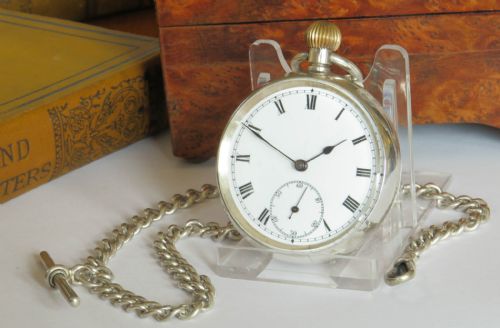
A hallmarked silver albert chain is a traditional waistcoat chain of exceptional weight and utility, prized today as a substantial necklace or pocket watch accessory.
Hallmarked Silver Albert Chain
When you search for a hallmarked silver albert chain, you enter a field dominated by heavy, linked designs that once secured pocket watches to waistcoats. The pieces you are most likely to meet on this page span the nineteenth century up to the 1930s, reflecting Victorian, Edwardian and Art Deco tastes.
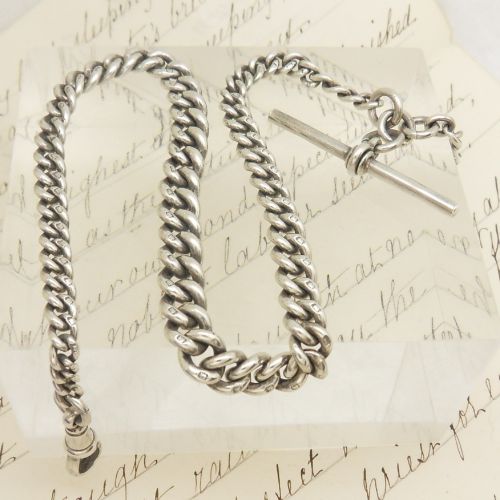
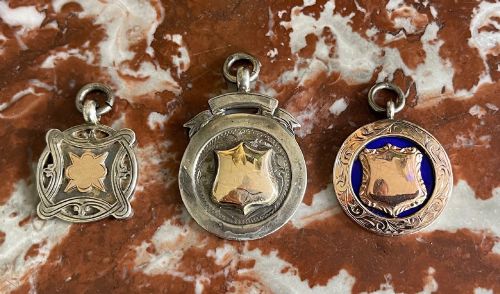
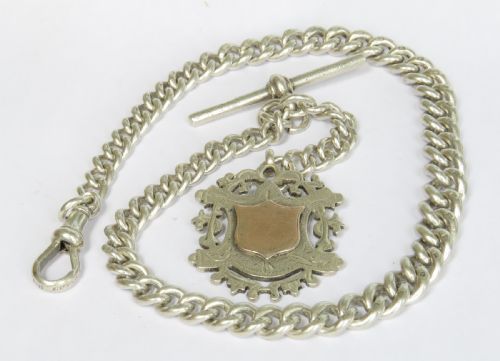
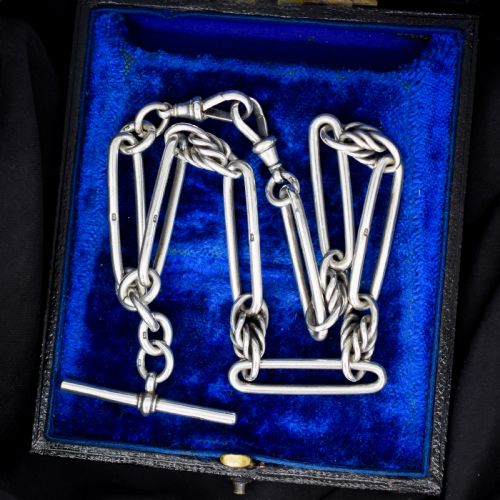
Most examples take the form of curb link or trombone link chains, often fitted with T-bars and dog clips. Alongside standard sterling silver, you will occasionally encounter pieces incorporating gold, rose gold or enamel elements.
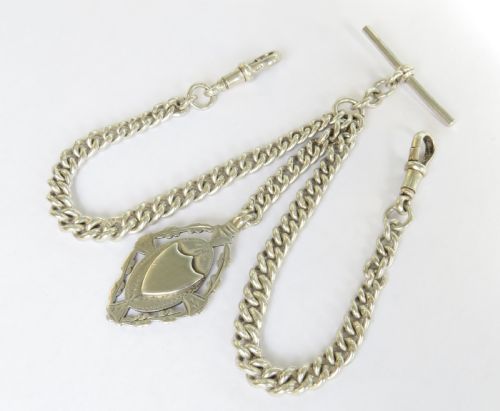
The objects listed range from simple single strands to double watch chains, sometimes accompanied by silver watch fobs. Origins are rooted in English workshops, with specific pieces bearing hallmarks from centres such as Birmingham.
How they were made
Makers fashioned these chains from sterling silver, shaping individual links by hand or machine before assembling them into robust uniform patterns. Trombone love knot chains and chunky curb links required precise metalwork to ensure each connection could bear daily use.
Components such as the T-bar and dog clips were soldered or swivel-jointed to the main chain to allow secure fastening to buttonholes and pocket watches. Surfaces were polished to a bright finish, while applied enamel or contrasting rose gold accents provided decorative detail on select fobs and links.
The site listings show pieces spanning the nineteenth century, 1900, 1910, 1920, 1930, and 1936, utilising sterling silver, gold, rose gold, and enamel.
What varies in quality
Quality in these chains rests primarily on the gauge of the silver and the integrity of the individual links. Heavier pieces, weighing ninety grams or more, demonstrate a substantial use of metal that marks out the upper tier of production.
The presence of complete hallmarks, original dog clips and matching T-bars elevates an example. Furthermore, the inclusion of contemporaneous silver fobs or integrated love knot motifs distinguishes superior workshop output from simpler utilitarian items.
The Hallmarked Silver Albert Chain Glossary
- Hallmark
- An official stamp applied to precious metals indicating purity, origin, and assay office. On these pieces, it confirms the silver standard.
- T-bar
- A transverse bar attached to the chain by a short length, designed to pass through a waistcoat buttonhole. It anchors the watch securely.
- Dog clip
- A spring-loaded swivel fastening used to attach a pocket watch or fob. It allows the attached item to rotate without twisting the chain.
- Curb link
- A chain design composed of identical oval links twisted to lie flat. It forms the most common heavy structure for these pieces.
- Trombone link
- A link pattern featuring alternating long rectangular bars and small round connecting rings. It is frequently associated with Victorian examples.
- Watch fob
- A decorative pendant suspended from the chain. These often incorporate coins or engraved shields.
Hallmarked Silver Albert Chain: Frequently Asked Questions
How do I wear a hallmarked silver albert chain today?
Many people wear these chains as necklaces by fastening the dog clips to each other or adding an extension. The substantial weight of curb link pieces makes them sit well as neckwear.
Alternatively, you can thread the T-bar through a lapel buttonhole and secure a pocket watch to the clip in the traditional manner.
How can I tell the date of a silver albert chain?
The primary method for dating these pieces is reading the hallmarks stamped onto the links, dog clips, or T-bars. Assay office marks and date letters provide the exact year of testing.
Stylistic markers also help, as trombone love knot links point firmly to the Victorian era, while cleaner geometric lines suggest later periods.
What are watch fobs and did they always come with the chain?
Watch fobs are small decorative ornaments or shields that hung from the main chain to add weight and personal style. They often feature engraved dates, initials, or mounted coins.
While some chains retain their original fobs, many pieces were assembled over time as owners added or removed charms according to personal taste.