



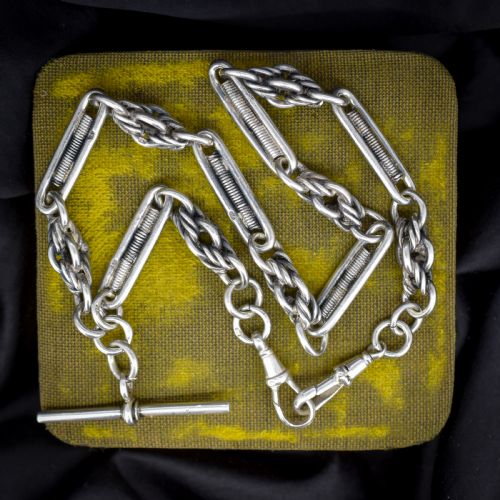
Silver Albert Necklace
A silver albert necklace carries the robust links and heavy utility of nineteenth-century pocket watch chains directly onto the neckline.
Silver Albert Necklace
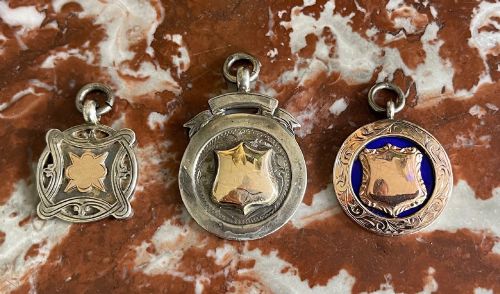
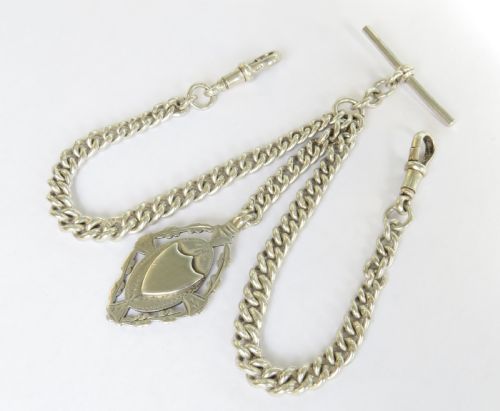
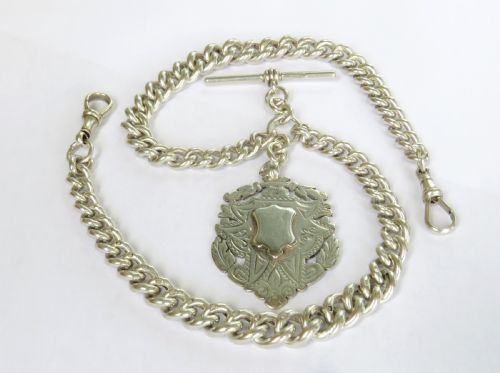
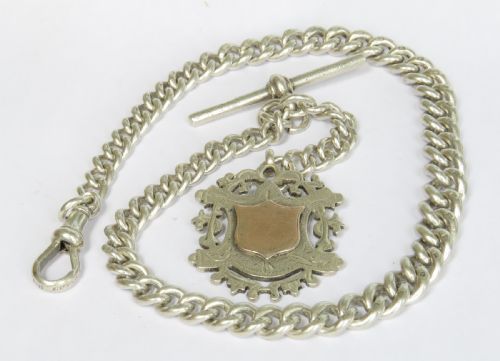
A silver albert necklace originates from functional nineteenth-century watch chains designed to secure pocket timepieces to a gentleman's waistcoat. These repurposed pieces now function as substantial necklaces, frequently retaining their original attachments such as dog clips, swivel fobs, and T-bars.
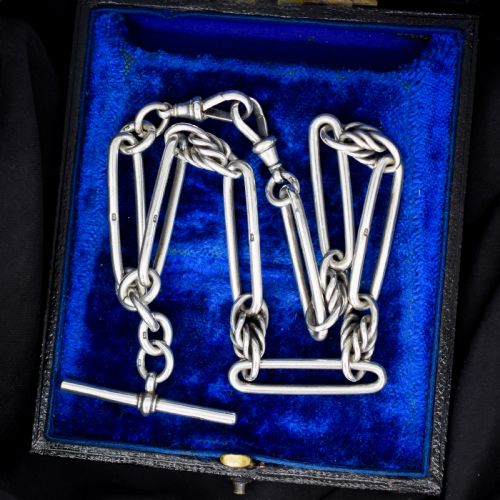
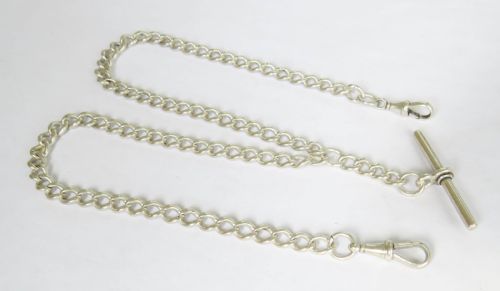
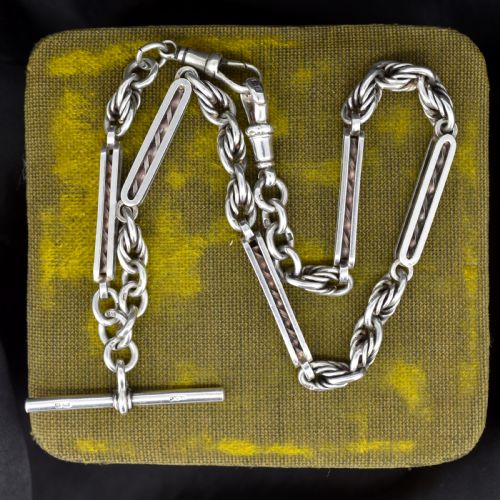
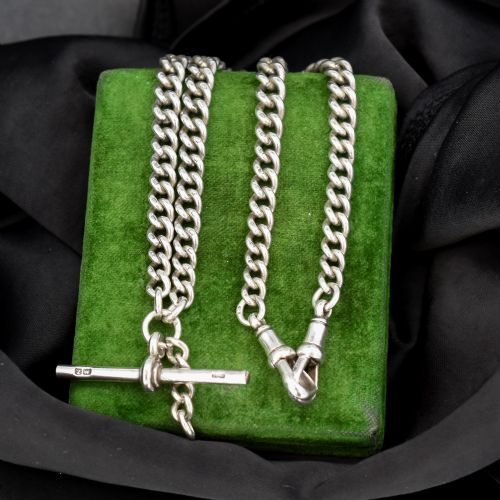
The most common examples encountered on this page date from the Victorian period through the early twentieth century, spanning the 1880s to the 1930s. They appear in distinct forms including uniform curb links, trombone links with love knots, and double albert configurations.
Makers fashioned these chains primarily in sterling silver, sometimes accented with gold highlights, enamel, or gemstones. The survival of dated hallmarks allows a clear reading of their origins across the nineteenth century and subsequent decades.
Quality variations in silver albert necklace items
Quality rests upon the gauge of the silver links and the completeness of the original hardware. Heavier, chunky curb links and solid double chains represent the upper tier of production, offering substantial weight and structural presence.
The presence of crisp, legible hallmarks and original components like T-bars, watch keys, and engraved fobs elevates an example. Pieces retaining their matching dog clips and uniform link wear demonstrate superior preservation over time.
Listings feature sterling silver predominantly, alongside occasional examples incorporating gold, enamel, gemstone, and niello across the Victorian, Edwardian, and Art Deco periods.
The Silver Albert Necklace Glossary
- Albert chain
- A pocket watch chain named after Prince Albert, designed to secure a timepiece through a buttonhole. These chains are now commonly worn as necklaces.
- T-bar
- A transverse bar attached to the centre of the chain. It was originally passed through a waistcoat buttonhole to anchor the watch.
- Dog clip
- A spring-loaded swivel clasp attached to the end of the chain. It fastened securely to a pocket watch or fob medal.
- Curb link
- A chain pattern composed of interlocking, slightly flattened links. This design allows the chain to lie flat against the wearer.
- Trombone link
- A fancy link style featuring alternating long oval links and short round links. It frequently incorporates love knots in Victorian examples.
- Hallmark
- An official stamp struck into the silver indicating metal purity and the assay office. It often includes a date letter for the year of production.
Silver Albert Necklace: Frequently Asked Questions
How do I wear a silver albert necklace?
These chains sit comfortably around the neck as a standalone choker or collar. You can position the T-bar and dog clip as a frontal feature or let them hang naturally at the back.
Many wearers attach additional charms or fob medals to the swivel clasp to personalise the piece.
How can I date my silver albert necklace?
Dating relies on the assay office hallmarks stamped directly onto the individual links or the T-bar. These tiny marks include specific letters indicating the exact year of manufacture.
Stylistic elements like trombone links or niello work also point to specific decades between the Victorian era and the 1930s.
Were these originally meant to be necklaces?
No, they were originally manufactured as pocket watch chains for Victorian and Edwardian gentlemen. They looped through waistcoat buttonholes and attached to timepieces.
Modern collectors and wearers repurposed them as necklaces due to their robust weight, length, and decorative metalwork.