






Silver Shell Spoon
A silver shell spoon brings organic marine curves and practical utility to the table, spanning Georgian delicacy and Victorian invention.
Silver Shell Spoon
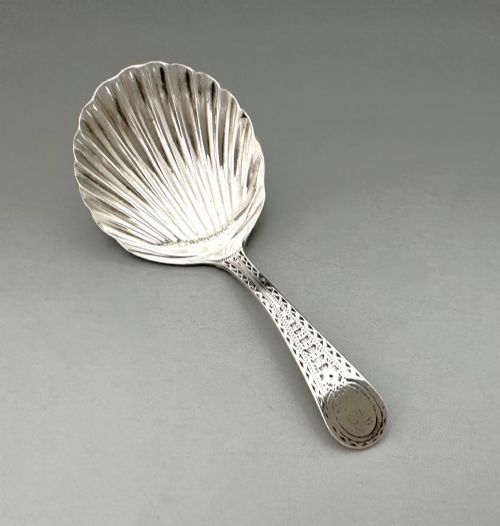
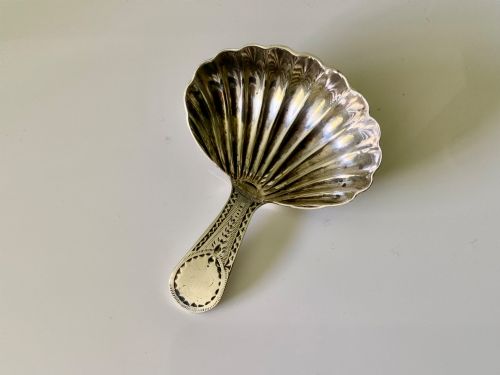
When you search for silver shell spoon, you encounter items shaped like natural marine bivalves or cast with scalloped bowls that echo coastal forms. The selection encompasses small caddy spoons designed for tea leaves, larger serving implements, and novelty receptacles.
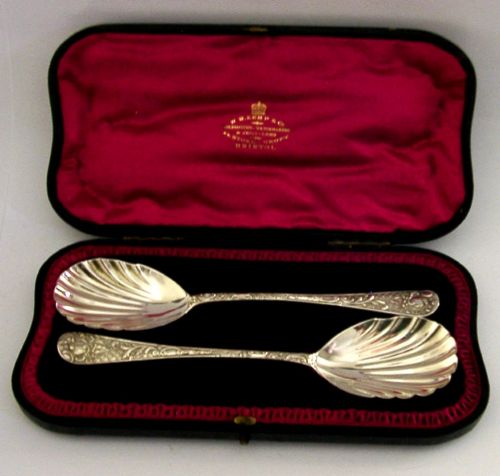
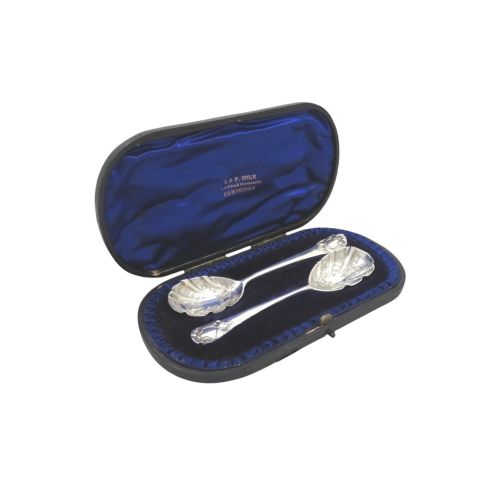
Most examples originate from the Georgian, Victorian, and Edwardian eras, rendered in solid sterling silver or silver plate. You find pieces ranging from utilitarian table accessories to ornate display items housed in fitted presentation boxes lined with velvet or satin.
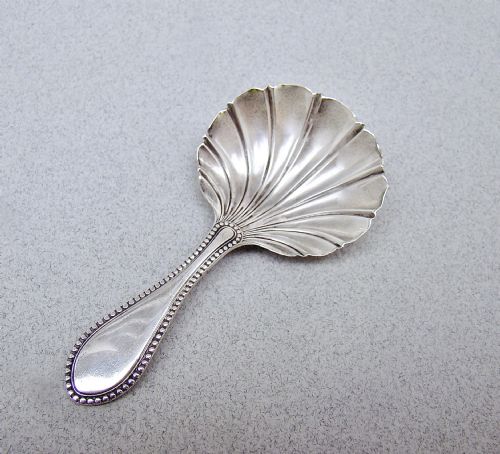
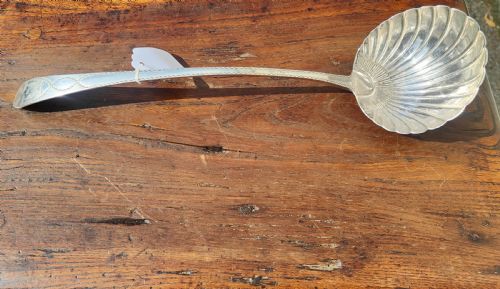
Caddy spoons and condiment ladles dominate the available forms, often featuring chased bowl detailing or engraved handles. Makers utilised traditional motifs, incorporating shell backs and scrollwork into domestic utensils intended for daily service.
How they were made
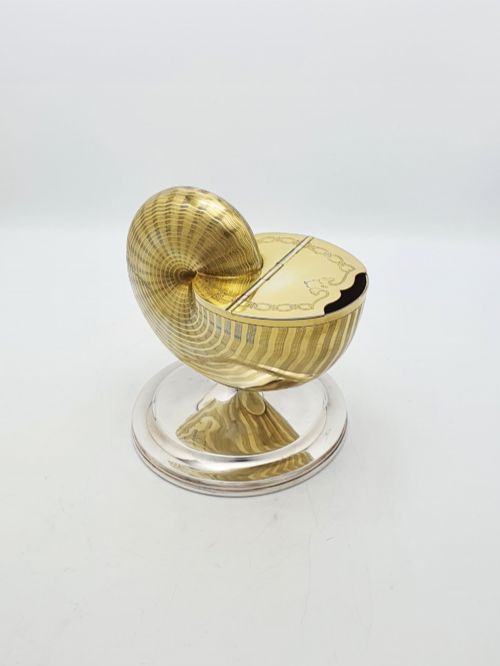
Silversmiths formed these utensils using sterling silver or copper alloys coated via silver plating, shaping the metal through hammering, casting, and pressing techniques. Handles often received hand-engraved detailing or applied wire borders, while larger vessels utilised nautilus and conch shell components mounted on plated bases.
Makers applied silver gilt finishes to the interior bowls of specific serving pieces to resist corrosion from food acids. Hallmarks stamped directly into the metal record the assay office, city, and date of manufacture.
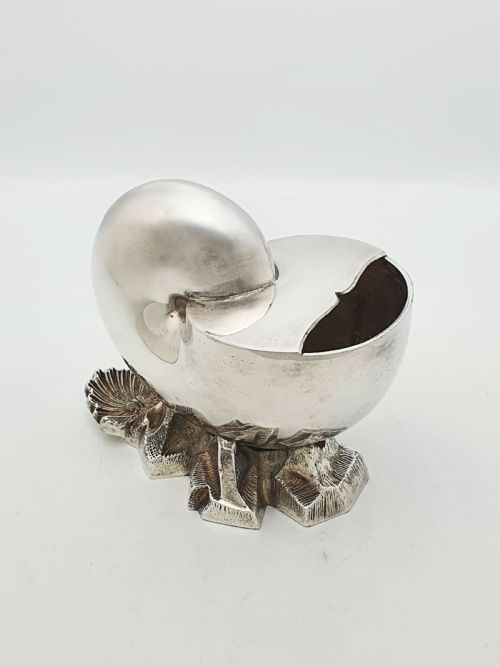
Several Victorian pieces utilise actual nautilus and whelk shells mounted in silver plate to serve as novelty table warmers.
What varies in quality
The standard of a piece rests upon the crispness of the shell fluting and the proportional balance between handle and bowl. Finer examples display deeply struck hallmarks and precise hand-chased articulation rather than shallow machine stamping.
Preservation of the original surface finish, including parcel-gilt highlights and fitted cases lined with silk or velvet, elevates certain items. Superior gauge metal ensures structural rigidity in everyday utensils like caddy spoons and sauce ladles.
Martin Hall & Co·The Goldsmiths & Silversmiths·Hamilton & Inches·Michael Smith·Tiffany & Co·Mappin & Webb·Whiting Co·William Hutton and Son·Atkin Bros·Elizabeth Morley·Thomas Tookey·Chawner & Co
The Silver Shell Spoon Glossary
- Caddy spoon
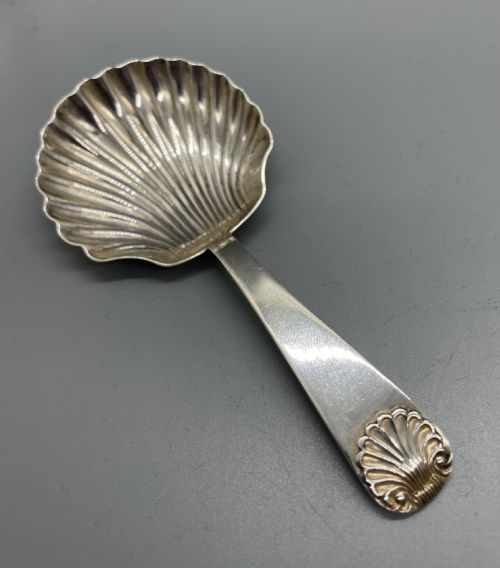
- A small utensil specifically proportioned for measuring loose tea leaves from a caddy. These often feature shell-shaped bowls.
- Silver gilt
- Sterling silver that has been coated with a thin layer of gold, frequently applied to the interior bowls of spoons. This technique protected the silver from tarnishing when exposed to wet condiments.
- Hallmark
- A series of official marks stamped into precious metals indicating the standard of purity, the maker, and the year of assay. These stamps provide the primary documentation for dating British silver.
- Sifter spoon
- A perforated utensil designed for dusting sugar over food items. They often incorporate decorative shell motifs within the bowl or handle design.
- Fiddle, Thread & Shell
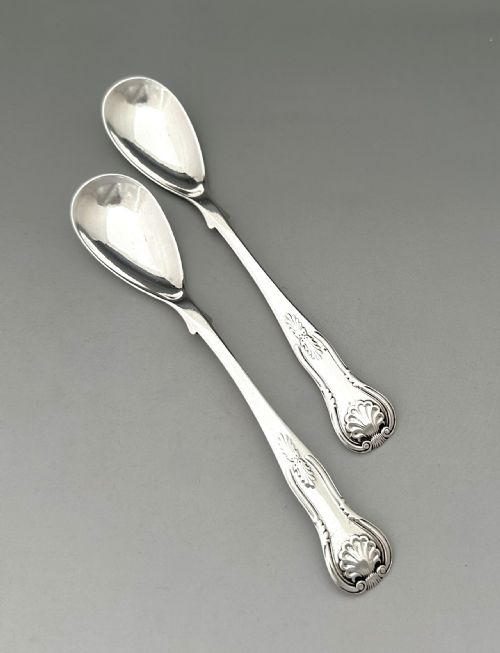
- A traditional nineteenth-century cutlery pattern featuring a fiddle-shaped stem, a raised central thread border, and a shell motif at the terminal.
Silver Shell Spoon: Frequently Asked Questions
How were silver shell spoons used?
These utensils served specific domestic tasks at the dining and tea table, ranging from scooping dry tea leaves to ladling sauces and serving preserves. Smaller varieties accompanied caddies and salt cellars, while larger iterations handled seafood or berries.
Their distinct bowl shapes proved practical for gathering loose contents cleanly from jars and bowls. Over time, many transitioned from active service to decorative display pieces within fitted presentation boxes.
How do I clean a silver shell spoon?
Maintenance requires gentle washing in warm, soapy water followed by thorough drying with a soft, lint-free cloth to preserve the metal surface. Avoid harsh chemical dips that strip away desirable patination and historical wear.
For pieces with silver gilt interiors or delicate engraved handles, specialised silver cloths prevent abrasion. Storing items away from moisture helps prevent accelerated tarnishing.
How can I tell the period of a silver spoon?
Dating relies primarily on the stamped hallmarks, which record specific symbols and date letters corresponding to active assay office registries. Georgian and Victorian pieces display distinct stylistic cues, such as rococo scrollwork or neoclassical engraving.
Pattern designs also provide chronological clues, with specific handle motifs gaining popularity during distinct design movements like the Regency or Art Nouveau eras.