


Cased Sugar Tongs
Cased sugar tongs combine silver service with tailored presentation cases, offering a glimpse into formal dining rituals from the late nineteenth and early twentieth centuries.
Cased Sugar Tongs
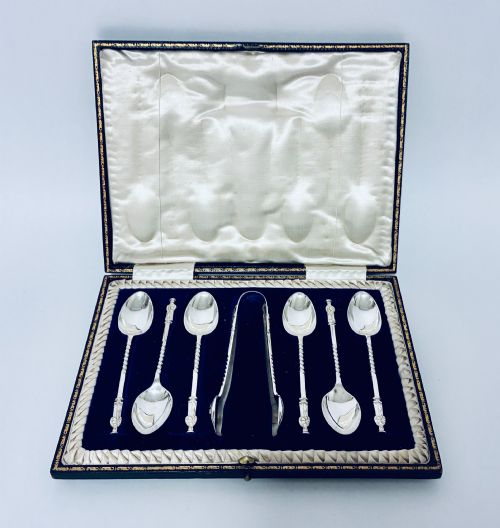
When searching for cased sugar tongs, buyers encounter items produced across the Victorian, Edwardian, and Art Deco periods. These objects typically appear alongside matching teaspoons, tea caddy spoons, or larger tea service components housed within fitted presentation boxes.
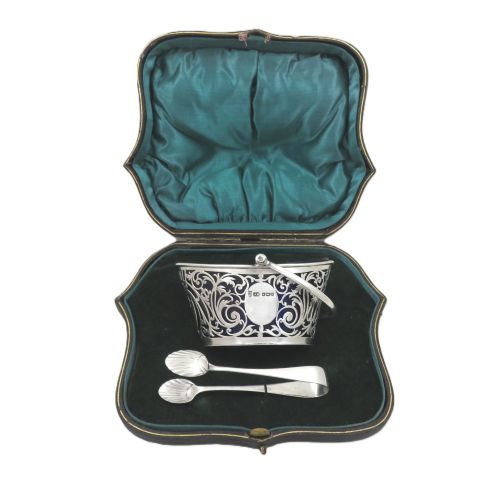
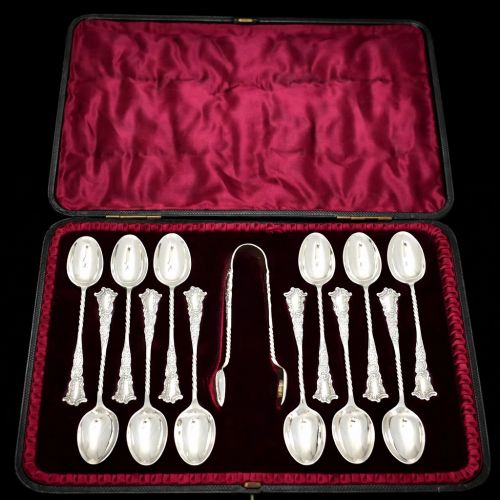
The versions most frequently met on this page combine sterling silver sugar tongs with velvet or satin-lined leatherette cases. They frequently arrive as part of larger condiment or flatware sets rather than as standalone instruments.
Originating primarily from British assay offices such as Birmingham, Sheffield, Chester, and London, these items reflect the domestic habits of middle and upper-class households during the late 1800s and early 1900s.
Materials and construction
The metal components rely upon solid sterling silver, occasionally with silver-gilt finishes applied to the surface. Makers shaped the tongs using traditional metalworking techniques while incorporating decorative motifs specific to Victorian and Edwardian tastes.
The accompanying cases utilise structural bases covered in leatherette, housing interiors fitted with moulded recesses lined in tactile fabrics like velvet, silk, or satin. Glass elements occasionally join the silver within broader tableware sets.
Object forms recorded in the archive range from individual sugar tongs to twelve-piece teaspoon sets with baskets and jugs.
Judging the range
Quality rests upon the preservation of the fitted case alongside the metalware. Sets retaining their original interior silk linings and structural leatherette exteriors command greater attention than those with compromised boxes.
The distinction between standard output and finer production also lies in the precision of the silver-smithing, the weight of the metal, and the clarity of the hallmarks stamped into the silver tongs.
Robert Stebbings·Robert Pringle and Sons·James Deakin and Sons·Aldwinckle and Slater·Wakely and Wheeler
The Cased Sugar Tongs Glossary
- Sterling silver
- An alloy consisting of 92.5 percent silver by mass, forming the primary material for the tongs and spoons in these sets.
- Silver-gilt
- Silver objects that have been coated with a thin layer of gold on the surface, visible on several spoon and tong sets.
- Leatherette
- A simulated leather material utilised for the exterior protection of the fitted presentation cases.
- Assay office
- An official body that tested the purity of precious metals and stamped items with town marks and date letters.
- Hallmark
- A series of official marks stamped on precious metals showing the maker, standard of purity, and year of assay.
Cased Sugar Tongs: Frequently Asked Questions
What periods do these cased sets come from?
The surviving sets originate primarily from the late Victorian, Edwardian, and early Art Deco eras, spanning the late nineteenth century through to the nineteen-thirties.
Production dates cluster heavily around the turn of the twentieth century, reflecting the popularity of fitted presentation silverware during that era.
Were these tongs used alone or with spoons?
While tongs occasionally appear by themselves, they are most commonly found nestled alongside matching teaspoons, Apostle spoons, or tea caddy spoons inside the same box.
Larger configurations also incorporate sugar baskets, cream jugs, or butter knives within the fitted interior compartments.
How are the presentation cases constructed?
The protective boxes utilise a rigid exterior covered in leatherette to safeguard the contents during storage and transport.
Inside, wooden or cardboard frames are shaped to hold the pieces securely, then lined with soft fabrics such as velvet, silk, or satin.
How do I identify the maker and date?
Makers and dates are identified by examining the small stamped hallmarks impressed directly into the surface of the silver tongs and spoons.
These marks typically include a maker's mark, a standard mark for sterling silver, a town mark indicating the assay office, and a specific letter representing the year.