


Silver Pocket Watch Case
A silver pocket watch case protects portable timepieces and often doubles as a desk or travel clock holder.
Silver Pocket Watch Case
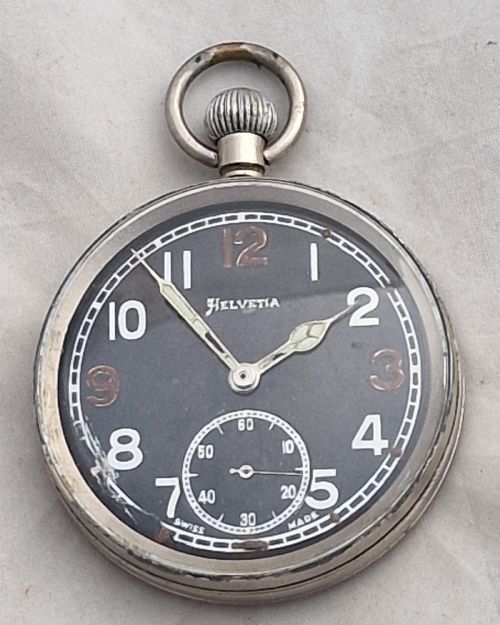
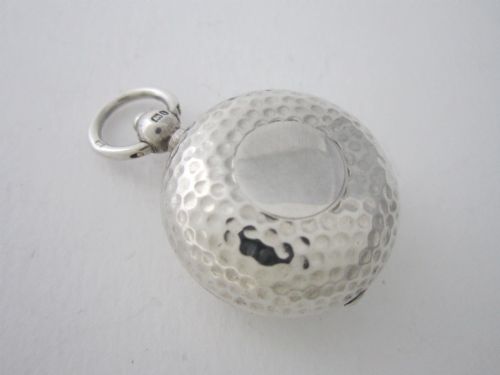
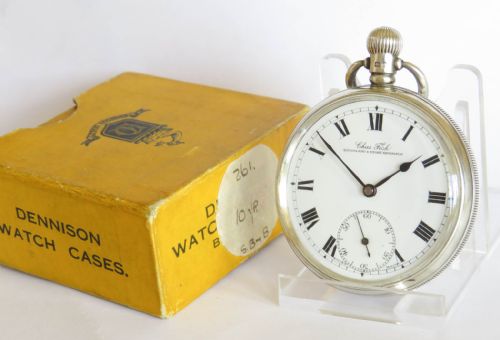
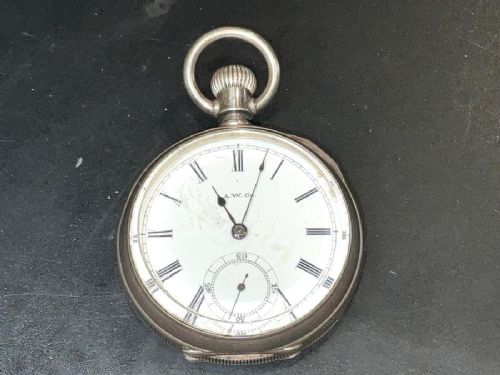
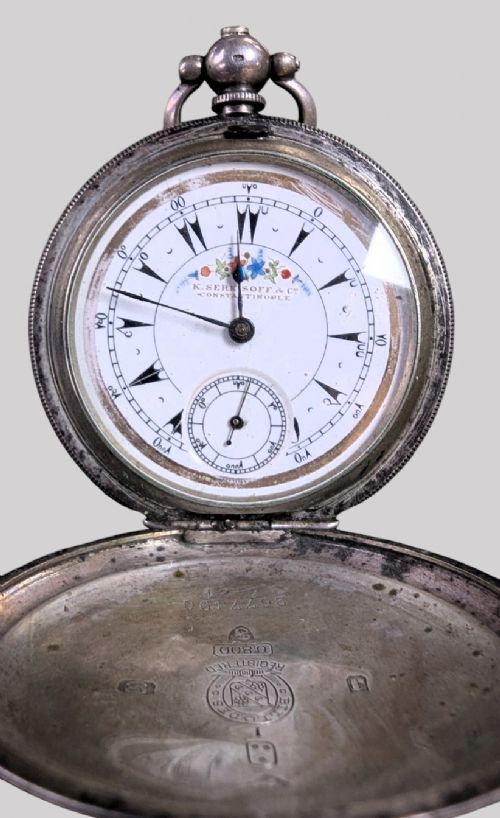
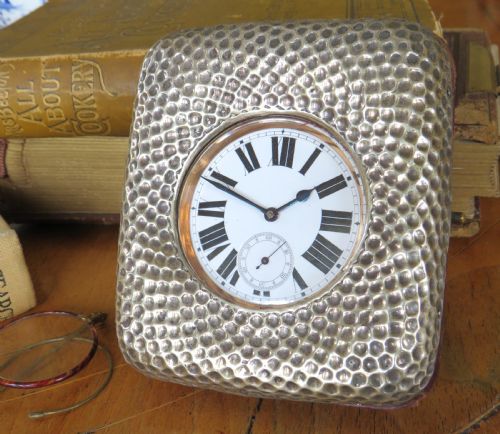
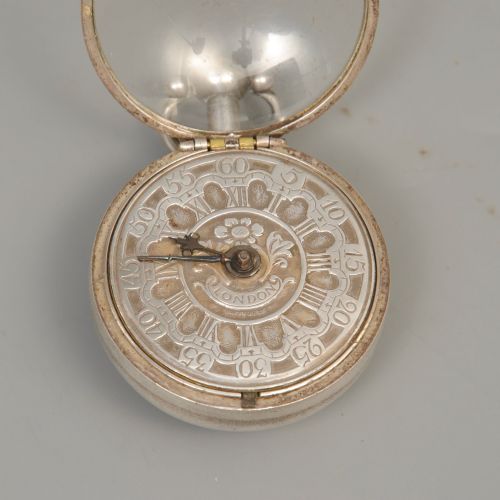
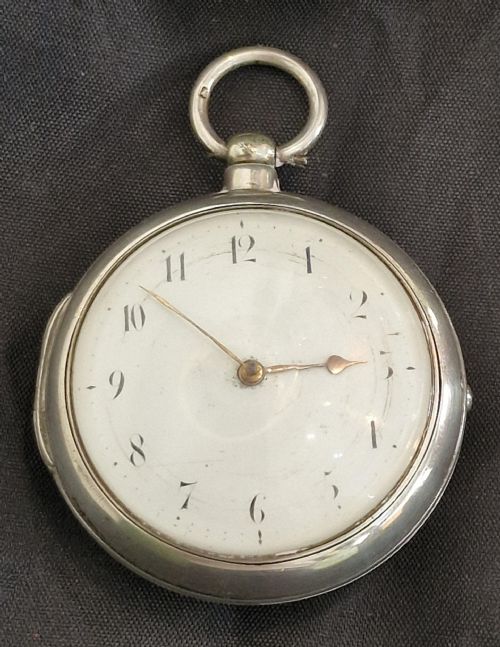
When you examine a silver pocket watch case on this page, you encounter items spanning from the eighteenth century through the Edwardian era and the 1930s. These pieces include open face housings, pair cases, double shells, and hinged folding designs intended for travel.
Materials and construction methods
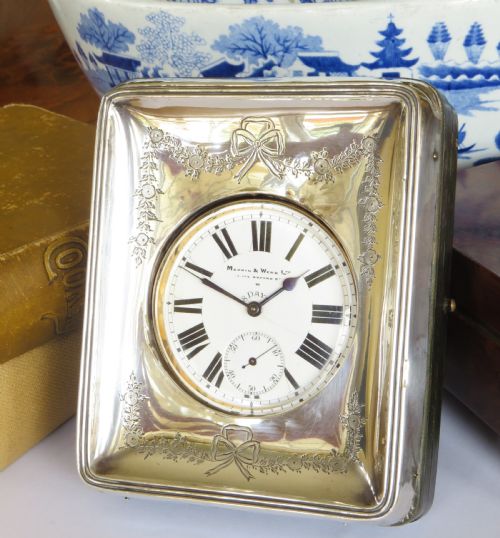
Silversmiths utilised sterling silver, coin silver, and lower-purity alloys, often applying hallmarks to designate assay offices and years of production. Many pieces incorporate glass windows for travel clocks, alongside internal brass, steel, and nickel movement rings.
Outer surfaces display decorative techniques including repousse work, niello detailing, enamel panels, and engine-turned textures. Pair cased examples rely on an inner protective shell housed snugly within a second outer enclosure.
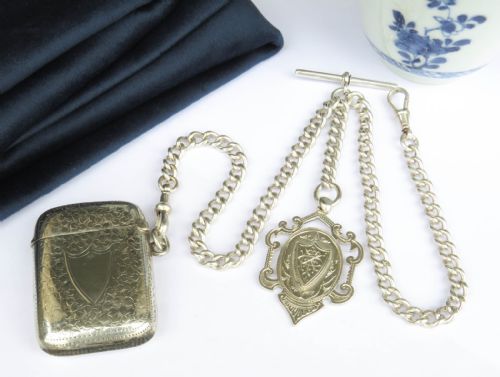
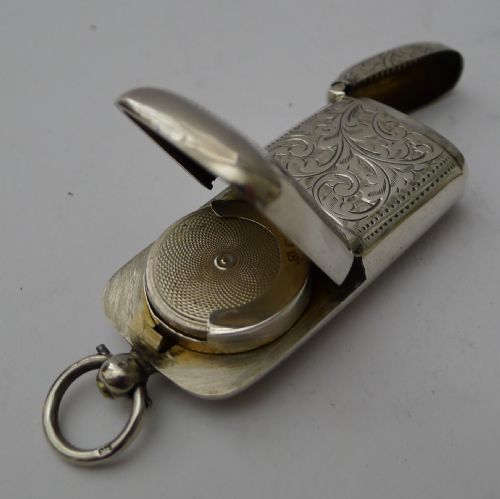
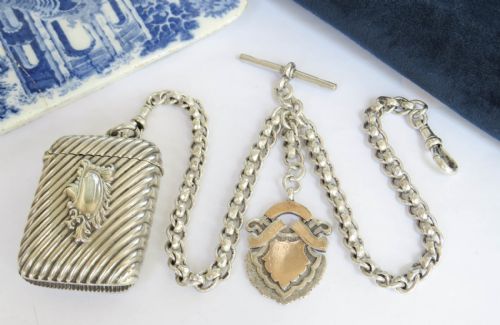
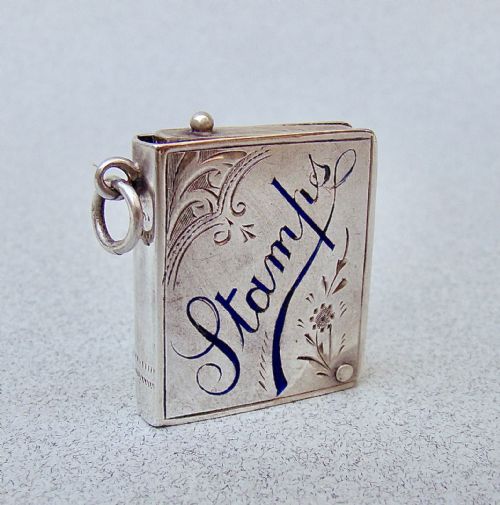
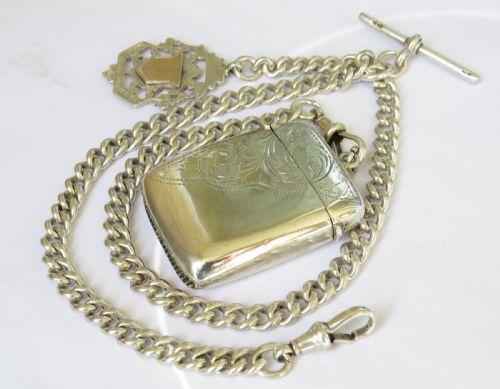
The selection includes specialised companion items such as sovereign holders, vesta cases, and stamp books alongside standard watch housings.
Assessing quality and execution
Quality reveals itself in the crispness of repousse relief, the tight alignment of hinged closures, and the clarity of maker marks and hallmarks. Heavier gauge metal resists denting better than thinner alternatives.
Refinement appears in secondary decorative elements, such as hand-chased borders on pair cases or the precision of enamel work on specialised dials and fob accessories.
Aaron Lufkin Dennison·Mappin & Webb·Crisford & Norris·JW Benson·Charles Frodsham·Stauffer IWC·H Samuel
The Silver Pocket Watch Case Glossary
- Pair case
- An outer protective shell fitted over the primary inner housing of an early pocket watch. This construction was common during the eighteenth and early nineteenth centuries.
- Full hunter
- A pocket watch featuring a spring-loaded metal cover that protects the glass dial. The cover opens via a push-piece on the crown.
- Vesta case
- A small portable container designed to hold matches. These frequently accompany watch chains and sovereign holders in period listings.
- Verge
- An early type of escapement mechanism utilising a crown wheel and pallet structure. It is frequently found in Georgian and eighteenth-century examples.
- Borgel case
- A screw-together case design patented by François Borgel. It offered improved dust and moisture resistance for the movement inside.
Silver Pocket Watch Case: Frequently Asked Questions
What is a pair case?
A pair case consists of two separate enclosures where an inner housing holds the movement and fits inside a larger outer shell. This double construction provided extra protection against dust and impact.
Such configurations are typical of eighteenth-century and Georgian pieces found in the archive and current listings.
How do travel cases differ?
Travel versions often feature folding leather-backed or solid metal frames with built-in stands to support clocks on desks or bedside tables. They allow portable timepieces to function safely away from the pocket.
Many examples date from the Edwardian period and the early twentieth century.
What is a full hunter?
A full hunter incorporates an integrated metal lid that covers the dial face completely. Users press a crown button to spring the cover open and read the time.
This style protects delicate glass faces during daily wear or travel.
How are periods identified?
Periods are determined through official hallmarks, assay office symbols, maker marks, and stylistic indicators. Eighteenth-century items typically feature verge movements and pair cases, while later Victorian and Edwardian examples show varied engine-turning and standard stem-wind formats.
Comparing these details against recorded archives helps establish approximate dates of origin.