


Edwardian Silver Travel Clock
An edwardian silver travel clock combines portable timekeeping with precious metal casing, offering a practical timepiece suited for carriage or bedside use.
Edwardian Silver Travel Clock
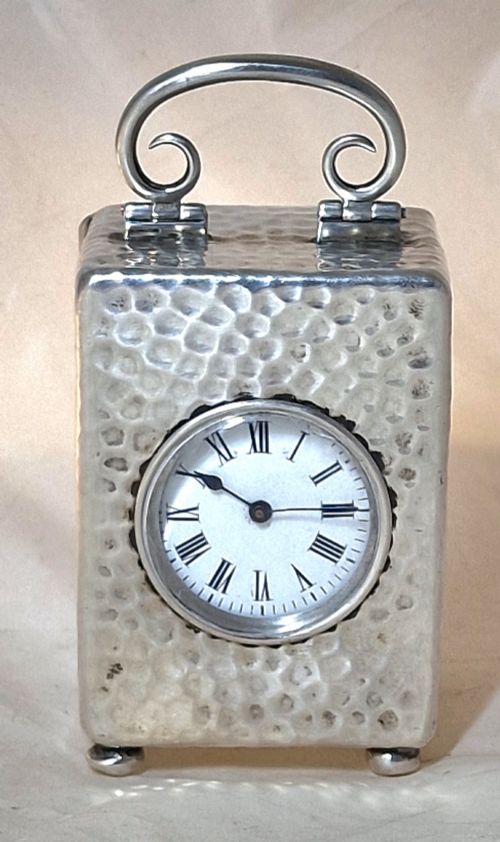
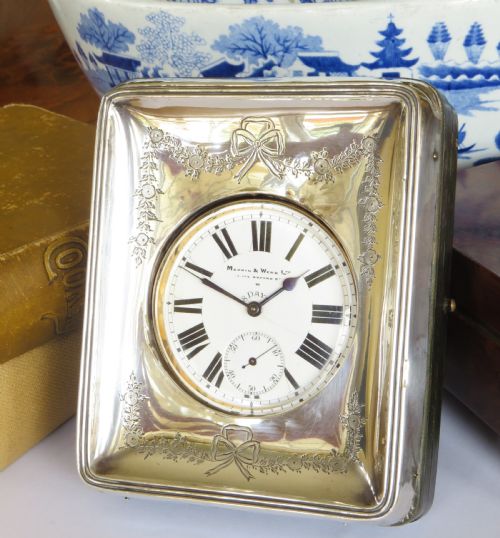
An edwardian silver travel clock encompasses miniature carriage clocks, folding timepieces, and pocket goliath watches housed in protective metal cases. These objects originate predominantly from the early twentieth century, alongside examples spanning the nineteenth century into the nineteen thirties.
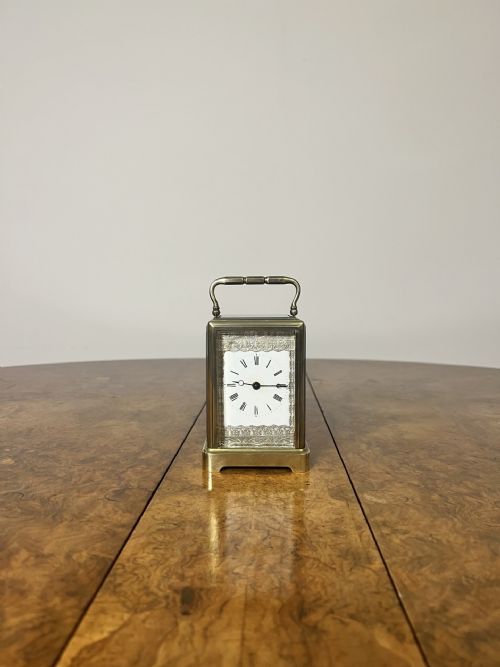
Buyers will most frequently encounter compact carriage clocks and folding silver cases designed for portability. The selection includes pieces featuring glass panels, enamel work, and brass interior components alongside the sterling silver exterior.
How they were made
Maker workshops utilised sterling silver, brass, and silvered metal to construct the protective outer cases and internal movements. Enamel and tortoiseshell appear as decorative elements applied to the silver bodies.
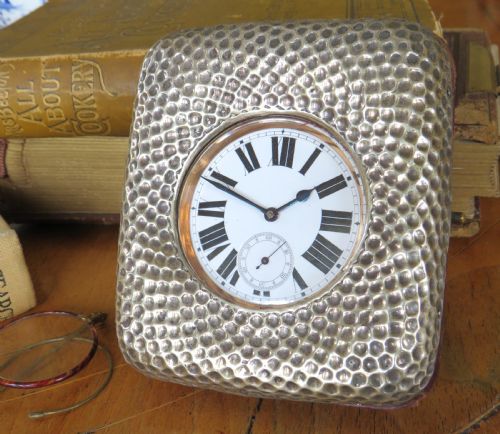
Techniques recorded on these pieces include chased surface decoration, hammered finishes, and guilloche enamel work. Makers incorporated glass windows to display the clock faces while keeping the mechanical movements enclosed.
Travel clocks designed with folding silver cases meant that owners could tuck their portable timekeeper into a pocket just like a pocket watch.
What varies in quality
The sophistication of the metalwork distinguishes different pieces, particularly where hand-chased ornamentation or detailed hammered textures enrich the silver case. The presence of decorative enamel work or gilt plating adds complexity to the construction.
The integration of materials such as tortoiseshell or complex dial designs reflects the ambition of the maker. Movement types, ranging from standard timepieces to repeating carriage mechanisms, alter the technical scope of the object.
Mappin and Webb·J Batson and Son·Henry Matthews
The Edwardian Silver Travel Clock Glossary
- Carriage clock
- A small, portable spring-driven clock originally designed for travellers during the nineteenth and early twentieth centuries. These pieces typically feature a rectangular brass or silver case with a carrying handle.
- Goliath watch
- An oversized pocket watch, often measuring significantly larger than standard pocket watches, frequently housed in a dedicated travelling case. They served as portable timekeepers for desks or bedside tables.
- Guilloche enamel
- A decorative technique where precise, intricate patterns are mechanically engraved into metal beneath a translucent enamel layer. This creates a repeating geometric visual depth on the surface.
- Silver gilt
- Silver objects that have been coated with a thin layer of gold applied to the exterior surface. This finish provides the appearance of solid gold while retaining a silver base structure.
- Hallmark
- An official stamp applied to precious metals indicating the standard of purity and the assay office of origin. These marks help verify the material composition of the piece.
Edwardian Silver Travel Clock: Frequently Asked Questions
How do I wind an edwardian silver travel clock?
Most portable timepieces of this period utilise a key or an integrated butterfly winder located on the backplate. Winding should be performed gently until resistance is felt, without forcing the spring.
Care must be taken to match the correct key size to the arbour to avoid damaging the internal mechanism. Regular, gentle winding maintains the tension needed for accurate timekeeping.
Were these clocks made for actual travel?
Original travel clocks were designed to withstand movement inside carriages and luggage. Heavy outer cases and fitted folding leather or metal housings protected the delicate internal gear trains from shock.
While robust for their era, modern vibration and frequent transit can disrupt delicate vintage mechanisms. Many owners now keep them as stationary desk or bedside timepieces rather than carrying them actively.
How should I clean the silver case?
Silver casing benefits from occasional gentle polishing with a soft cloth designed for precious metals. Avoid applying abrasive cleaning pastes directly onto enamel panels, glass windows, or engraved surface details.
Keeping moisture away from the clock face ensures the internal movement remains free from corrosion. Professional servicing is recommended for cleaning the mechanical components inside.
What is the difference between a timepiece and a carriage clock?
A timepiece indicates the hours and minutes without incorporating a striking mechanism. Traditional carriage clocks frequently feature repeating or striking functions that sound the hours on bells or gongs.
Timepieces generally possess simpler internal gear trains, making them slightly more straightforward to maintain over long periods of use. Both share similar exterior housing styles and portable forms.