


Edwardian Sterling Silver Clock
An Edwardian sterling silver clock brings refined proportion and polished metal to a desk or mantelpiece, offering a glimpse into early twentieth-century design.
Edwardian Sterling Silver Clock
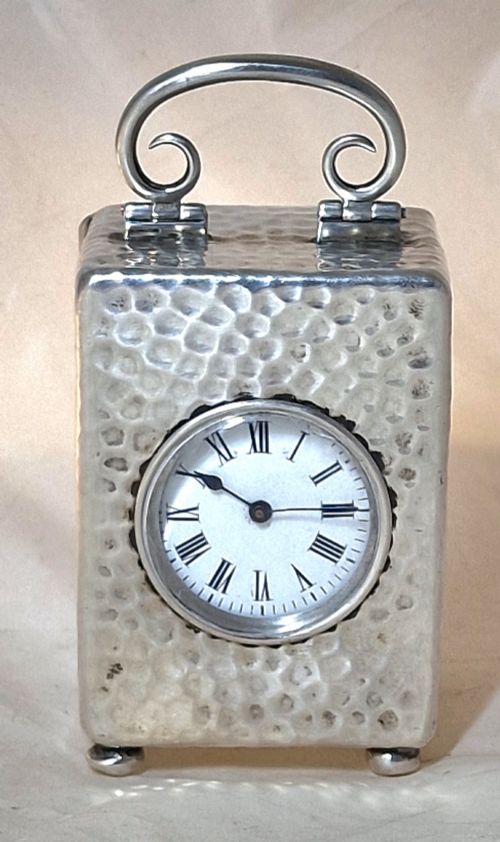
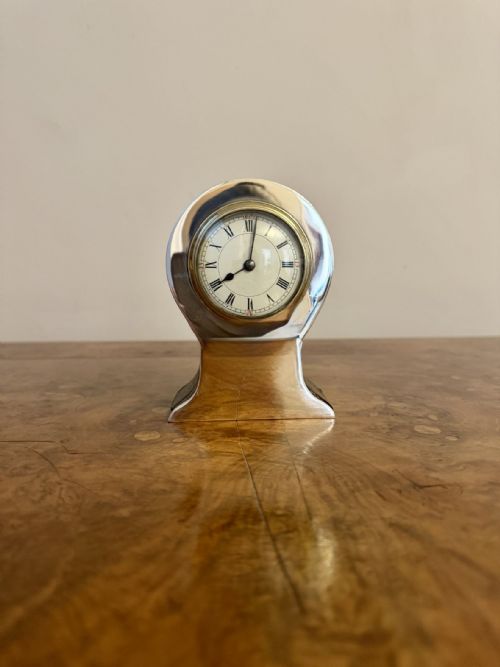
The most common forms on this page are miniature carriage clocks and small desk timepieces, frequently bearing hallmarks from London or associated makers. Pieces range from plain silver-fronted mantel designs to more ornate models featuring guilloche enamel or floral details.
How they were made
These clocks combine solid sterling silver cases or silver fronts with mechanical movements, often utilising brass internal components and glass panels to display the dial. Makers employed techniques such as hammering the silver surface or applying blue guilloche enamel and floral decoration to the outer casing.
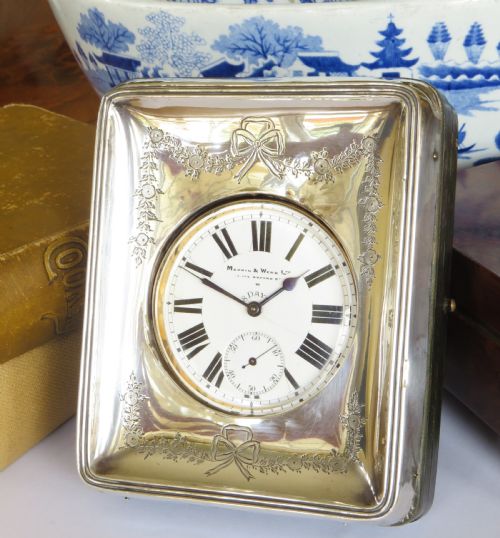
Many examples incorporate leather or wooden cases for travel or domestic placement, while others rely entirely on heavy-gauge silver construction shaped into carriage forms or capstan desk accessories.
Some travel clocks arrived with custom leather cases so a gentleman could check the hour while bouncing across cobblestones in a carriage.
What varies in quality
Quality in these timepieces rests on the weight of the sterling silver, the crispness of the hallmarks, and the intricacy of any decorative enamel work. Finer examples display meticulous hand-hammering or well-preserved guilloche patterns without loss to the coloured enamel.
The calibre of the movement and the integration of secondary materials, such as tortoiseshell or bevelled glass, further distinguish standard production pieces from more exceptional workshop examples.
Mappin & Webb·William Comyns·Henry Matthews·Liberty's London
The Edwardian Sterling Silver Clock Glossary
- Sterling silver
- A silver alloy containing 92.5 percent pure silver by mass and 7.5 percent other metals, usually copper. This standard composition appears across British hallmarked pieces of the period.
- Guilloche enamel
- A decorative technique where a precise, intricate pattern is mechanically engraved beneath a translucent enamel layer. This method creates depth and shifting light effects on the surface of the clock case.
- Carriage clock
- A small, portable spring-driven clock designed for travel during the nineteenth and early twentieth centuries. They usually feature a rectangular brass and glass case with a carrying handle on top.
- Hallmark
- An official mark stamped on items made of precious metals in the United Kingdom, indicating the standard of purity, the assay office, and the date letter.
- Timepiece
- A clock that indicates the time without striking the hours or playing musical tunes. Many smaller desk and travel clocks fall into this category.
Edwardian Sterling Silver Clock: Frequently Asked Questions
How do I wind a silver carriage clock?
Most portable timepieces of this period use a dedicated key inserted into the backplate to tension the mainspring. Care must be taken not to overwind the movement once resistance is felt.
Assessing the feel of the mechanism helps prevent damage to older springs that have aged over the decades.
Are these clocks suitable for daily use?
While these mechanical pieces can keep accurate time when serviced, many owners treat them as decorative objects for occasional running. Regular daily use places wear on delicate historical gear trains.
Placing the clock on a stable surface away from direct sunlight protects both the silver case and any enamel panels.
What is the difference between a timepiece and a clock?
In horological terms, a timepiece refers strictly to a mechanism that tells the time without a striking train for hours or quarters. Many Edwardian desk clocks are classified simply as timepieces because they lack bells or gongs.
Larger mantel clocks often included striking functions, though smaller travel formats omitted them to save space.
How should I clean the silver case?
Polishing requires a soft cloth and a non-abrasive silver cleaner designed to lift tarnish without removing thin layers of metal or damaging adjacent enamel and glass. Care must be taken around hinges and engraved details.
Harsh dips should be avoided, particularly on cased or mounted pieces where chemicals might seep into the internal wooden or fabric linings.