



Sterling Silver Travel Clock
These sterling silver travel clocks are portable timepieces housed in protective cases, offering functional elegance for journeys and desks alike.
Sterling Silver Travel Clock
A sterling silver travel clock is a portable timepiece designed to be carried or set upon a surface, combining timekeeping utility with protective metal or leather housing. The examples found here span from the nineteenth century through the Edwardian era and the art deco period.
Makers and origins vary across the inventory, reflecting Victorian, Edwardian, arts and crafts, and art deco styles. Buyers encountering these pieces will find both simple silver housings and more ornate designs embellished with enamel.
How they were made
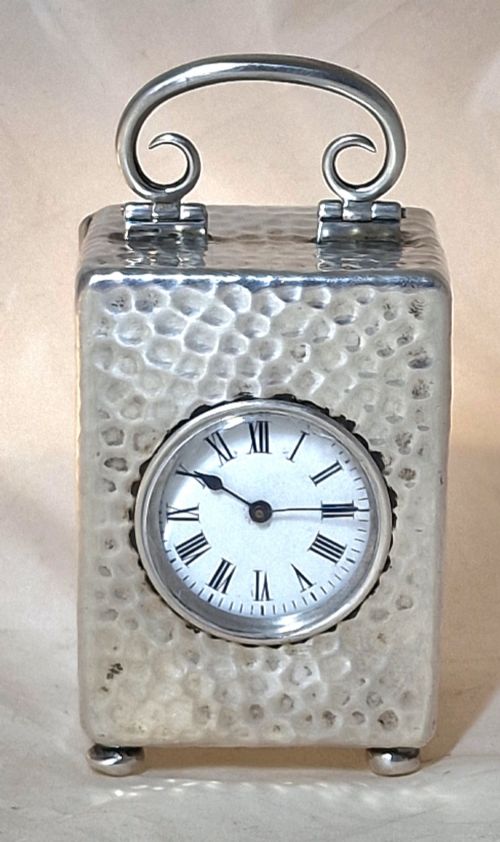
The construction of a sterling silver travel clock relies heavily on worked silver, brass, and glass, often combined with leather for the outer cases. Artisans shaped the sterling silver through smithing and hammering techniques to create durable protective shells for the internal clockwork.
Decorative surfaces frequently incorporate blue guilloche enamel or floral enamel work applied directly to the metal. Internal movements range from standard mechanisms to eight-day movements, housed securely behind glass dials.
Sterling Silver Travel Clock Retail Price Guide 2026
Typical asking prices for sterling silver travel clock among the pieces listed under this phrase on Sellingantiques today, from the lower quarter to the upper quarter. They describe what is for sale here now, not the wider market.
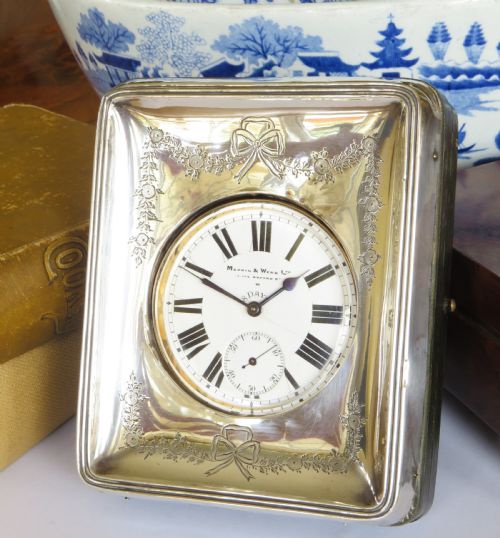
Some travel clocks feature folding leather and tortoiseshell cases designed to shield delicate watch faces from the bumps of a horse-drawn carriage.
What varies in quality
Quality in these pieces is dictated by the fineness of the metalwork and the complexity of the exterior decoration. Hand-hammered silver cases and intricate guilloche or floral enamel display a higher degree of craftsmanship than plain housing.
The sophistication of the movement inside also determines the calibre of the piece, with eight-day mechanisms representing a more involved mechanical undertaking than standard miniature timepieces.
Mappin & Webb·Henry Matthews·Octava·Doxa
The Sterling Silver Travel Clock Glossary
- Guilloche enamel
- A decorative technique involving precise mechanical engraving beneath translucent enamel. It creates repetitive geometric patterns that catch the light.
- Carriage clock
- A small, spring-driven clock originally designed for travelling by carriage. They typically feature a rectangular brass or silver case with glass panels.
- Hallmark
- An official stamp applied to precious metals indicating purity and origin. British sterling silver pieces carry assay office marks and date letters.
- Boudoir timepiece
- A small decorative clock intended for a private sitting room or bedroom. These items prioritise aesthetic charm alongside timekeeping.
- Pocket watch case
- A protective outer housing designed to hold a portable watch securely during transit. Some examples incorporate tortoiseshell or leather.
Sterling Silver Travel Clock: Frequently Asked Questions
How do I wind a travel clock?
Winding depends on the internal movement housed within the silver case. Most mechanical pieces utilise a key or a winding crown attached to the back.
Care should be taken not to overwind the mainspring, ensuring the longevity of the vintage mechanism.
Are these clocks suitable for daily use?
While these items were originally built for travel and daily timekeeping, older mechanical movements require gentle handling. Modern owners often keep them stationary on desks or mantels.
Regular servicing by a horologist helps maintain their working order.
What periods do these pieces represent?
The inventory spans the nineteenth century, the Victorian era, and the Edwardian period. Later examples extend into the nineteen-twenties and nineteen-thirties.
Art deco and arts and crafts design influences also appear across the selection.
How should I clean the silver?
Sterling silver requires careful polishing with a soft cloth to avoid damaging delicate enamel or glass components. Proprietary silver cleaners should be used sparingly around hinges and dials.
Keeping the metal dry prevents tarnishing and preserves the original hallmarks.