


Silver Boudoir Clock
A silver boudoir clock brings diminutive elegance to a dressing table, combining miniature precision with precious metal casework.
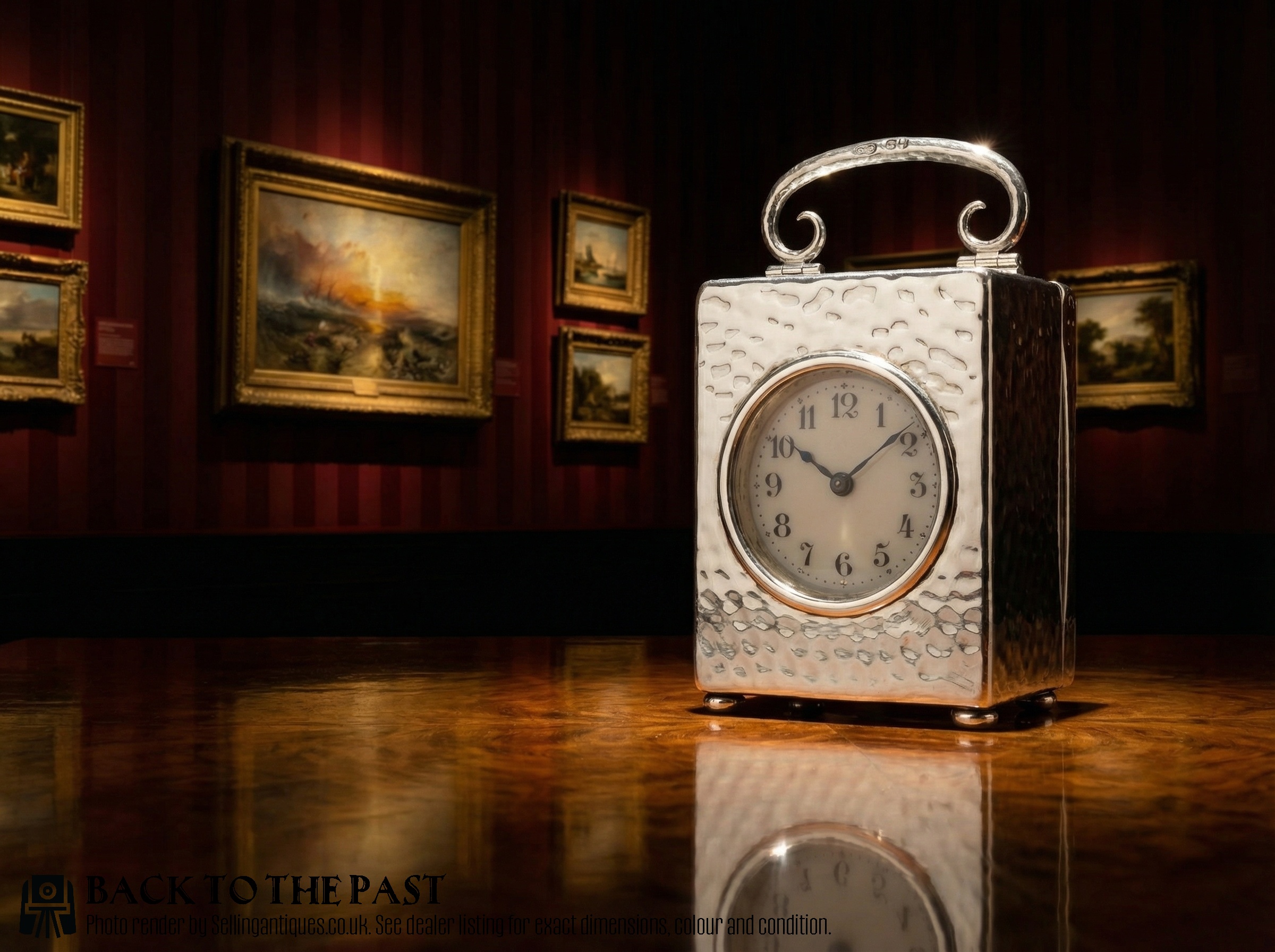
Silver Boudoir Clock
When you search for a silver boudoir clock, you encounter small timepieces designed for bedrooms, desks and travel from the nineteenth and early twentieth centuries. These objects typically take the form of miniature carriage clocks or compact timepieces intended to sit on a bedside surface.
The pieces on this page span the Victorian, Edwardian and Art Deco periods, alongside Belle Epoque and Arts & Crafts examples. You are most likely to meet silver-cased carriage clocks and travel timepieces bearing hallmarks from Birmingham and London, or French movements.
Makers such as William Comyns, J Batson & Son and Henry Matthews appear frequently among these listings. Their creations range from plain sterling silver cases to elaborate chased designs and enamelled surfaces.
What Varies in Quality
The standard of a silver boudoir clock rests on the crispness of the chased decoration and the preservation of any enamel work. Finer examples display sharp, hand-tooled relief on the silver case without softening to the edges.
The inclusion of original fitted travel cases and legible hallmarks indicates a higher grade of preservation. Movement origin, such as French mechanisms housed in British silver cases, also influences the character of the piece.
Silver Boudoir Clock Retail Price Guide 2026
Typical asking prices for silver boudoir clock among the pieces listed under this phrase on Sellingantiques today, from the lower quarter to the upper quarter. They describe what is for sale here now, not the wider market.
Listings for silver boudoir clocks feature materials including tortoiseshell, guilloche enamel, brass and leather alongside sterling silver.
William Comyns·J Batson & Son·Henry Matthews
The Silver Boudoir Clock Glossary
- Guilloche enamel
- Enamel applied over engine-turned metal. This technique creates repeating geometric patterns that show through translucent coloured layers.
- Carriage clock
- A small, spring-driven clock originally designed for travel. They usually feature a rectangular brass or silver frame with glass sides and a carrying handle.
- Hallmark
- An official mark stamped on precious metals. It indicates the standard of silver, the assay office, and often the year of manufacture and maker's mark.
- Chased work
- Metal ornamentation beaten from behind with punches to raise a design in relief. This technique creates textured floral or scroll patterns on the silver case.
- Timepiece
- A clock that tells the time without a striking mechanism. Most small boudoir and travel clocks are timepieces rather than full striking clocks.
Silver Boudoir Clock: Frequently Asked Questions
What is a silver boudoir clock?
A silver boudoir clock is a miniature timepiece housed in a sterling silver case, designed for use in a bedroom or on a desk. These pieces often feature glass panels and decorative chased or enamelled work.
Originating primarily in the nineteenth and early twentieth centuries, they served both a practical purpose for telling time and a decorative function as dressing table accessories.
Were these clocks meant for travel?
Many silver boudoir clocks functioned as travel timepieces as well as stationary desk pieces. Some examples were sold with fitted leather cases to protect them during journeys.
Their compact size and robust silver framing made them suitable for packing into luggage while maintaining accurate time away from home.
How do I identify the date of a silver clock?
Dating relies primarily on the hallmarks stamped into the silver case by assay offices in cities like London and Birmingham. These marks include letter codes indicating the exact year of assay.
Stylistic elements such as Edwardian proportions or Art Deco geometric enamel work also help place the piece within a specific period.
What movements do these clocks use?
These clocks use small spring-driven movements, often of French origin even when housed in British silver cases. They are typically timepieces, meaning they keep time without chiming or striking.
Access to the movement is usually gained through a small rear door behind the dial.