



Sterling Silver Mantel Clock
A sterling silver mantel clock brings the quiet heft of precious metal and the precision of the turn of the century into any room.
Sterling Silver Mantel Clock
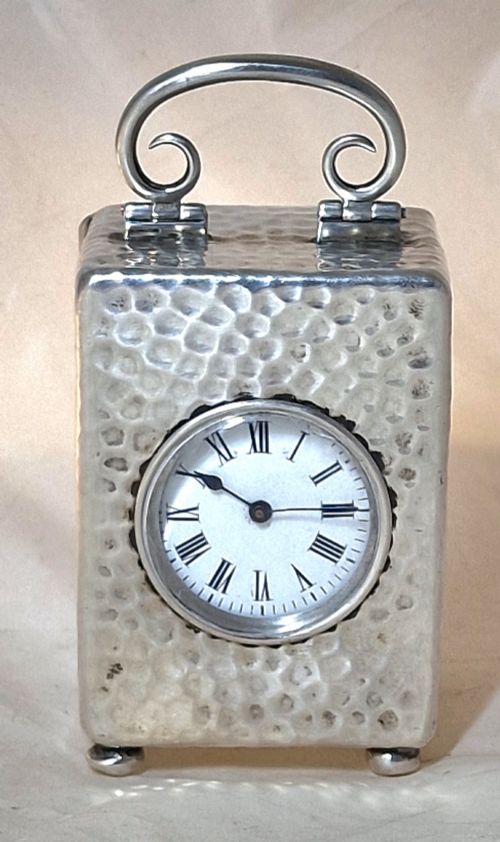
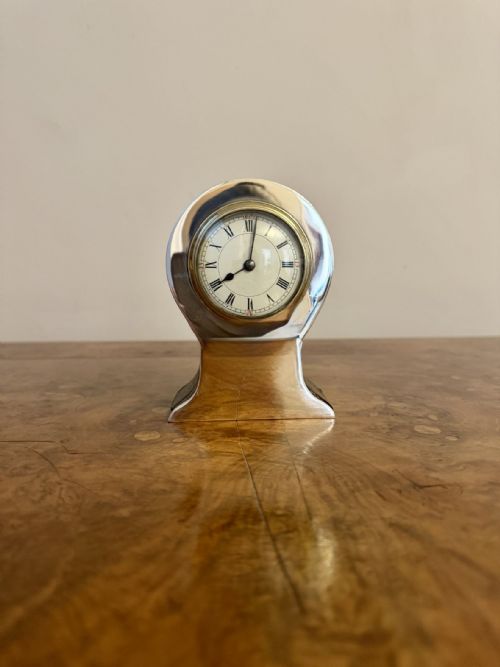
A sterling silver mantel clock is a domestic timekeeper housed in a case of precious metal, predominantly appearing here in the Edwardian style from the late nineteenth and early twentieth centuries. These pieces encompass carriage clocks, boudoir timepieces and fronted mantel clocks made from solid sterling silver or silver over other substrates.
The carriage clock form dominates the selection, frequently presented in miniature proportions alongside larger boudoir iterations. Makers of the period drew upon Art Nouveau and Arts and Crafts aesthetics, incorporating organic curves and hammered surfaces into the silver cases.
Examples from this grouping often feature additional decorative elements such as enamel panels, glass viewing windows and tortoiseshell details. Buyers encounter works associated with known makers like William Comyns, Henry Matthews and Liberty's alongside unmarked domestic timepieces.
How they were made
The cases combine structural metals or wood with sterling silver facades and housings, often utilising glass panels to display the internal mechanics. Artisans worked the silver through hammering, embossing and enamelling, creating floral motifs and sweeping Art Nouveau lines.
Enamel work appears as guilloche or painted floral designs applied directly to the silver surface, requiring careful firing to achieve the coloured finish. Wood and brass frequently serve as internal framing or backing materials to support the heavy silver outer shells.
Sterling Silver Mantel Clock Retail Price Guide 2026
Typical asking prices for sterling silver mantel clock among the pieces listed under this phrase on Sellingantiques today, from the lower quarter to the upper quarter. They describe what is for sale here now, not the wider market.
Several miniature clocks are small enough to sit in the palm of your hand, yet contain fully working mechanical movements.
What varies in quality
Quality rests upon the weight and thickness of the sterling silver case and the sophistication of its decorative execution. Hand-hammered surfaces and intricate enamel panels distinguish superior pieces from plain or mass-produced housings.
The presence of clear hallmarks indicating specific silversmiths and assay offices elevates an item's standing. Refinement in the dial design and the inclusion of complex materials like tortoiseshell mark the upper tiers of the selection.
William Comyns·Henry Matthews·Liberty's London
The Sterling Silver Mantel Clock Glossary
- Sterling silver
- A silver alloy containing 92.5 percent pure silver and 7.5 percent other metals, usually copper, chosen for durability in decorative objects. This composition provides the bright reflective surface seen on Edwardian clock cases.
- Carriage clock
- A small, portable spring-driven clock originally designed for travellers during the nineteenth century. These pieces usually feature a rectangular brass or silver frame fitted with glass panels.
- Guilloche enamel
- A decorative technique where a detailed pattern is engraved into metal and covered with translucent enamel. This process allows light to reflect through the coloured glass layer.
- Hallmark
- An official stamp applied by an assay office to indicate the purity of precious metal and the year of manufacture. These marks confirm the origin and silver standard of the piece.
Sterling Silver Mantel Clock: Frequently Asked Questions
How do I wind a silver carriage clock?
Most carriage clocks of this period use a key inserted into the backplate to wind the mainspring. Care must be taken not to overwind the movement.
Rotating the hands should be done gently in the direction indicated by the maker to protect the delicate escapement.
Were these clocks meant for travel?
While the carriage clock format originates from portable travel clocks, the silver and enamelled versions listed here were primarily intended for stationary use on boudoirs, desks and mantels.
Their delicate silver cases and decorative enamel panels make them less suited for the rigours of actual travel.
What is a boudoir timepiece?
A boudoir timepiece is a small decorative clock designed specifically for private dressing rooms and bedrooms. These clocks prioritise aesthetic charm and compact scale over complex striking mechanisms.
They frequently feature floral enamelling and precious metal fronts suited to intimate interior spaces.
How do I identify an Edwardian silver clock?
Edwardian silver clocks are identified through a combination of hallmarks, stylistic cues and structural forms dating from the reign of Edward VII. The period is marked by lighter, more graceful designs often incorporating Art Nouveau curves.
Assay office stamps and date letters on the silver casing provide precise verification of the manufacturing decade.