



Sterling Silver Travel Timepiece
A sterling silver travel timepiece brings portable precision into daily movement, offering the dependable mechanical heart of a carriage clock in a case made for journeys.
Sterling Silver Travel Timepiece
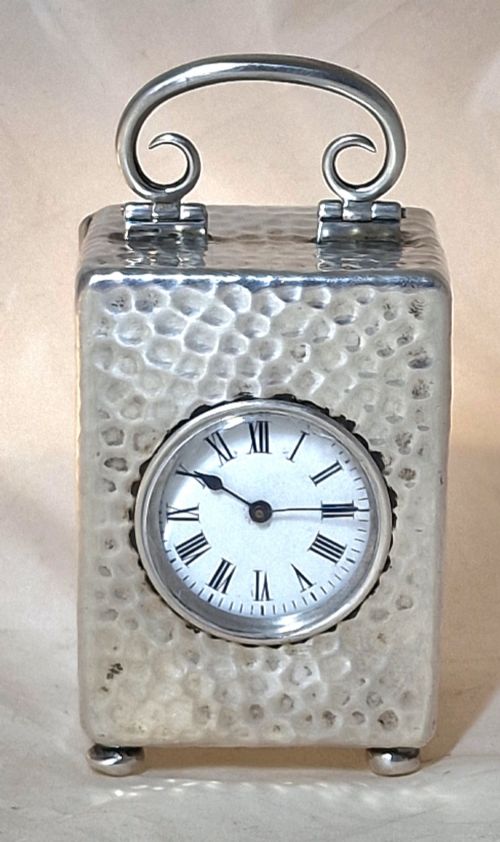
A sterling silver travel timepiece is a portable mechanical clock designed to be carried or set down in temporary quarters, combining utility with precious metal work. The examples seen on this page span the late nineteenth century through the 1930s, encompassing Victorian, Edwardian, Arts and Crafts, and Art Deco design periods.
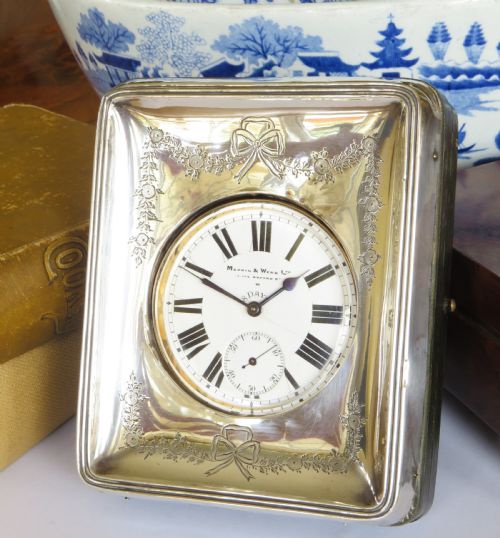
The most frequent form on this page is the miniature silver carriage clock, often accompanied by pocket travel clocks, folding cased travelling clocks, and small boudoir timepieces. These pieces draw on Edwardian and earlier nineteenth century origins, frequently housing movements by makers such as Mappin and Webb or Doxa.
Buyers seeking a sterling silver travel timepiece will find objects ranging from plain silver cases to elaborate examples decorated with blue guilloche enamel or floral enamel. Their survival demonstrates the enduring appeal of portable timekeeping across changing decades of the early twentieth century.
How they were made
Makers constructed these timepieces using sterling silver or silver for the outer cases and folding mounts, often combining them with leather for fitted travel outer shells. Structural support and internal mechanical components utilised brass, whilst viewing windows and dial covers relied upon fitted glass.
Decorative work on the silver cases frequently involved enamel application, including translucent blue guilloche enamel and hand-painted floral enamel motifs. Hallmarking on the silver provided official certification of metal purity, anchoring these portable pieces to specific assay years and locations such as London.
Sterling Silver Travel Timepiece Retail Price Guide 2026
Typical asking prices for sterling silver travel timepiece among the pieces listed under this phrase on Sellingantiques today, from the lower quarter to the upper quarter. They describe what is for sale here now, not the wider market.
Listings on this page span the Edwardian, Victorian, and Art Deco periods, utilising materials including sterling silver, brass, glass, and enamel.
What varies in quality
Quality in a sterling silver travel timepiece is determined by the crispness of the case chasing and the preservation of any enamel work. Pieces featuring undamaged blue guilloche enamel or detailed floral enamel demand closer attention to craftsmanship than plain silver surfaces.
The structural integrity of the silver case and the clarity of the hallmarks also influence the overall standard of the piece. Inclusion of original fitted leather travel cases adds a further layer of completeness to the surviving object.
Mappin and Webb·Doxa
The Sterling Silver Travel Timepiece Glossary
- Sterling silver
- A silver alloy containing ninety-two point five percent pure silver and seven point five percent other metals, typically copper. This standard composition provided the durable body required for portable travel clocks.
- Guilloche enamel
- A decorative technique where intricate geometric patterns are mechanically engraved beneath a translucent enamel layer. This method produced the rich coloured surfaces seen on early twentieth century dials and cases.
- Carriage clock
- A small, spring-driven clock originally designed for transport in horse-drawn carriages. These pieces retained the brass movement and glass panels whilst being housed in protective silver frames.
- Hallmark
- A series of official marks stamped on precious metal items in the United Kingdom. These symbols indicate the metal standard, the assay office, and the exact year of manufacture.
Sterling Silver Travel Timepiece: Frequently Asked Questions
How were travel timepieces used?
These clocks were designed to be packed into luggage or set upon bedside tables during journeys, providing reliable timekeeping away from home.
Their sturdy silver cases and folding leather covers protected the delicate internal gears from the bumps and movements of travel.
What periods do these clocks represent?
The listings span from the late nineteenth century through the Edwardian era and into the Art Deco period of the 1920s and 1930s.
Stylistic shifts move from ornate Victorian and Arts and Crafts detailing to clean geometric lines and vibrant enamel work.
Are these clocks mechanical?
Yes, these portable timepieces rely upon traditional spring-driven mechanical movements rather than modern electronics.
They require regular manual winding to maintain accurate operation of the internal gears and escapement.
How do I identify the date of a piece?
Dating relies upon examining the hallmarks stamped into the silver case, which indicate the specific assay office and year of testing.
Stylistic markers such as the presence of guilloche enamel or specific carriage clock proportions also point toward Edwardian or 1920s manufacture.