




Silver Plated Glass Centrepiece
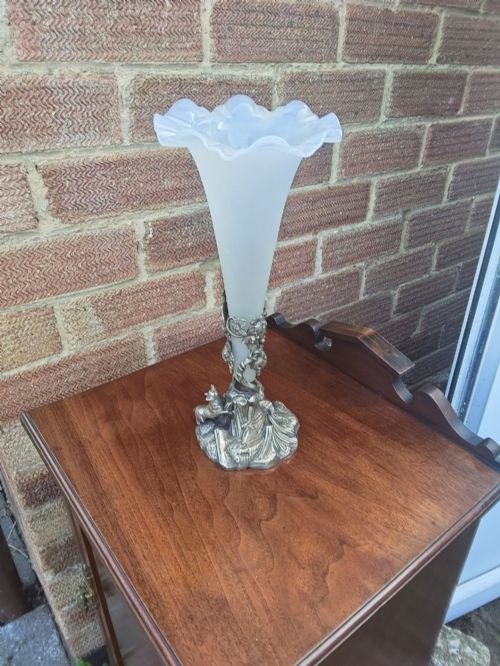
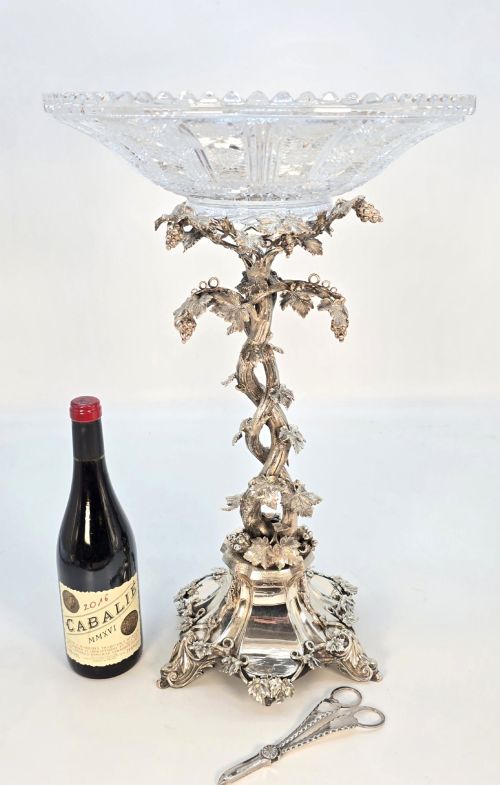
A silver plated glass centrepiece anchors a dining table with a combination of reflective metal and coloured or cut glass.
Silver Plated Glass Centrepiece
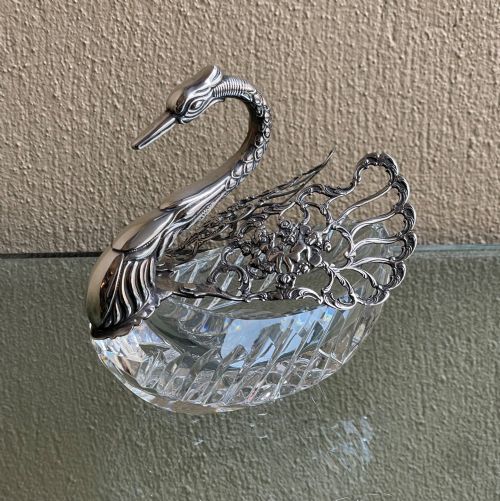
A silver plated glass centrepiece combines a metal framework with a glass dish, bowl, or liner. These items appear across the Victorian, Edwardian, and Art Nouveau periods, taking the form of large table centerpieces, epergnes, and smaller bonbon or sweet dishes.
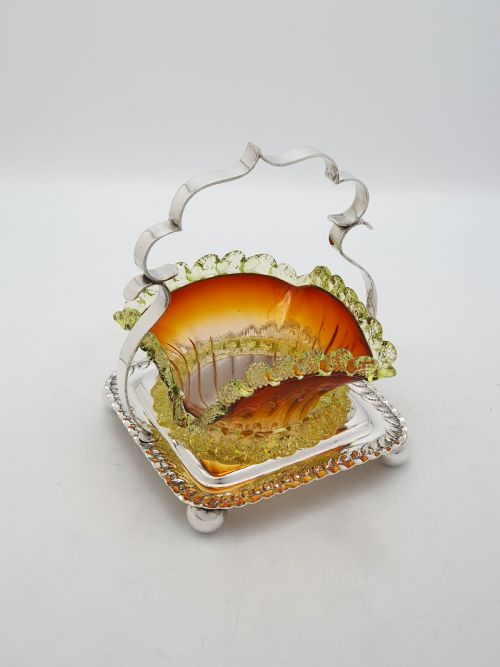
The most common versions met on this page date from the nineteenth and early twentieth centuries, particularly the Victorian and Edwardian eras. They range from simple silver-plated wirework stands holding ruby or vaseline glass bowls to elaborate multi-branch epergnes and nautically themed centrepieces.
Materials and construction
Makers utilised a base white metal or Britannia metal coated in silver through plating techniques, combined with blown, pressed, or cut glass. Metal stands were frequently cast, pierced, or chased with floral, geometric, or figurative motifs.
Glass inserts were shaped by hand, mould-blown, or cut and etched. Coloured variants such as cranberry, vaseline, opal, and amber glass relied on specific mineral additives during the melting process to achieve their distinctive hues.
Listings demonstrate a strong presence of Victorian and Edwardian examples, featuring materials ranging from vaseline glass and cut crystal to silver plate.
Distinguishing quality in design and execution
Quality rests in the weight and thickness of the silver plate relative to the underlying metal, alongside the depth and crispness of the chasing or piercing. Superior examples exhibit substantial metal mounts that hold complex glass vessels securely without distortion.
The glass component itself dictates the standard of the piece, with hand-cut crystal, deep wheel-engraving, and vibrant coloured glass liners representing higher manufacturing effort than plain pressed glass. Maker attribution to notable firms also influences the standing of an item.
Walker & Hall·WMF·James Dixon·Deykin & Sons·Wade Wingfield Wilkins·Christofle et Cie
The Silver Plated Glass Centrepiece Glossary
- Centrepiece
- A decorative table ornament designed to sit in the middle of a dining or display surface. They often take the form of elevated bowls, baskets, or multi-tiered epergnes.
- Silver Plate
- A thin layer of silver bonded to a base metal such as copper or white metal. It allowed manufacturers to produce vessels with the appearance of solid silver at a lower cost.
- Epergne
- An ornamental centrepiece featuring a central basket or bowl surrounded by multiple smaller hanging arms or trumpets for flowers and fruit. They are typically constructed from glass combined with metal mounts.
- Cruet Set
- A table stand holding multiple bottles, cruets, or jars for condiments and sauces. These sets utilise similar silver-plated frames and glass bottle combinations as table centrepieces.
Silver Plated Glass Centrepiece: Frequently Asked Questions
What is a silver plated glass centrepiece?
A silver plated glass centrepiece is an ornamental tableware item featuring a silver-plated metal stand combined with a glass bowl, dish, or liner. These pieces were used to display fruit, flowers, or sweetmeats on dining tables.
They bridge the gap between functional tableware and decorative sculpture. The combination of reflective silver surfaces and coloured or cut glass created dramatic centrepieces for formal dining.
How were they used historically?
Hosts placed these centrepieces in the middle of dining tables during formal meals. Epergnes held flowers in their upper trumpets and fruit in the lower basins, while simpler bowls served sweets or desserts.
As dining habits evolved through the Victorian and Edwardian periods, these objects became status symbols for displaying wealth and taste. They were often matched with cruet sets or sweet dishes in a unified table service.
How do I date these pieces?
Dating relies on stylistic clues, manufacturing techniques, and maker marks stamped on the metal mounts. Victorian pieces often display heavy cast ornamentation, while Art Nouveau examples feature fluid, organic lines and stylized figures.
Changes in glass colour preferences also help narrow the period. Vaseline, cranberry, and opaline glass were particularly popular during the late nineteenth century, whereas cleaner geometric lines emerged by the Edwardian era.
How do I care for silver plated glass?
Care requires gentle cleaning of both the metal and the glass components separately. The silver plate should be wiped with a soft cloth and a dedicated silver polish, avoiding abrasive pads that can wear away the thin silver layer.
Glass liners can be washed in warm soapy water. Care must be taken with antique glass, particularly pieces with delicate frilled rims or applied trailing, which can be vulnerable to thermal shock.