


Silver Plated Condiment Dishes
Silver plated condiment dishes bring practical elegance to the table, pairing metal frames with coloured or cut glass for sauces, salts and preserves.
Silver Plated Condiment Dishes
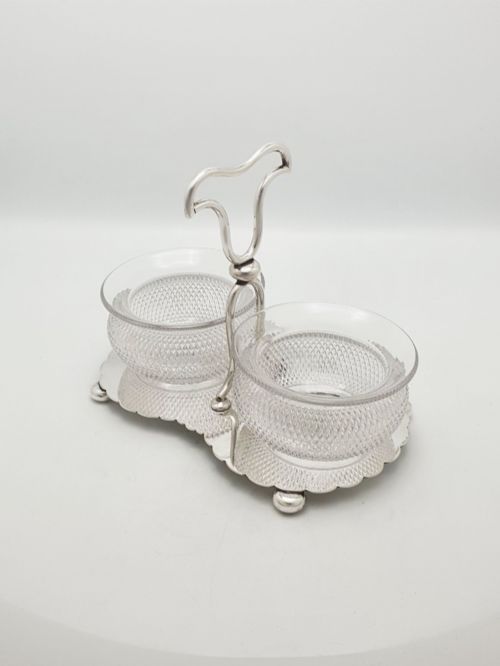
Silver plated condiment dishes encompass a diverse group of tableware designed for holding preserves, sauces, salts, and relishes. These table accessories range from single jam pots with spoons to elaborate stands carrying twin glass bowls.
Edwardian and Victorian pieces dominate the selection, often featuring cranberry glass inserts or delicate metal frames. Later examples stretch into Art Deco and Scandinavian Modern designs, introducing geometric lines and utilitarian forms.
Buyers encounter everything from open salt cellars with cobalt liners to intricate strawberry sets and relish caddies. Each piece reflects the formal dining habits of the nineteenth and twentieth centuries.
How They Were Made
Manufacturers utilised electroplated nickel silver as the primary base metal for the frames, mounts, and stands. This technique allowed makers to apply a durable layer of silver over a stable core.
Glass components were blown, moulded, or cut to fit the metal housings precisely. Many vessels incorporated coloured glass, such as cranberry or cobalt, alongside clear cut glass.
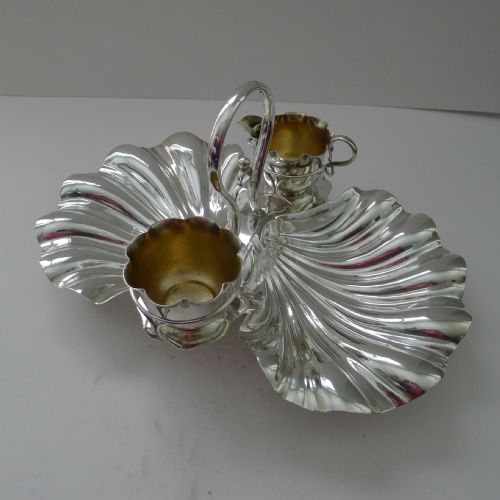
Specialist firms added interior gold wash to selected salt cellars and sauce dishes to protect the metal from corrosive salts and vinegars.
Materials combine electroplated nickel silver with cut glass, cranberry glass, cobalt glass, and occasional gold wash interiors.
What Varies in Quality
The sophistication of the metalwork and the craftsmanship of the glass liners determine the standing of individual pieces. Heavy gauge silver plate and intricately cast mounts indicate superior workshop production.
The survival of original coloured glass inserts, particularly matched pairs or sets with matching spoons, elevates a piece. Replacement liners or missing spoons alter the integrity of the ensemble.
Design attribution to known makers or notable designers adds a distinct layer of distinction to standard serving vessels.
Daniel Arter·Roberts and Belk·WMF
The Silver Plated Condiment Dishes Glossary
- Electroplated nickel silver
- A base metal alloy of copper, nickel, and zinc coated with a thin layer of pure silver through an electrolytic process. This method became the standard for quality tableware production from the mid-nineteenth century onwards.
- Cranberry glass
- A rich pinkish-red glass produced by adding gold chloride to the molten batch. It appears frequently in preserve dishes and jam pots from the Victorian and Edwardian periods.
- Salt cellar
- A small open bowl used to hold loose salt at the dining table before the invention of the spring-loaded shaker. They often feature blue cobalt glass liners to contrast with the silver frame.
- Sweetmeat dish
- A small shallow vessel intended for serving confectionery, nuts, or preserved fruits. These pieces often exhibit decorative pierced work or figural handles.
- Jugendstil
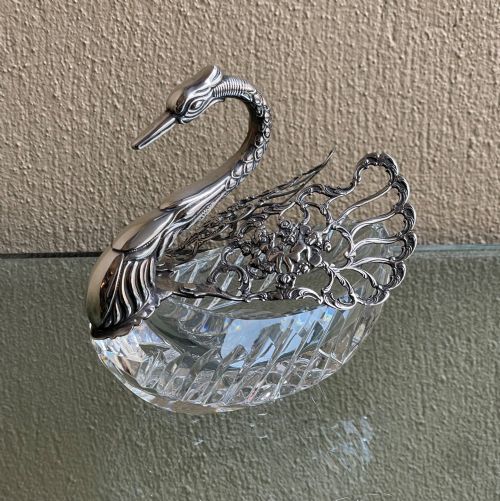
- The continental European manifestation of Art Nouveau, characterised by flowing organic lines and stylised natural motifs. German firms utilised this aesthetic heavily in tableware around the turn of the twentieth century.
Silver Plated Condiment Dishes: Frequently Asked Questions
What were silver plated condiment dishes used for?
These dishes held preserves, jams, relishes, sauces, and salt during formal dining services.
They allowed hosts to present various table condiments in dedicated glass vessels set within decorative metal frames.
How do I date an Edwardian condiment stand?
Edwardian pieces typically date between 1901 and 1910, often showing transitional styles between Victorian ornamentation and cleaner Edwardian tastes.
Look for hallmarks, registration numbers, and characteristic glass colours like cranberry within the listings.
Are the glass liners usually original?
Many surviving pieces retain their original blown or moulded glass inserts, which were specifically fitted to the metal stands.
Coloured glass liners in cobalt or cranberry frequently match the period of the outer silver plated frame.
How should I clean silver plated tableware?
Use a non-abrasive silver polish and a soft cloth to maintain the shine of the plated surface without wearing through the silver layer.
Wash glass liners separately in warm soapy water and dry them thoroughly before placing them back into the metal stands.