



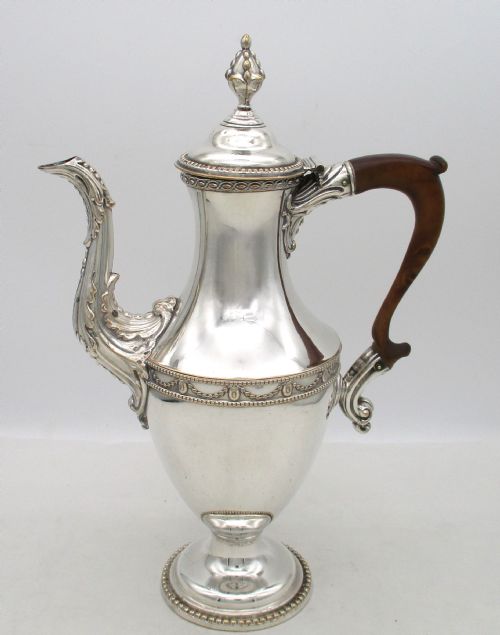
Silver Plated Coffee Jug
A silver plated coffee jug brings the elegance of formal hospitality to the table through gleaming metalwork.
Silver Plated Coffee Jug
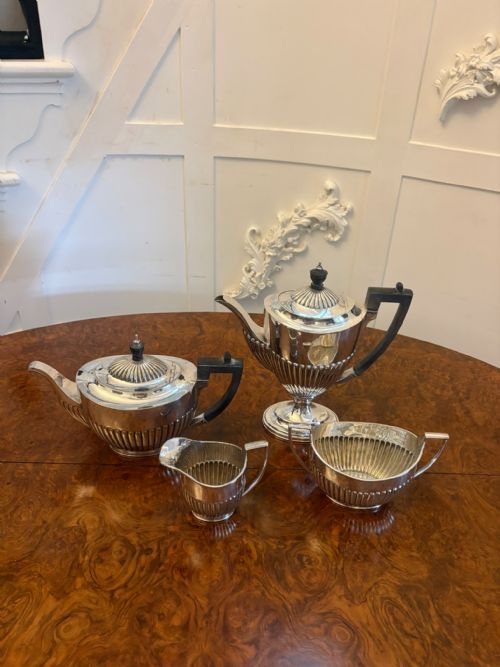
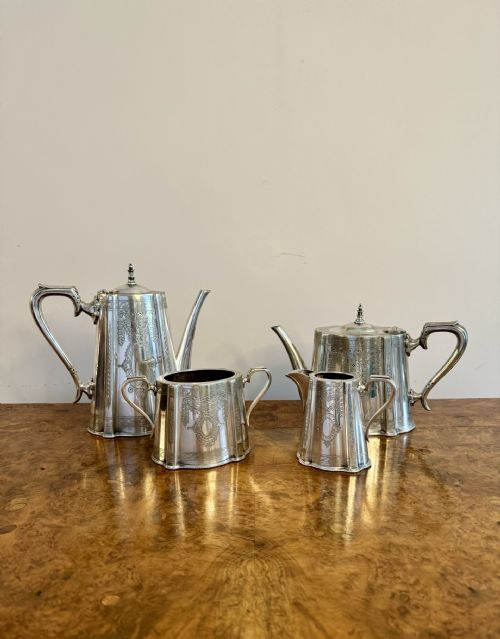
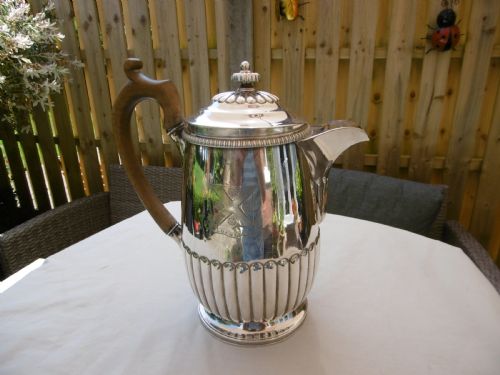
When you search for a silver plated coffee jug, you encounter tall vessels designed for serving hot brew during formal meals. These range from standalone pots originating in the eighteenth century to pieces included within larger Edwardian and Victorian tea and coffee sets.
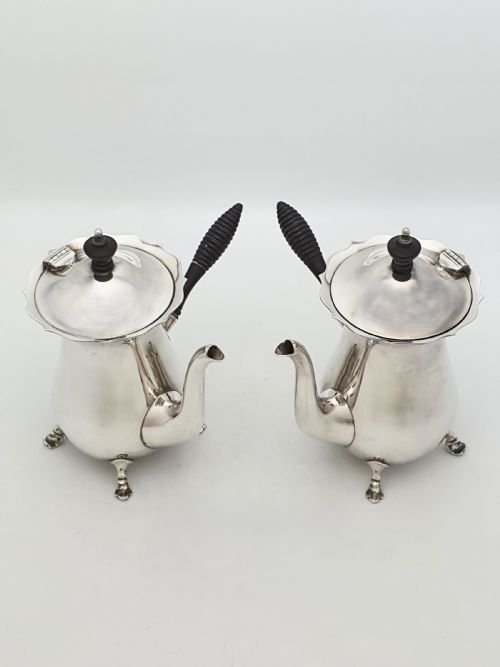
The selection includes early Old Sheffield plate examples alongside electroplated nickel silver items from later decades. You will also find matching café au lait pots and multi-piece services bearing traditional crests and ornate period detailing.
How they were made
Early items utilise Old Sheffield plate, a technique fusing a thin sheet of silver to a thicker copper core. Later production shifts to electroplated nickel silver, applying a silver coating via an electrical current over a base metal alloy.
Handles and insulators frequently incorporate contrasting materials such as wood, ebony, ebonised wood or bone to prevent heat transfer during use. Artisans shaped the bodies through hammering and spinning, adding chased or engraved crests by hand.
Listings feature items spanning the eighteenth century through the Edwardian period, utilising silver plate, copper, and ebony.
What varies in quality
The standard of a silver plated coffee jug depends upon the crispness of its chased decoration and the integrity of the underlying metal. Pieces displaying deep, hand-engraved crests and well-defined rococo revival motifs command greater attention than plain, mass-produced counterparts.
Weight and balance also dictate distinction, with superior examples offering a substantial feel in the hand. The quality of the handle insulation and the snugness of the hinged lid further separate standard vessels from works by prominent makers.
Walker and Hall·Matthew Boulton·John Hoyland·Boardman Glossop and Co·Elkington·WMF Germany
The Silver Plated Coffee Jug Glossary
- Old Sheffield plate
- An early method of fusing silver to a copper base before rolling them into sheets together. This technique often reveals a faint copper line along cut edges.
- Electroplated nickel silver
- A nineteenth-century process using an electric current to coat a nickel alloy base with a layer of pure silver. This innovation largely replaced the older fused plating method.
- Café au lait pots
- Matching pairs of vessels designed to pour hot coffee and hot milk simultaneously into separate cups. They appear frequently in Edwardian dining services.
- Biggin
- A tall pot equipped with a wire basket or bag for holding coffee grounds during brewing. These items serve as precursors to modern filter systems.
- Crest
- An heraldic badge engraved onto the body of a vessel to denote ownership by a specific family. These marks often allow researchers to trace the original provenance.
Silver Plated Coffee Jug: Frequently Asked Questions
How do I clean a silver plated coffee jug?
Wash the vessel gently in warm, soapy water using a soft cloth rather than an abrasive sponge. Avoid harsh chemical dips that strip away the remaining silver layer.
Dry the metal immediately with a lint-free cloth to prevent water spots. Apply a specialised silver polish only when necessary to maintain the shine without wearing down the plating.
What is the difference between Old Sheffield plate and electroplate?
Old Sheffield plate involves fusing a sheet of silver onto a copper core through heat and pressure. Examining the edges often reveals a subtle line where the copper shows through.
Electroplate uses an electric current to bond silver particles to a base metal like nickel silver. This later technique produces a more uniform coating without exposed copper seams.
Why do some pots have wooden handles?
Wooden or bone insulators prevent heat from transferring from the boiling coffee to the handle during pouring. Ebony and ebonised wood were chosen for their durability and dark colour.
These natural materials complement the gleaming silver surface. They also provide a comfortable grip for the user.