




Silver Plated Chargers
Silver plated chargers are large decorative plates and display dishes bringing weight and metallic polish to a table or wall.
Silver Plated Chargers
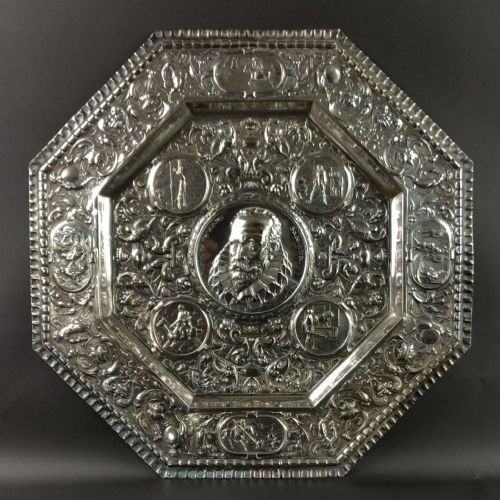
Silver plated chargers encompass large decorative platters, wall chargers, and display dishes intended for formal dining or architectural display. Buyers searching for silver plated chargers encounter nineteenth-century pieces alongside older pewter formats and detailed inlaid metalwork from diverse global traditions.
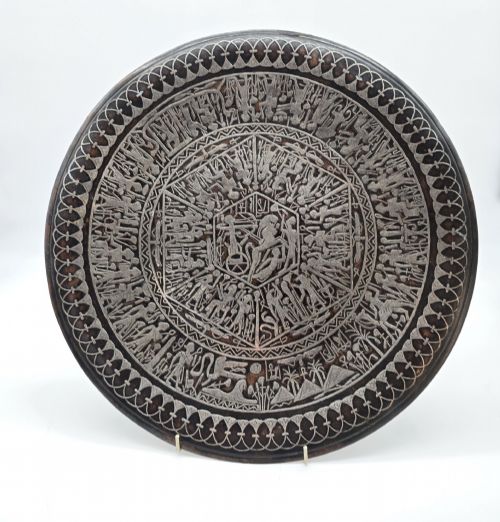
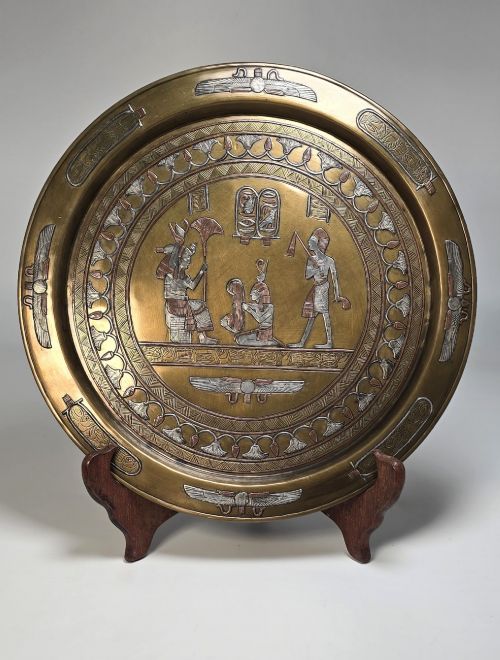
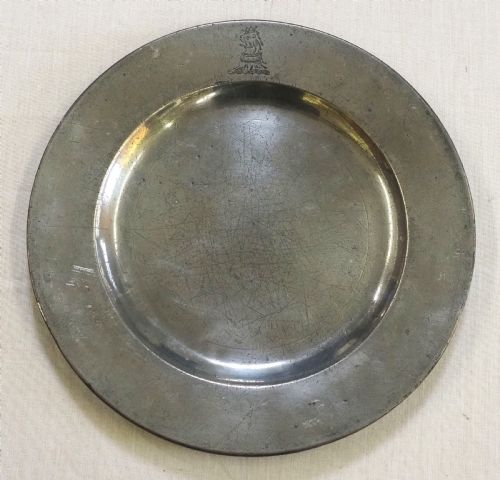
The selection ranges from heavy nineteenth-century plated bronze platters and floral designs to complex Egyptian Cairo Ware and Middle Eastern copper dishes. Makers from different periods utilised base metals such as copper, bronze, and pewter as the foundation for silver plating, repoussé decoration, or metal inlay.
Materials and construction
Many chargers utilise a base of copper, bronze, or pewter, shaped through hammering, casting, or spinning before receiving a layer of silver via plating or electrotype methods. Artisans often applied repoussé techniques to hammer figural scenes, floral motifs, or crests from the reverse side into relief.
Surface enrichment frequently included silver and gold inlay, patination, or specific plating processes such as Old Sheffield Plate. These construction methods defined the visual weight and durability of each individual platter.
Listings feature items spanning from the seventeenth century through the Georgian and Victorian eras up to the nineteen-twenties, incorporating pewter, silver plate, copper, brass, and bronze.
Judging quality in metal chargers
Quality rests upon the crispness of the repoussé work, the integrity of the base metal, and the preservation of the silver plating or metal inlay. Hand-beaten surfaces and deep relief chasing indicate superior artisan skill compared to simpler stamped alternatives.
The weight of the metal and the precision of historical figural depictions or crests separate standard domestic items from exhibition pieces. Original patination and intact plating without excessive wear distinguish superior examples.
James Spackman·Matthew Boulton·Elkington and Co·Samuel Hennell·Thomas Templeman·Thomas Powell·S Duncomb·WMF
The Silver Plated Chargers Glossary
- Charger
- A large decorative plate or platter traditionally used for ceremonial dining or placed beneath smaller course plates. These items frequently double as wall plaques.
- Repoussé
- A metalworking technique where the artisan hammers the design from the reverse side to form a raised relief on the front. This method creates dimensional portraits and floral patterns.
- Electrotype
- A replica or object formed through the electrodeposition of metal onto a mould. This nineteenth-century process allowed the faithful reproduction of intricate historical metalwork.
- Cairo Ware
- Metalware originating from Egypt during the late nineteenth and early twentieth centuries, characterised by intricate silver and copper inlay on brass or bronze surfaces.
- Old Sheffield Plate
- An early composite material made by fusing a thin sheet of silver to a thicker copper ingot. This technique preceded modern electroplating.
Silver Plated Chargers: Frequently Asked Questions
What is a silver plated charger used for?
These large pieces function primarily as decorative platters, centrepieces, or wall chargers rather than everyday tableware.
Historically they served formal dining purposes or monumental display on sideboards and walls.
How do I clean silver plated chargers?
Careful dusting with a soft cloth preserves the patination and protects the underlying silver plate or metal inlay.
Harsh chemical dips damage historical plating and should be avoided in favour of gentle conservation.
How can I tell the period of a charger?
Dating relies upon stylistic markers such as Egyptian Revival motifs, Arts and Crafts hand-beaten textures, or Georgian hallmarks.
Base materials like old pewter or electrotype metal also indicate specific manufacturing eras.
What is the difference between a charger and a plate?
Chargers are significantly larger than standard dining plates, typically exceeding twelve inches in diameter.
They act as architectural or decorative foundations rather than functional vessels for food.