


Large Silver Chargers
Large silver chargers are commanding display pieces that anchor a room, appearing across periods from the seventeenth century through to the late nineteenth century.
Large Silver Chargers
Large silver chargers stand as substantial decorative plates and wall hanging platters designed to command attention in a room. When you search for large silver chargers, you meet heavy metal work alongside unexpected materials treated with silver finishes or metallic plating.
The pieces on this page span several centuries, reaching from the seventeenth century through the Georgian and Victorian eras up to the end of the nineteenth century. Forms range from plain rim plates to highly ornate repoussé wall plaques and inlaid bronze specimens.
Origins and materials vary widely, encompassing English tavern and dining wares alongside Egyptian Cairo Ware and Arts and Crafts metalwork. You encounter items meant for formal display as well as domestic platters adapted over time for wall decoration.
How they were made
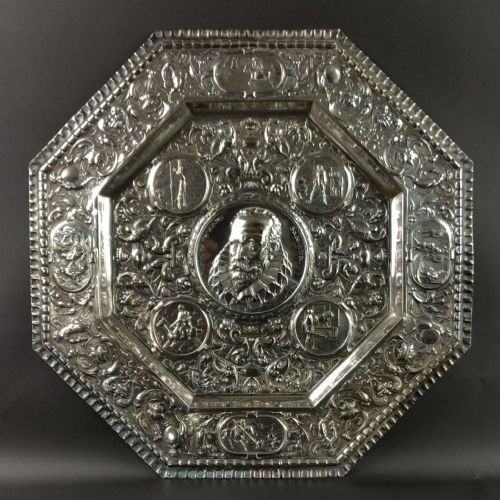
Maker techniques rely heavily on hammering, beating, and repoussé work to push designs outward from the reverse of the metal sheet. Pewter and bronze form the sturdy base for many examples, finished with silver plating or intricate inlaid copper details.
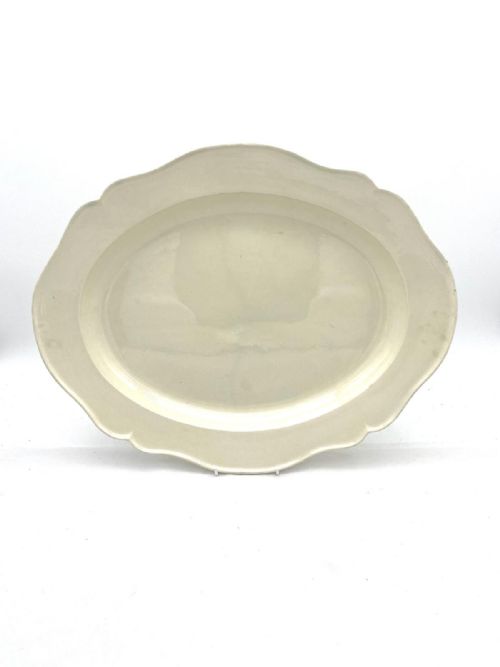
Creamware and earthenware bodies offer an alternative substrate, surface-treated to mimic metallic platters of the period. Artisans combined traditional casting with meticulous hand chasing to achieve deeply textured pictorial scenes and crisp decorative borders.
Miguel De Cervantes makes a surprise appearance immortalised in repoussé metalwork.
What varies in quality
Quality rests in the crispness of the hand-hammered relief and the depth of the repoussé work across the well of the plate. Superior examples display confident, unhesitating tool marks and robust gauges of metal that hold their flat form without buckling.
The sophistication of the surface decoration separates standard domestic utility platters from ambitious artistic statements. Finishes that retain integrated metal inlays or sharply defined narrative portraits represent the upper tier of production.
THOMAS TEMPLEMAN·THOMAS POWELL·S DUNCOMB
The Large Silver Chargers Glossary
- Charger
- A large broad plate, historically used for serving food at grand banquets or placed beneath smaller courses. These items frequently transition to wall hanging display pieces.
- Repoussé
- A metalworking technique where the artisan hammers the design from the reverse side to create a raised image on the front. This creates strong tactile relief across the rim and well.
- Creamware
- A refined earthenware developed in the eighteenth century with a pale yellowish glaze. Examples occasionally mimic metallic silver chargers through specialised glazing and finishing.
- Cairo Ware
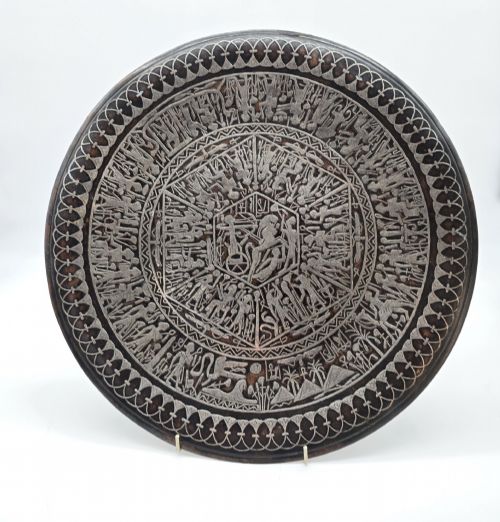
- Nineteenth-century metalwork originating from Egypt, typically featuring brass or bronze inlaid with silver and copper calligraphy or geometric patterns. These items were widely collected during the Egyptian Revival.
- Triple reeded
- A style of rim moulding defined by three parallel raised concentric rings. This feature appears frequently on seventeenth and eighteenth century English metal plates.
Large Silver Chargers: Frequently Asked Questions
Were large silver chargers used for dining?
These large plates originally served at formal banquets or sat beneath smaller dishes to anchor the table setting. Over time, many transitioned to decorative wall hangings.
Heavier specimens made of solid metal provided a stable base for grand feasts before finding permanent homes on dining room walls.
How do I hang a heavy metal charger safely?
Displaying large metal plates requires adjustable spring-loaded wall hangers designed to bear significant weight without scratching the rim. Ensure the fixing secures directly into wall studs.
Heavier bronze and pewter pieces need robust support to prevent accidental slips from the wall display.
How can I tell a seventeenth century charger apart from a Victorian one?
Early pieces from the seventeenth and eighteenth centuries rely on plain rims, hammer marks, and maker hallmarks associated with traditional pewterers. They prioritise simple form over busy surface engraving.
Victorian and later items often embrace revival styles, incorporating dense floral repoussé work, intricate inlays, or Egyptian motifs that reflect nineteenth-century taste.
Why are some chargers made of pewter or creamware instead of solid silver?
Solid silver was prohibitively expensive for everyday dining, so makers utilised affordable alternatives like pewter, copper, and creamware. Plating and specialised glazes allowed craftsmen to achieve the desired metallic sheen at a lower cost.
These alternative materials offered greater durability for daily use while maintaining the visual weight of precious metal.