


Silver Display Platters
Silver display platters are substantial ornamental vessels designed for sideboard presentation, ranging from Georgian pewter chargers to heavy Victorian silver plated trays.
Silver Display Platters
Silver display platters encompass large decorative chargers, trays, and salvers produced across several centuries. These pieces function primarily as visual centerpieces rather than utilitarian tableware, often displayed upright on sideboards or mounted to walls.
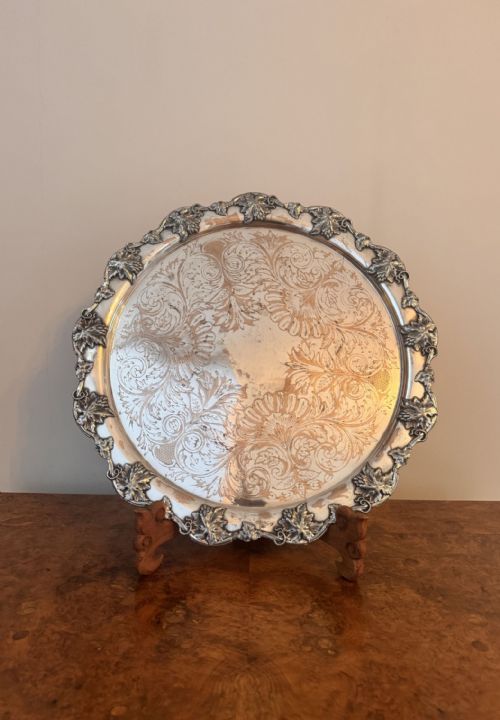
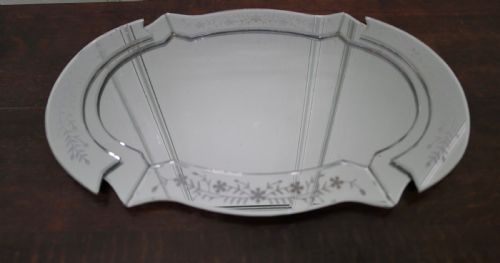
The selection on this page draws heavily from the nineteenth century alongside earlier examples, featuring round charger dishes and wine trays. Forms span plain rim pewter vessels, heavy silver plated bronze tazzas, and cut glass mirror trays.
Stylistic influences range from English Restoration and Georgian periods through to Victorian Renaissance Revival and Art Deco designs. Buyers encounter both utilitarian serving dishes adapted for display and highly ornate ceremonial platters.
How they were made
Manufacture relies on base metals, pewter, and bronze finished with silver plating or electrotype techniques. Many earlier vessels utilise hammered pewter, whilst later nineteenth-century examples employ heavy silver plating over copper or bronze cores.
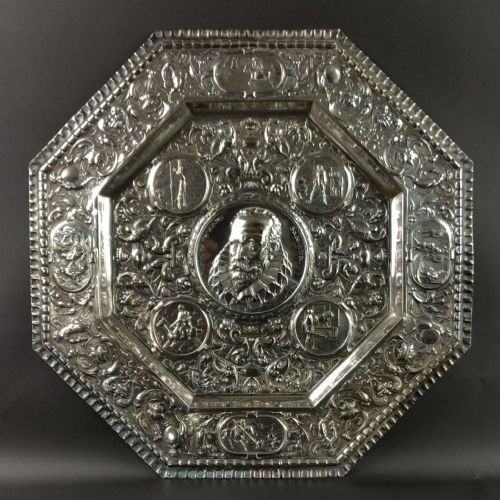
Decoration involves repoussé work, floral embossing, and detailed figural battle scenes chased into the metal surface. Glass and mirror elements appear in later Art Deco items, integrated alongside cut crystal and silvered metal frames.
Some nineteenth-century chargers depict Miguel De Cervantes, bringing a touch of literary drama straight to the sideboard.
What varies in quality
Quality rests upon the depth and crispness of the hand-chased relief work and the thickness of the original plating. Heavy gauge metal retains structural integrity better over centuries and provides a more substantial weight in the hand.
The clarity of makers' marks and touchmarks on pewter and silver items distinguishes standard production from superior workshop output. Artistic execution in figural depictions, such as classical scenes or literary portraits, separates ordinary platters from exceptional pieces.
Thomas Templeman of London·Thomas Powell·S Duncomb
The Silver Display Platters Glossary
- Charger
- A large ornamental dish or plate, traditionally placed under a course or displayed upright on a sideboard. These substantial pieces form the core of early metalwork collections.
- Repoussé
- A metalworking technique where the artisan hammers the design from the reverse side to create a raised relief on the front. This method defines the decorative surface of many nineteenth-century chargers.
- EPNS
- Electroplated Nickel Silver, a common base metal composition introduced in the nineteenth century. It provides the bright appearance of solid silver at a different production cost.
- Tazza
- A small, stemmed ornamental cup or flat bowl elevated on a pedestal base. These items often feature heavy silver plating over bronze.
Silver Display Platters: Frequently Asked Questions
What is a charger dish?
A charger dish is a large plate or platter measuring significantly more than standard dining ware. They were historically utilised for grand ceremonial dining or as a decorative base beneath smaller courses.
Over time, these pieces shifted from the dining table to sideboard display. Their generous surface area allowed craftsmen to showcase intricate repoussé decoration and historical scenes.
How do I display antique platters?
Antique platters can be displayed upright on sideboards using sturdy plate stands to support their substantial weight. Large chargers with adequate hanging provisions also suit wall mounting.
Placement should avoid direct sunlight and excessive humidity to protect metal surfaces and silver plating. Rotation and gentle dusting help maintain the finish over time.
How do I tell pewter from silver plate?
Pewter exhibits a softer, dark grey matte finish characteristic of tin alloy compositions. It lacks the bright reflective sheen associated with silver plating.
Silver plated items display a white metal lustre that may reveal the underlying base metal where wear has occurred. Touchmarks on pewter also differ entirely from the plating stamps found on later wares.
Are these platters safe for food?
These antique platters serve primarily as decorative objects rather than functional tableware. Older pewter and plated items may contain trace metals or show historical wear unsuited to modern culinary use.
Display and visual appreciation remain the intended purpose for these historical vessels. Cleaning should involve non-abrasive methods appropriate for historic metalwork.