
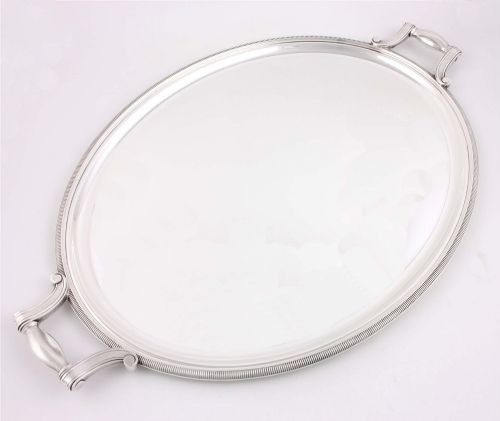


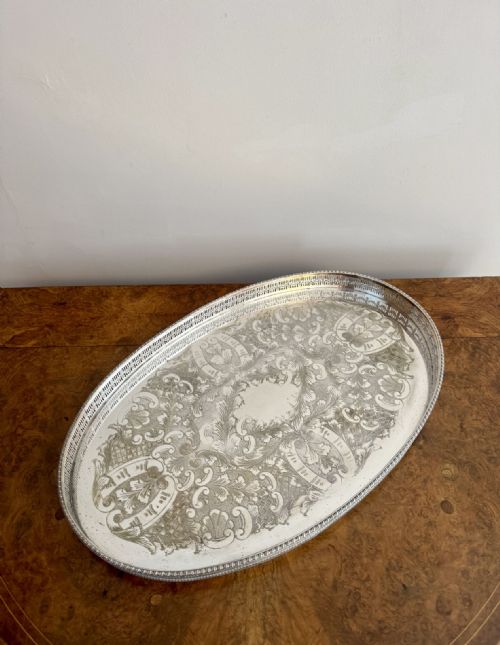

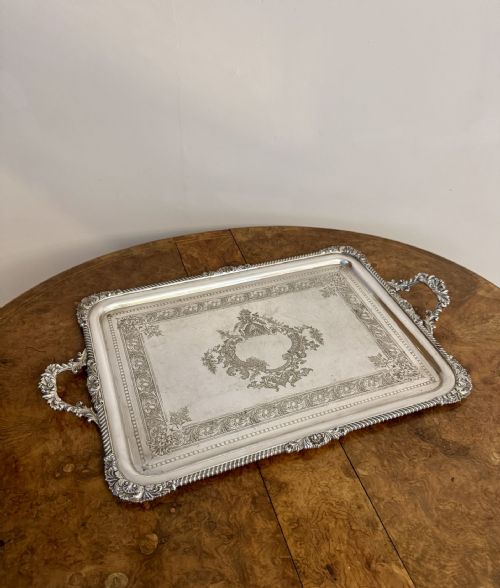
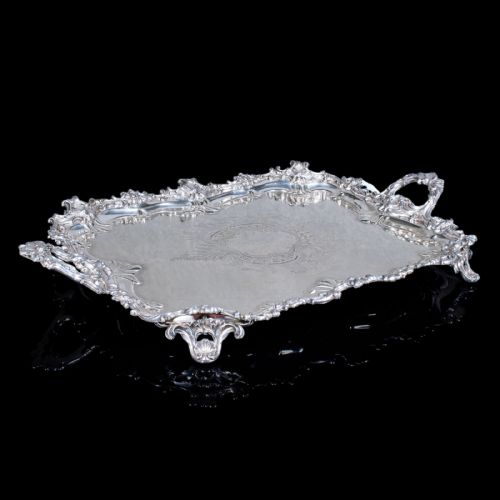
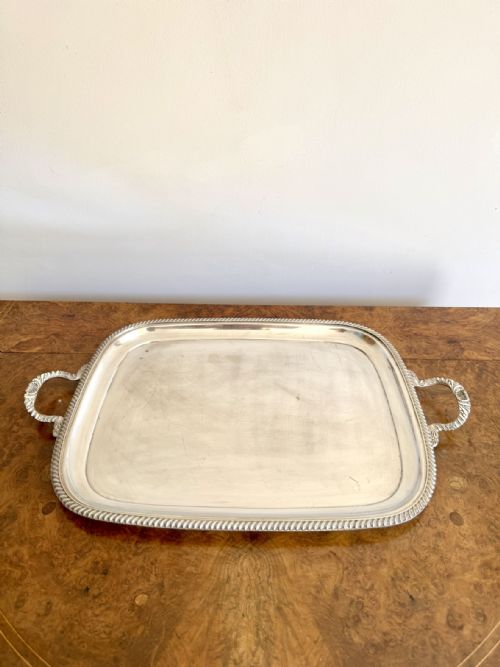


Silver Plated Butler Tray
When you search for a silver plated butler tray, you seek a versatile serving piece that bridges domestic utility and formal display.
Silver Plated Butler Tray
A silver plated butler tray serves as a functional centrepiece for drinks, tea, and formal presentation in domestic spaces.
The selections span from the nineteenth century into the mid-twentieth century, encompassing Victorian, Edwardian, and Art Deco periods.
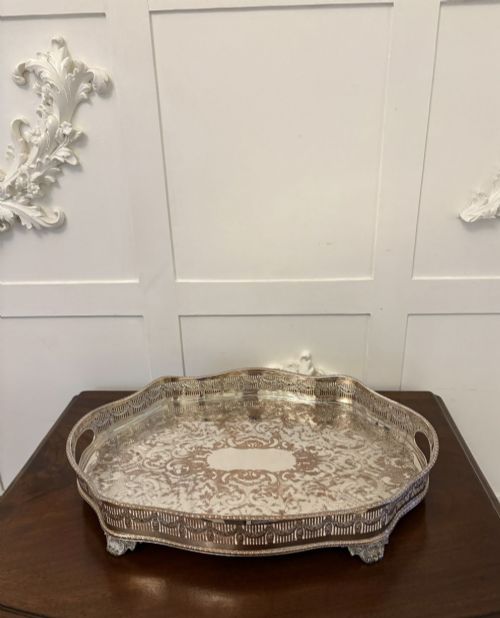
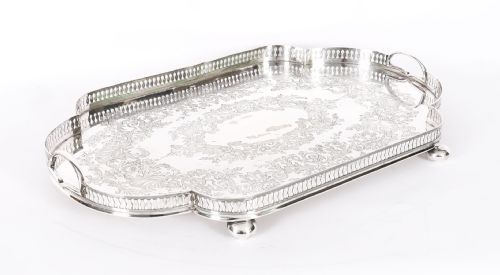
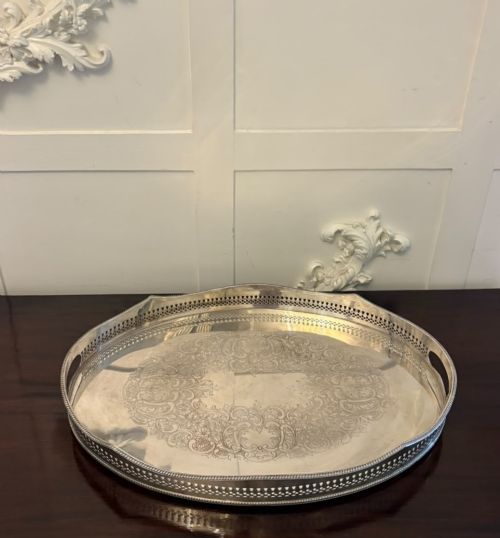
You will encounter flat engraved platters alongside raised gallery trays featuring pierced metalwork or wooden bases.
Materials and Construction Methods
Manufacturers built these pieces using a base metal such as nickel silver or electroplated nickel silver, coated with a layer of silver.
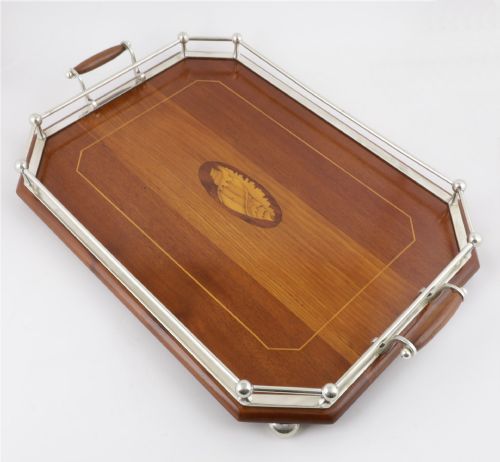
Many examples integrate timber elements, incorporating mahogany, oak, or ebonised wood alongside metal handles and galleries.
Workshops applied techniques including hand engraving, embossing, and shell inlay to decorate the surfaces.
Makers occasionally fashioned miniature cruet sets shaped like tiny butler trays to amuse Victorian diners.
Distinctions in Quality and Craft
The calibre of a piece rests upon the crispness of the engraved or embossed decoration and the structural integrity of the gallery walls.
Heavier base metals and substantial silver plating distinguish substantial service pieces from lighter domestic variants.
The integration of timber bases with metal mounts requires precise joinery that survives centuries of handling.
James Deakin·Mappin & Webb·Christofle·Hukin & Heath·J B Chatterley & Sons·Asprey·Atkin Brothers·Lee & Wigfull·J Hardy·Elkington & Co
The Silver Plated Butler Tray Glossary
- EPNS
- Electroplated nickel silver. This designation indicates a base of nickel alloy coated with a layer of silver through electrolysis.
- Gallery tray
- A serving tray featuring an elevated pierced or solid rim around the perimeter. This architectural border keeps glassware secure during transit.
- Sheffield plate
- An early method of fusing a thin sheet of silver to a thicker copper core. Makers utilised this technique before modern electroplating became standard.
- Reticulated
- Patterned with openwork or net-like piercing. This decorative technique lightens the visual weight of heavy metal rims.
- Salver
- A flat serving tray, typically raised on small feet. These pieces historically held drinking vessels presented to guests.
Silver Plated Butler Tray: Frequently Asked Questions
How do I clean a silver plated tray?
Use a soft cloth and a specialised silver polish designed for plated items to preserve the metallic coating.
Avoid abrasive cleaners and harsh scrubbing brushes that can wear away the thin silver layer over time.
Were these trays used for carrying drinks?
Victorian and Edwardian households utilised these trays to transport decanters, glasses, and tea services from room to room.
Sturdy handles and raised galleries specifically aided the safe conveyance of heavy glassware.
How can I date an antique tray?
Examine the style of engraving, the form of the gallery, and any maker marks stamped into the reverse or rim.
Victorian pieces often display heavier cast mounts, while Edwardian and Art Deco examples favour cleaner geometric lines.
Can I use an antique tray daily?
These serving pieces adapt well to modern interior styling as cocktail displays on sideboards or coffee tables.
Regular careful use maintains the polish of the metal without harming the historic structure.