


Silver Plate Decanter Stand
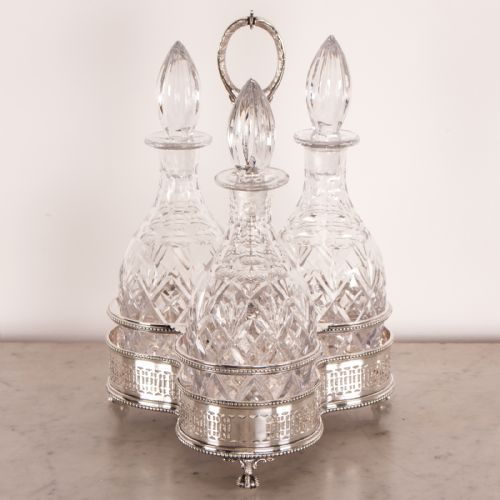
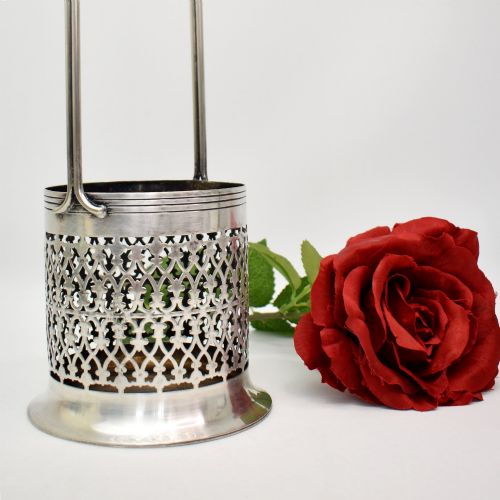
A silver plate decanter stand holds wine bottles and spirit flasks securely on the dining table or sideboard.
Silver Plate Decanter Stand
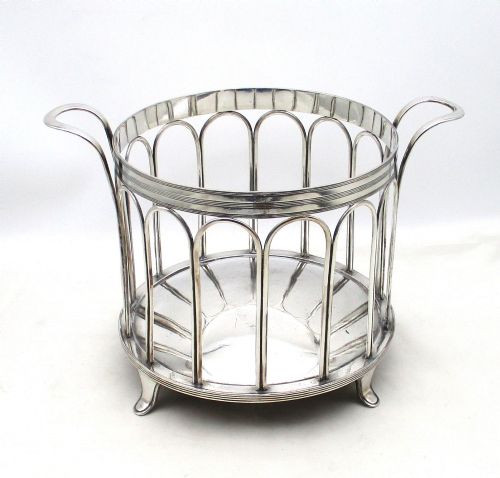
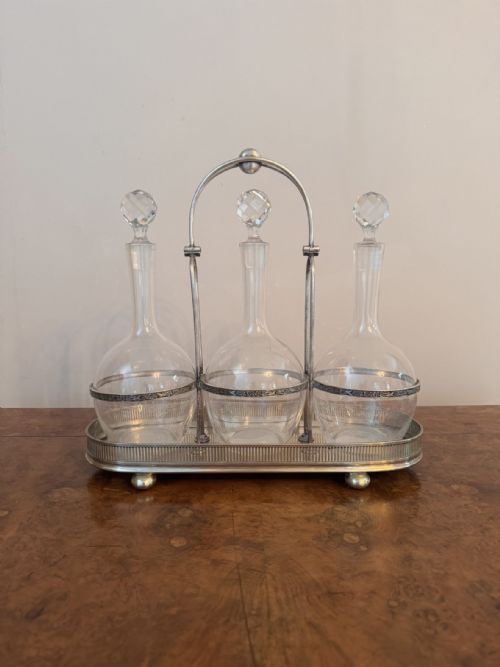
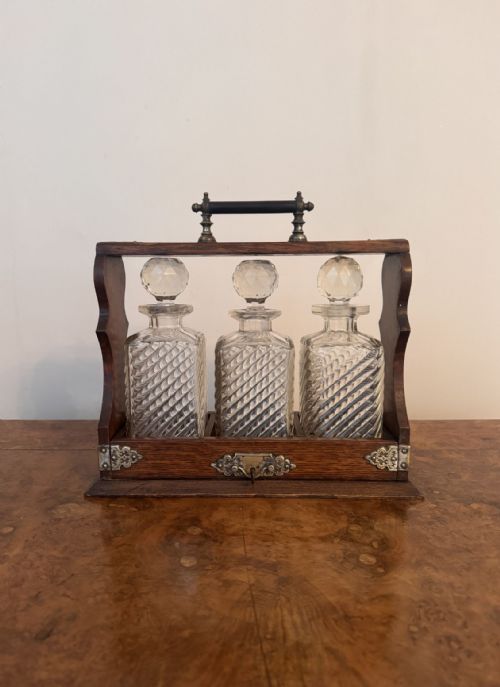
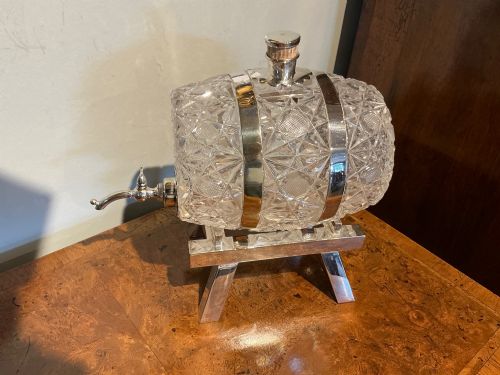
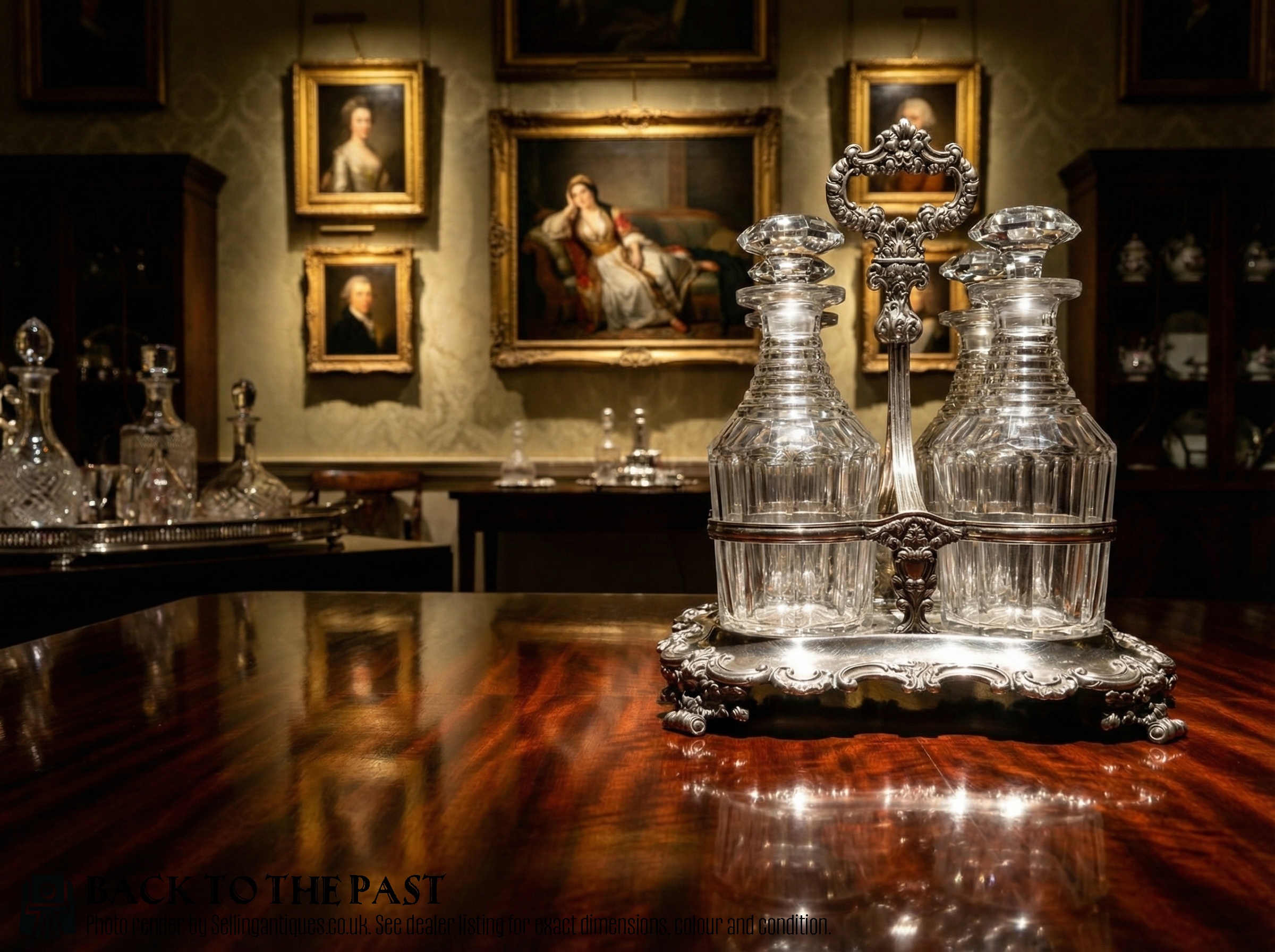
A silver plate decanter stand encompasses single bottle coasters, multiple bottle frames, and locking tantalus designs intended for serving drinks. Buyers encounter Victorian and Edwardian examples most frequently, alongside earlier Old Sheffield Plate pieces from the nineteenth century.
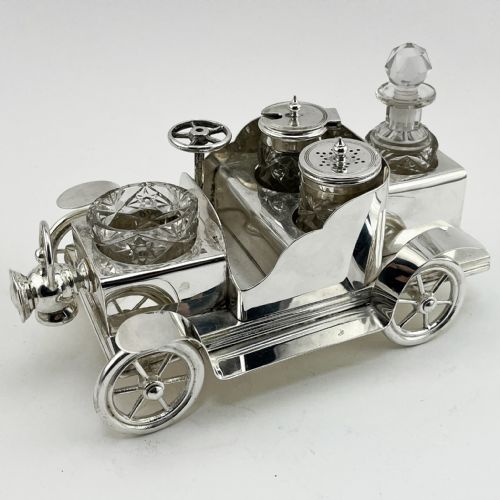
Many variants house cut glass or crystal decanters paired with fitted silver plated metalwork. Others function as wheeled wine wagons or stationary bottle holders fashioned from mahogany, oak, and copper.
Older pieces frequently originate from workshop traditions in Sheffield and Birmingham, spanning the Georgian, Regency, and later nineteenth-century periods.
Materials and Techniques
Sheffield plating fuses a thin layer of silver onto a copper base, creating durable metal frames that reveal subtle copper bleed along high edges on older items. Standard electroplating dominates later nineteenth- and twentieth-century production.
Glass components undergo heavy cutting, moulding, or blowing to produce Bristol blue, green, and clear crystal decanters that fit precisely into metal rings or wooden bases.
Joinery techniques combine turned hardwoods like mahogany and oak with cast, pierced, and reticulated silver plated mounts.
Listings feature silver plate decanter stands paired with cut crystal, mahogany, oak, and coloured Bristol glass.
Quality and Construction
Weight and structural thickness separate substantial frames from lighter mass-produced alternatives. Cast mounts and heavily pierced galleries demonstrate superior craftsmanship compared to stamped sheet metal.
The integrity and matching nature of the glass determine overall worth, as original cut crystal decanters sitting snugly in dedicated frames command higher regard than assembled later replacements.
Engraved armorial details, maker stamps from notable workshops, and complex locking mechanisms indicate elevated tier production.
Walker And Hall·Brook And Son·Elkington·Matthew Boulton·Wade Wingfield Wilkins·The Goldsmith Co·Henry Wilkinson And Co
The Silver Plate Decanter Stand Glossary
- Old Sheffield Plate
- A composite material made by fusing silver to a copper ingot before rolling them into sheets. This early technique precedes standard electroplating.
- Tantalus
- A locking drink stand that secures decanters within a frame while keeping the stoppers trapped to prevent unauthorized pouring. The name references the mythological figure.
- Reticulated
- Metalwork pierced with openwork lattice patterns or geometric designs. This technique lightened heavy trays and stands while adding decorative elegance.
- Wine Coaster
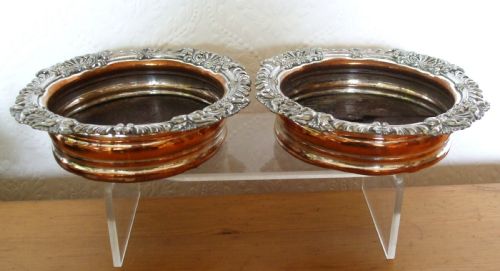
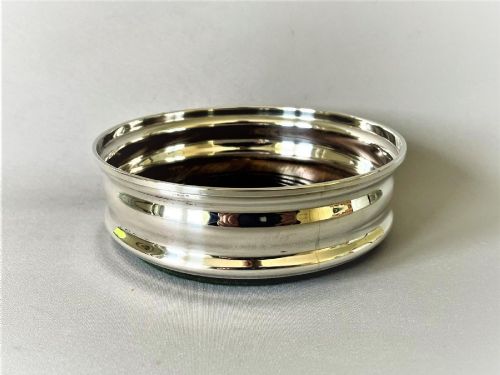
- A small, circular tray with a raised rim, often lined with wood and felt on the base. These protected polished dining tables from bottle rings during port service.
- Cruet Set
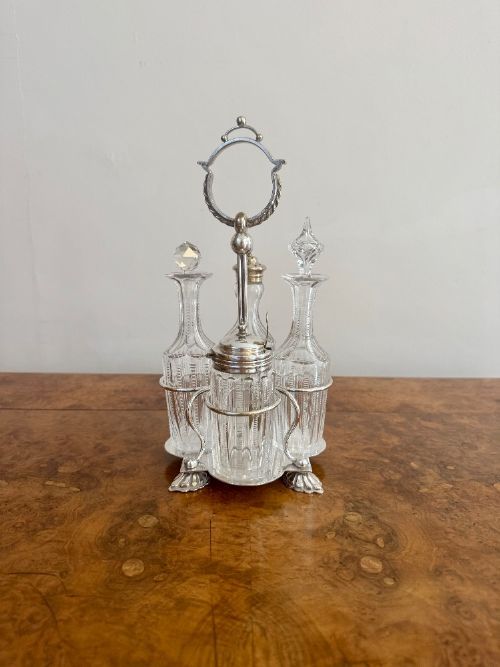
- A framed stand holding multiple bottles, cruets, or castors for condiments and liquids. They appear frequently in silver plate across the Victorian era.
Silver Plate Decanter Stand: Frequently Asked Questions
How do I date a silver plate decanter stand?
Dating relies on identifying manufacturing techniques, stylistic cues, and maker marks stamped into the metal. Pieces displaying fused Old Sheffield Plate typically date to the late eighteenth or early nineteenth centuries.
Later Victorian and Edwardian examples often utilise electroplating, showing crisper stamped ornament and incorporating cut crystal or coloured glass vessels.
Are the decanters usually original to the stand?
Many surviving stands retain their matching cut glass or crystal decanters, particularly in fitted tantalus frames and cruet sets. Because glass suffered breakage over generations, replacement bottles appear frequently in historical listings.
Checking that the base dimensions and neck heights match the frame compartments helps determine originality.
How do I care for antique silver plate?
Gentle cleaning with a soft cloth and mild silver polish preserves the plated surface without wearing through to the underlying base metal. Avoiding harsh chemical dips prevents damage to soldered joints and applied mounts.
Wooden bases and glass inserts require separate maintenance using dry or slightly damp cloths to protect organic materials.