


Silver Plated Liquor Stand
A silver plated liquor stand gathers fine glass and metalwork into a portable frame, offering a neat way to serve spirits from the Victorian and Edwardian eras.
Silver Plated Liquor Stand
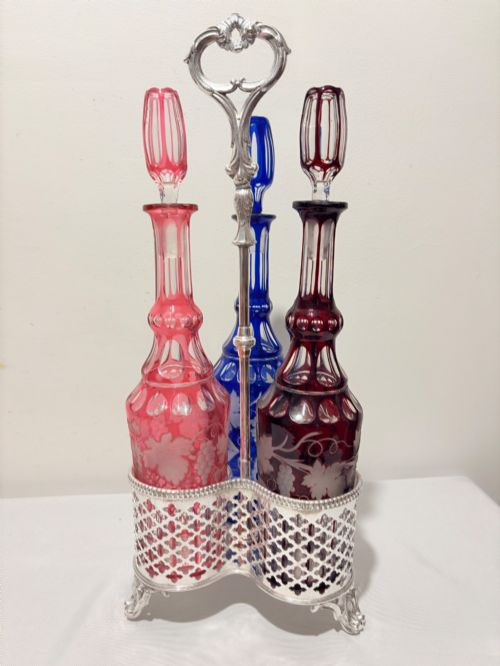
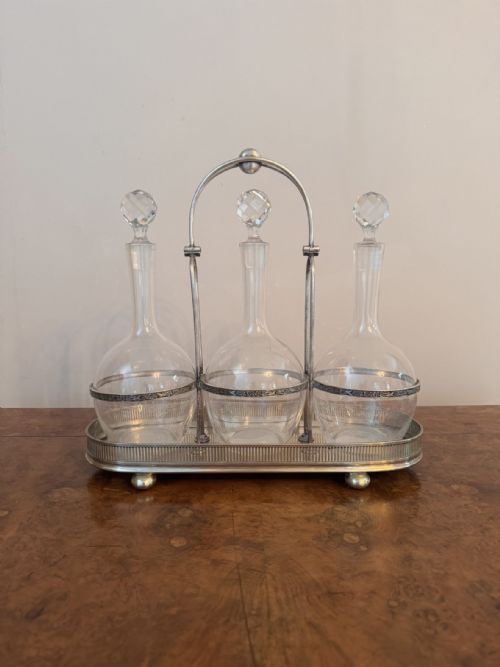
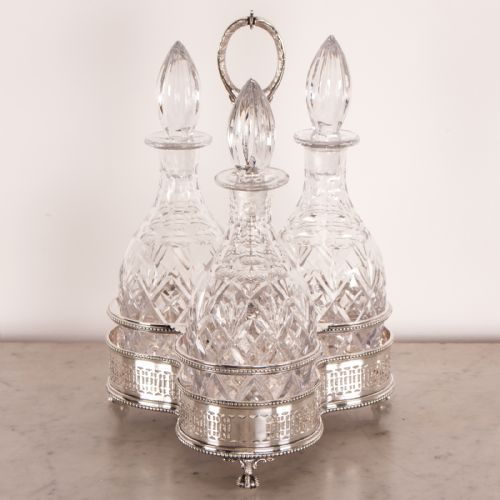
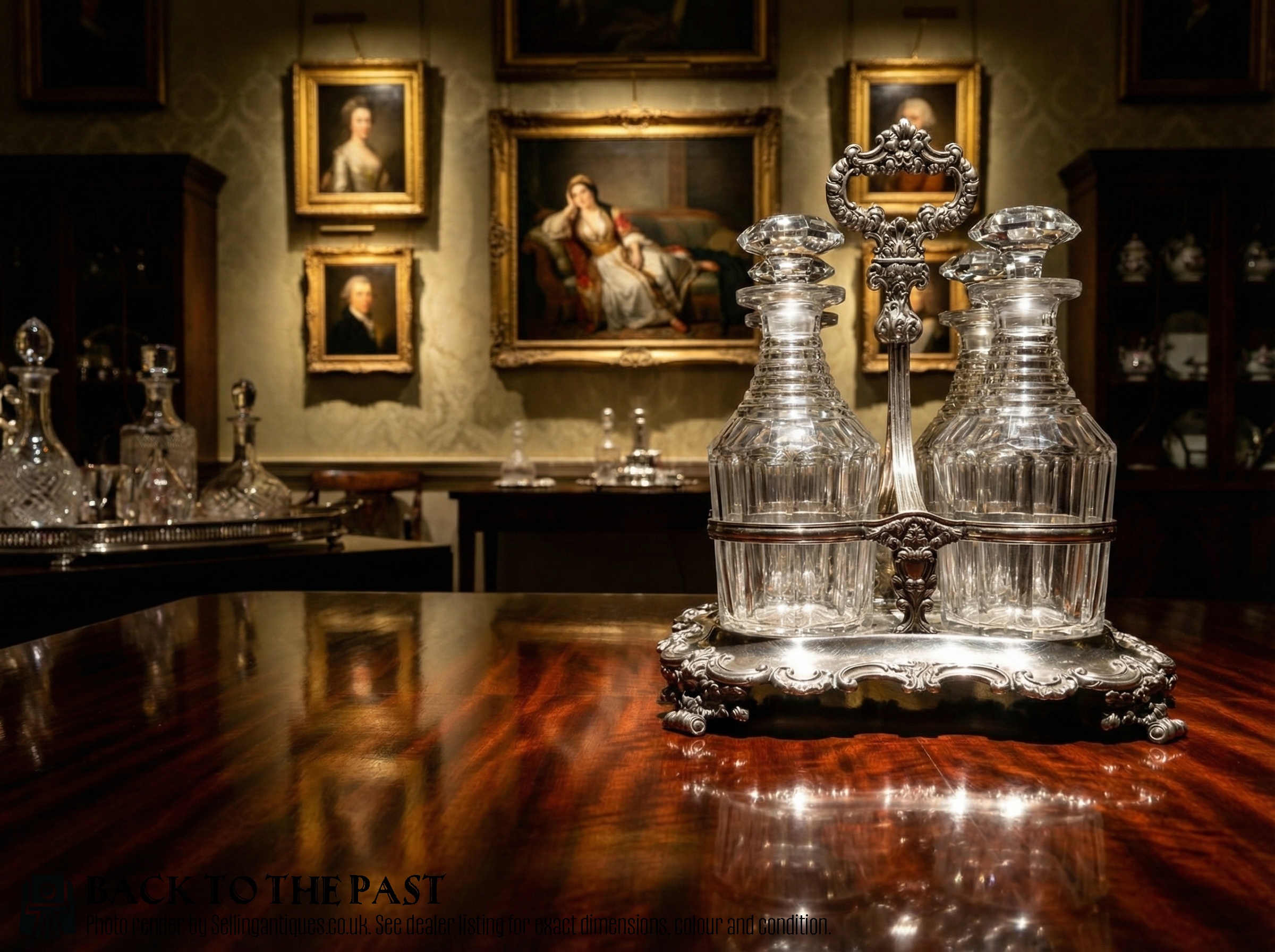
A silver plated liquor stand brings together glass decanters, barrels, or bottles within a secure metal frame dating from the Victorian and Edwardian periods. These serveware items appear in forms such as tantaluses, cruets, and travelling bars designed to hold whiskey, gin, and brandy.
The most common version met on this page is the multi-bottle decanter stand or tantalus, frequently housing three cut glass or crystal vessels. Frames range from ornate openwork metal to robust oak fitted with locking mechanisms to protect the contents.
Origins stretch across the late nineteenth and early twentieth centuries, encompassing Georgian stylistic influences and Victorian manufacturing ingenuity. Pieces often integrate original cut glass decanters with silver plate or Sheffield plate mounts.
How they were made
Silversmiths utilised silver plate and Sheffield plate over base metal to create the structural frames, often employing ornate casting and piercing techniques. Timber elements like oak provided sturdy housing for novelty barrel sets and locking tantalus boxes.
Glassmakers blew and cut crystal and coloured glass to form the heavy decanters and spirit casks that fit precisely into the metal frameworks. Metal locking bars and hinges were meticulously fitted by hand to secure the bottles within the stand.
Invented purely to tease thirsty guests by locking the booze away while keeping it in plain sight.
What varies in quality
The weight and clarity of the cut glass decanters distinguish standard production from superior examples, alongside the crispness of the cast ornamentation on the metal frame. Original matching stoppers and intact locking mechanisms significantly elevate the standard of a piece.
Maker attribution also shifts the standing of an object, with recognised workshops employing heavier gauge plating and more complex mechanical locking actions for their spirit stands.
Walker & Hall·Elkington·Hukin and Heath·Philip Ashberry·Mappin Brothers
The Silver Plated Liquor Stand Glossary
- Tantalus
- A locking drink stand that holds decanters securely within a metal and wood frame to prevent unauthorised access to the spirits inside. The locking mechanism typically engages with the stoppers to keep them firmly in place.
- Sheffield Plate
- An early method of fusing a thin sheet of silver to a thicker copper base before rolling them together. This technique predates modern electroplating and leaves a distinctive edge where the base metal shows.
- Cruet
- A small stand or frame fitted with bottles or cruets for holding condiments, oils, or spirits at the table. In barware terms, it refers to multiple bottles arranged in a portable carrier.
- Spirit Cask
- A barrel-shaped vessel, often made of oak with silver plate hoops, designed to dispense spirits via a small tap. These frequently sit within dedicated stands or novelty frames.
Silver Plated Liquor Stand: Frequently Asked Questions
What is a tantalus?
A tantalus is a locking spirit stand that secures decanters beneath a metal bar to prevent guests or servants from helping themselves. The frame usually incorporates a key-operated lock that secures the stoppers in place.
First patented in the Victorian era, these locking frames allowed hosts to display their whiskey and brandy safely in the dining room or study.
How do I date a silver plated liquor stand?
Dating relies on stylistic clues, registration marks, and the manufacturing methods visible in the metal and glass. Victorian pieces often display heavy cast ornamentation, while Edwardian examples lean towards cleaner lines.
Maker marks stamped onto the silver plate provide a direct link to the active dates of the workshop or silversmith.
Are the decanters usually original to the stand?
Many stands retain their original matched cut glass or crystal decanters, which fit snugly into the individual cutouts of the frame. Replacement bottles do occur due to breakages over the decades.
Matching the pattern of the cut glass to the period of the frame helps confirm if the set remains together as originally sold.
How were these stands used historically?
These stands functioned as portable barware for dispensing after-dinner drinks in middle and upper-class homes. Hosts kept them in drawing rooms, smoking rooms, or studies for evening hospitality.
Travelling versions were also built for use on carriages or boats, allowing spirits to be transported securely.