


4 Bottle Decanter Stand
A 4 bottle decanter stand holds multiple bottles securely for serving, combining practical utility with refined period craftsmanship.
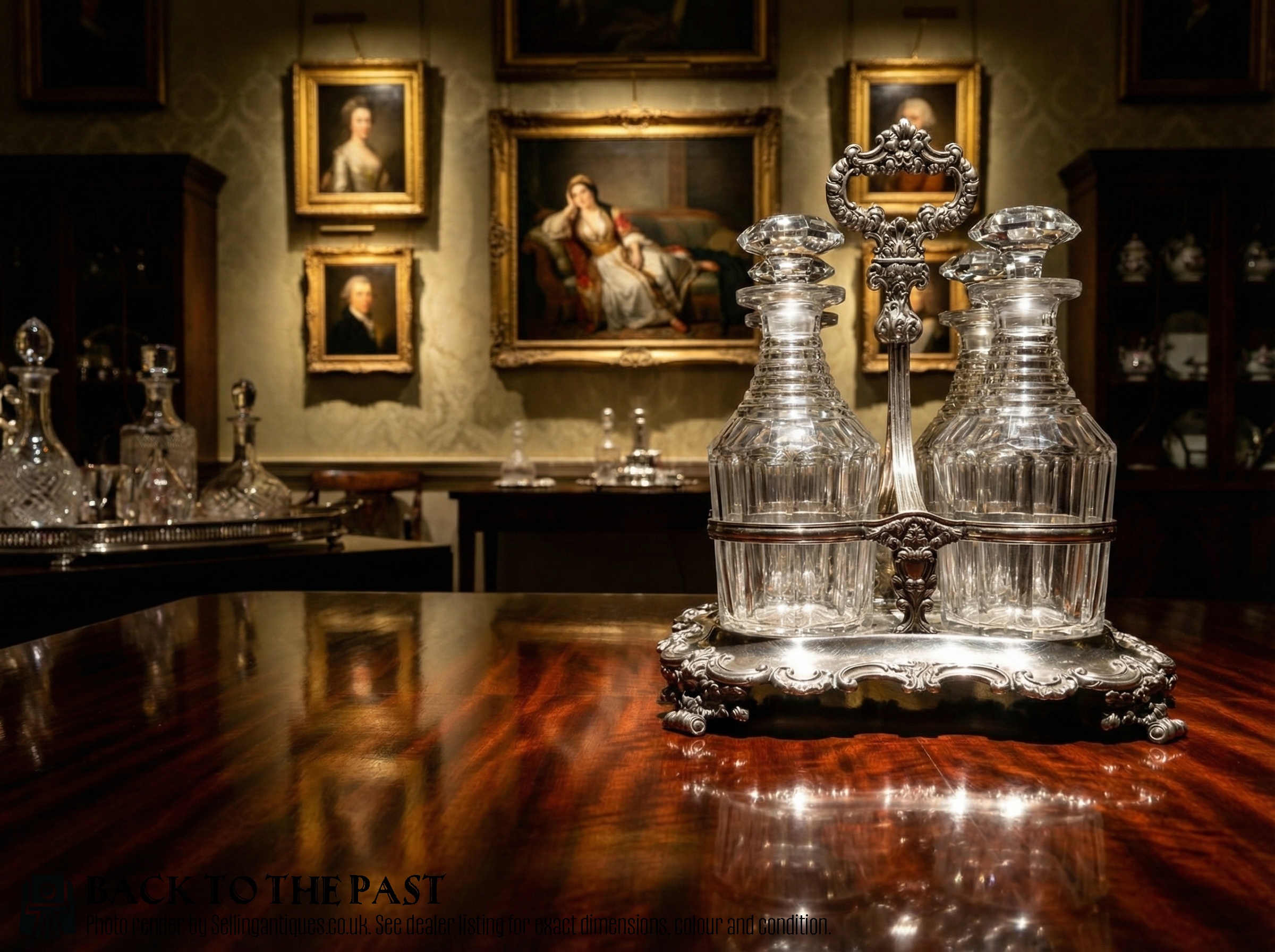
4 Bottle Decanter Stand
A 4 bottle decanter stand organises multiple vessels for the dining table or sideboard. These items appear across various historical periods, serving functions related to wine, spirits, and condiments.
The selections on this page encompass related serving vessels, including tantalus sets, cruet sets, and wine coasters. Oak, mahogany, and silver plate form the primary framework for these multi-bottle arrangements.
Georgian and Victorian examples show traditional cabinetmaking and metalwork, while Edwardian pieces introduce alternative configurations in wood and silver plate.
How they were made
Craftsmen built wooden frames using timbers such as oak, mahogany, padouk, and coromandel, often incorporating brass mounts or marquetry stringing for decoration. Wood surfaces were shaped and polished to highlight natural grain patterns.
Metal components relied on sterling silver, Old Sheffield plate, and silver plate over base metals. Silversmiths applied hallmarks, engraving, and detailed cast motifs like grape and vine designs.
Glass elements utilised cut crystal and moulded glass techniques, matching the exact contours of the stands and bottle holders.
Listings for this phrase include examples in oak, mahogany, silver plate, and sterling silver spanning the Georgian to Edwardian periods.
What varies in quality
The standard of materials dictates overall execution, distinguishing solid sterling silver and dense hardwoods from plated metals and simpler secondary timbers. Superior examples demonstrate precise joinery in wooden frames and crisp casting in metal mounts.
Design complexity separates basic utilitarian items from elaborate luxury pieces. Details such as marquetry stringing, fitted locking mechanisms on tantalus frames, and matching cut glass decanters indicate higher production standards.
Walker & Hall·Betjemann’s·Brook & Son·Charles Thomas Fox
The 4 Bottle Decanter Stand Glossary
- Tantalus
- A locking beverage stand that secures decanters within a wooden and metal frame while displaying the contents.
- Cruet set
- A collection of glass bottles for condiments mounted together on a shared metal or wooden tray.
- Old Sheffield plate
- A material made by fusing a thin layer of silver onto a copper base, typical of pieces from the Georgian and Regency eras.
- Wine coaster
- A small standalone tray or stand designed to hold a single bottle, often featuring a wooden base and a raised metal rim.
- Padouk
- A dense exotic hardwood used in cabinetmaking during the eighteenth century.
4 Bottle Decanter Stand: Frequently Asked Questions
What is a tantalus?
A tantalus is a locking frame that holds decanters securely, preventing access to the contents until unlocked with a key. These pieces typically feature wooden bases with metal locking bars.
They became popular during the Victorian and Edwardian periods for safeguarding spirits in the dining room or study.
How do I care for silver plated stands?
Silver plated items require gentle cleaning with a soft cloth and a specialised silver cleaner to preserve the metal layer. Avoid abrasive materials that can wear down the plating over time.
Store wooden and metal combinations in stable humidity environments to protect both the timber and the metal mounts.
How are Georgian and Victorian stands different?
Georgian pieces often utilise solid mahogany or padouk with Old Sheffield plate, focusing on classic cabinetmaker lines. Victorian examples frequently incorporate oak, elaborate brass mounts, and extensive silver plating.
Later Victorian and Edwardian items also see the widespread adoption of locking tantalus frames for multiple bottles.
What is the difference between a cruet set and a decanter stand?
A decanter stand holds larger wine or spirit bottles for serving at the table. A cruet set contains smaller bottles intended for condiments, oils, and sauces.
Both types utilise frames made from silver plate, sterling silver, or wood.