


Victorian Silver Plated Tantalus
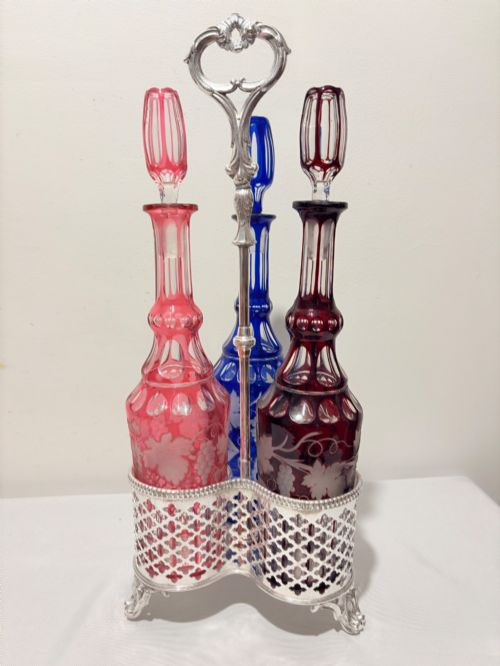
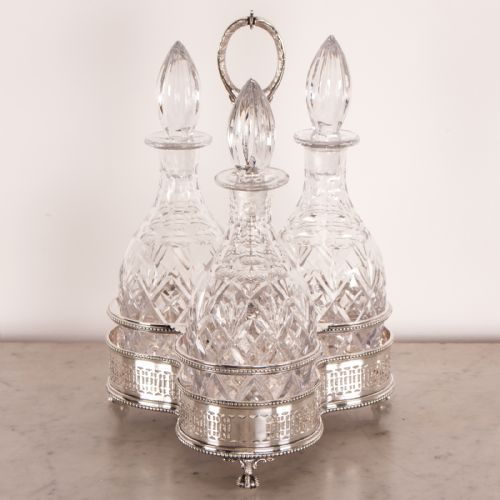
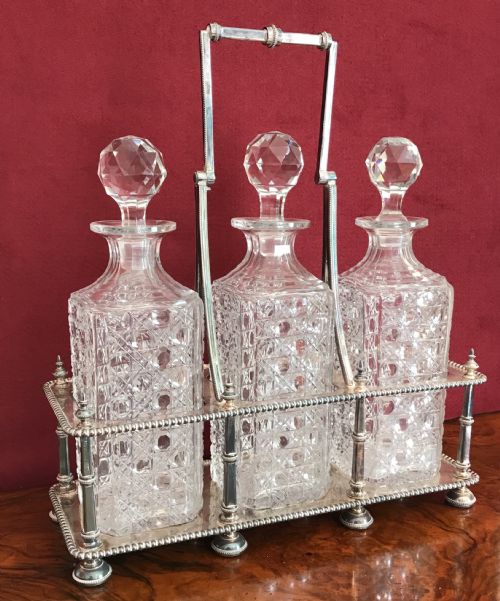
A victorian silver plated tantalus locks away spirits while showing off cut glass decanters in an ornate metal frame.
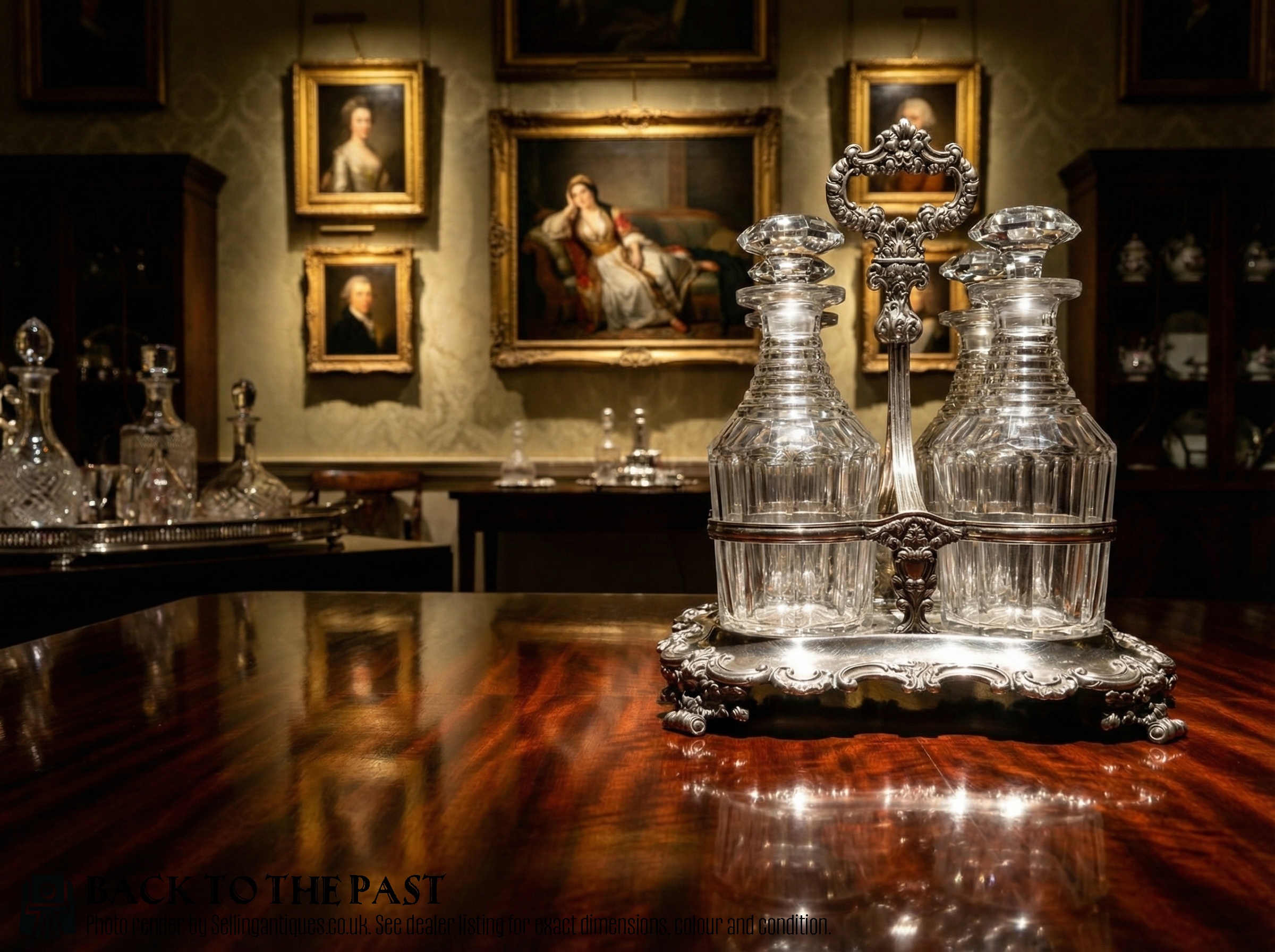
Victorian Silver Plated Tantalus
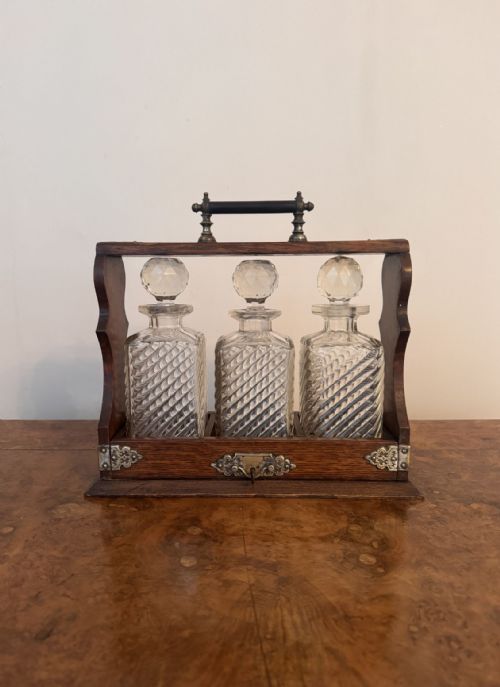
A victorian silver plated tantalus houses two or three spirit decanters inside a locking metal frame that prevents unauthorised pouring. These barware pieces take the form of tabletop stands, portable boxes, or rotating barrel dispensers created during the late nineteenth and early twentieth centuries.
Most examples combine sturdy wooden frames with bright metal mounts and heavy glass bottles designed for whisky, gin, or brandy. Makers constructed these drink dispensers for domestic dining rooms and studies, using robust locking mechanisms to secure expensive contents from household staff.
Materials and Technique
Craftsmen built the structural housings using solid oak, walnut, or exotic coromandel wood, often adding marquetry inlay for decorative effect. They mounted these wooden bases with cast and plated metal frames that support the locking bars.
The accompanying vessels consist of heavy cut glass or frosted crystal, occasionally paired with silver collars and small tot pails. Metal components received a layer of silver plating over a base metal, creating a bright reflective finish.
Some Victorian drinking sets utilise rotating wooden barrels for gin and brandy, turning the sideboard into a miniature tavern.
Markers of Excellence
Quality rests upon the weight and clarity of the glass decanters, the precision of the locking mechanism, and the crispness of the metal casting on the frame. Better examples retain their original matching bottles and working keys.
Simpler stands lack the complex locking bar and rely purely on open frames to hold decanters, whereas superior pieces integrate complex security rods and maker stamps into the design.
Walker & Hall·Elkington·The Goldsmith Co.·Hukin and Heath·Philip Ashberry·Mappin Brothers·Hobbs & Co·Betjemann & Sons·Fenton Bros Sheffield
The Victorian Silver Plated Tantalus Glossary
- Tot pail
- A small bucket or container included with barware sets to hold ice or water for mixing spirits. These metal vessels often match the silver plating of the main frame.
- Cut crystal
- Glassware decorated by cutting geometric patterns into the surface using a wheel. This material adds weight and brilliance to the decanters housed within the stand.
- Marquetry inlay
- Decorative wood veneer fitted into the surface of the wooden box or stand to form pictorial or geometric patterns. Artisans used contrasting timbers to create these ornate details.
Victorian Silver Plated Tantalus: Frequently Asked Questions
How does the locking mechanism work?
A metal bar runs across the stoppers of the decanters and fastens into a locking upright at the side of the stand. Turning a key releases this top bar so the bottles can be lifted free.
Without the key, the stoppers remain trapped beneath the metal restraint, preventing anyone from pouring a drink from the bottles.
Were these pieces meant for travel?
Some versions take the form of fitted boxes with carrying handles designed for safe transport in carriages or luggage. These travelling bars secured the bottles tightly during movement.
Most examples remained stationary on sideboards, serving as permanent fixtures in dining rooms and drawing rooms.
How do I care for silver plate?
Clean the metal components gently using a soft cloth and a specialised silver polish formulated to protect thin plated layers. Avoid harsh abrasives that wear away the plating.
Keep the wood and glass clean with a dry or lightly dampened cloth to prevent moisture damage to the internal compartments.
Are original keys common?
Original keys are uncommon because locks were easily jammed or keys misplaced over generations of use. Many pieces survive with replacement locks or keys fitted at a later date.
The presence of an original working key adds significantly to the completeness of the piece.