

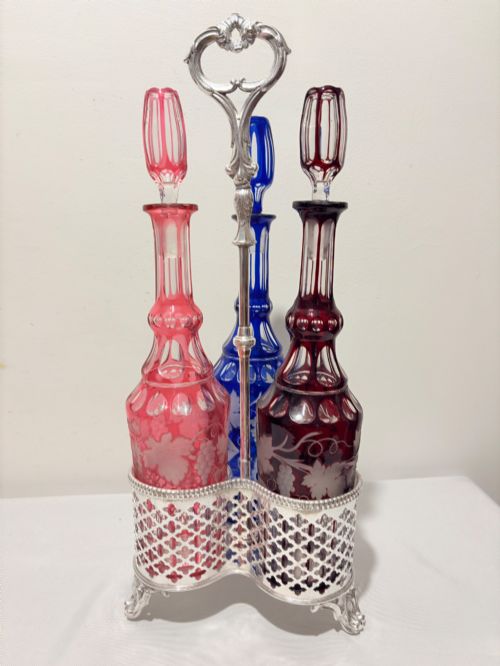


Silver Cruet Decanter Frame
These silver cruet decanter frame pieces hold bottles securely on the dining table, offering both structure and elegance for formal serving.
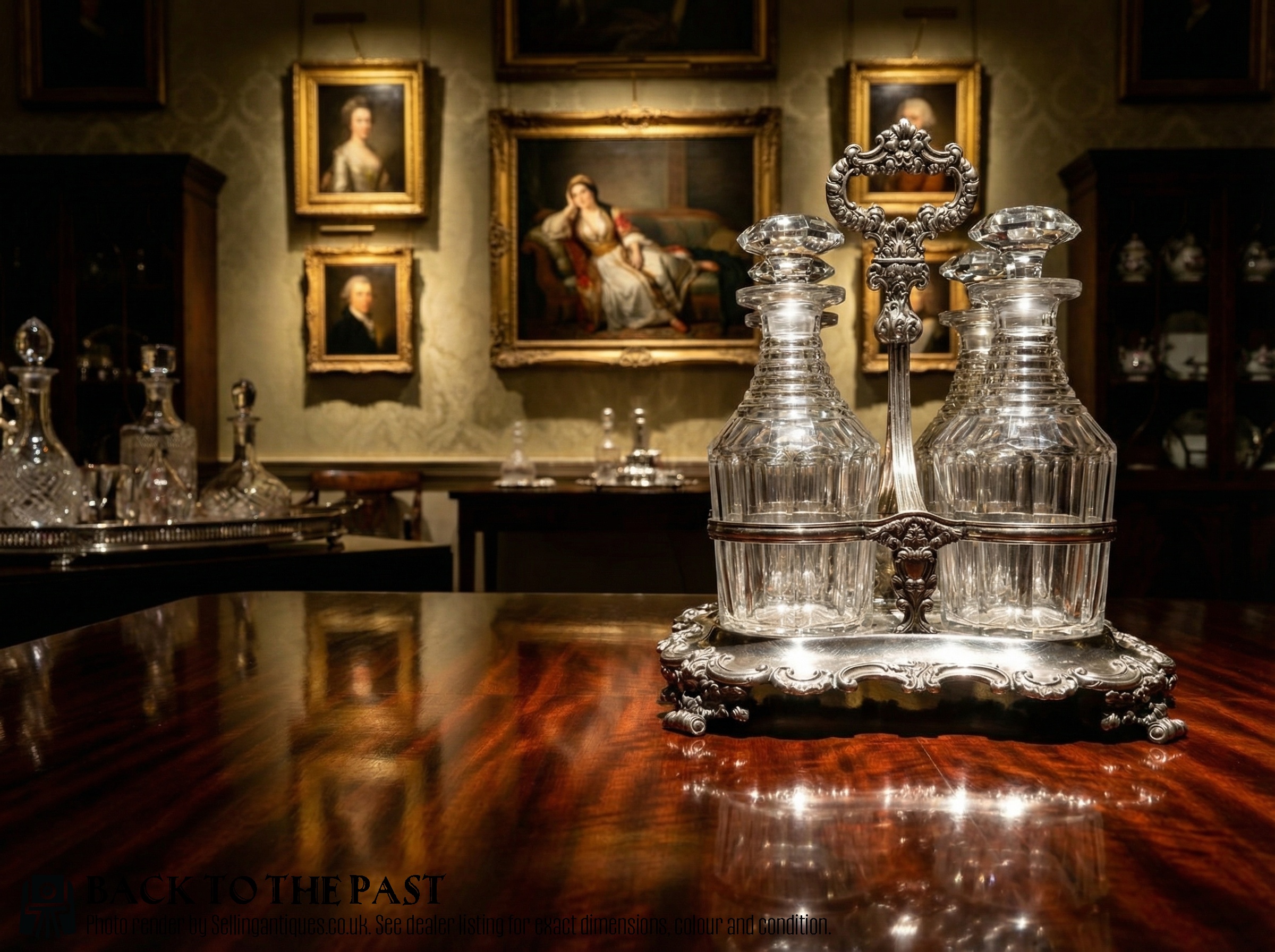
Silver Cruet Decanter Frame
A silver cruet decanter frame serves as a structured holder designed to keep glass bottles and condiment containers organised together on the dining table. When exploring a silver cruet decanter frame, buyers encounter various configurations spanning multiple historical eras, including Georgian and Victorian examples.
The selections on this page encompass forms such as multi-bottle cruet sets, decanter stands, and specialised bottle holders. These objects range from compact three-bottle frames to large oval eight-piece sets featuring cut glass vessels.
Origins stretch from the late eighteenth century through the Edwardian period, capturing both utilitarian dining room accessories and ornate display pieces. Collectors primarily encounter silver plated and sterling silver constructions housing original or matched glassware.
How they were made
Silversmiths constructed these frames using sterling silver, traditional silver plate, and Old Sheffield plate over a base metal foundation. Fabrication involved shaping metal sheets and wirework to form secure rings and central carrying handles.
Glass components rely on heavy cut glass production techniques, yielding faceted decanters and bottles designed to fit precisely within the metal apertures.
Silver Cruet Decanter Frame Retail Price Guide 2026
Typical asking prices for silver cruet decanter frame among the pieces listed under this phrase on Sellingantiques today, from the lower quarter to the upper quarter. They describe what is for sale here now, not the wider market.
Object forms vary across this selection, including bottle holders, decanter stands, and multi-piece cruet sets.
What varies in quality
Quality separates through the weight of the silver or plating used and the crispness of any chased or engraved ornamentation on the frame. Heavier gauge metal provides structural integrity that prevents warping under the weight of full glass decanters.
The integrity and originality of the fitted glassware heavily influence overall merit, particularly when cut glass bottles retain their matching stoppers and fit snugly into the silver frame.
Charles Thomas Fox·Hester Bateman
The Silver Cruet Decanter Frame Glossary
- Cruet set
- A matched group of bottles or containers designed to hold condiments, oils, or vinegars within a shared frame. These sets sit upon the dining table for easy access during meals.
- Sheffield plate
- An early form of composite metal created by fusing a thin sheet of sterling silver to a thicker copper base. This technique preceded modern electroplating methods.
- Hallmark
- A stamped official mark indicating the metal purity, place of assay, and date letter. These marks help verify the origin of sterling silver pieces.
- Decanter stand
- A specialised metallic frame or coaster designed to support single or multiple decanters. They protect table surfaces and facilitate serving drinks.
Silver Cruet Decanter Frame: Frequently Asked Questions
What is a silver cruet decanter frame?
A silver cruet decanter frame is a metal stand designed to hold bottles, cruets, or decanters securely together on a dining table.
These frames feature handles and specific apertures to keep glassware organised and portable during meals.
How were these frames used originally?
They served to transport oils, vinegars, sauces, or wine decanters from the sideboard to the dining table for guests.
Their structured design prevented heavy glass bottles from tipping over during service in Georgian and Victorian households.
How do I care for silver plated frames?
Clean silver plate and sterling silver gently using a non-abrasive polish formulated specifically for plated or solid silver objects.
Avoid submerging antique frames in harsh chemical dips, which can strip away older patinas and plating layers.
How can I tell the period?
Examine the style of the metalwork, any visible hallmarks, and the manufacturing technique of the accompanying glass bottles.
Georgian and Victorian pieces display distinct decorative motifs, manufacturing weights, and silversmith stamps that indicate their era.