




Silver Oval Frame
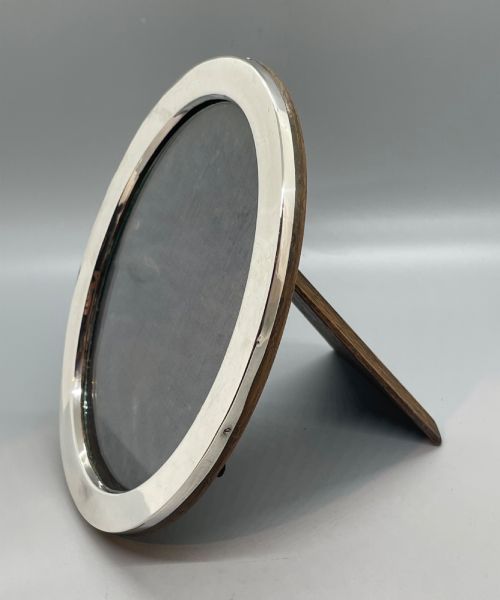
When you search for a silver oval frame, you are looking at small domestic items made to hold a portrait photograph upon a desk or dressing table.
Silver Oval Frame
A silver oval frame is primarily encountered as an Edwardian or George V desk accessory designed for portrait photographs. These pieces commonly emerge from assay offices in Birmingham, Sheffield, London, and Chester across the late nineteenth and early twentieth centuries.
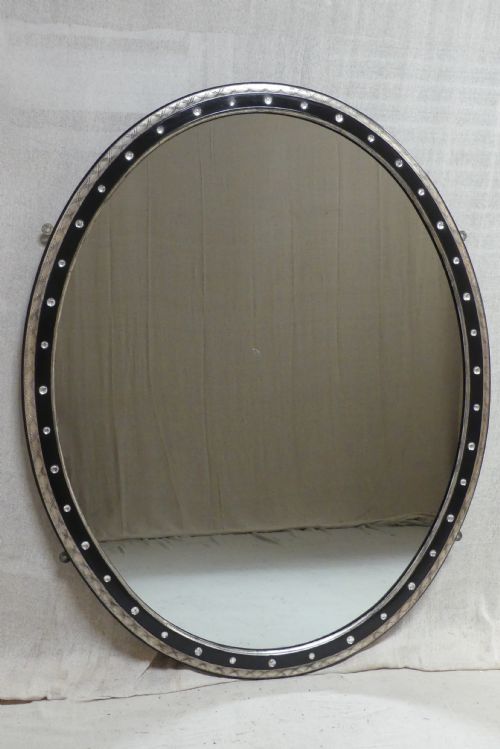
Beyond standard photograph holders, the category encompasses distinct decorative variants including miniature portrait frames, dressing table mirrors, and occasional picture frames. While many domestic examples rest on easel backs covered in wood or fabric, others take the form of wall-mounted mirrors and devotional art.
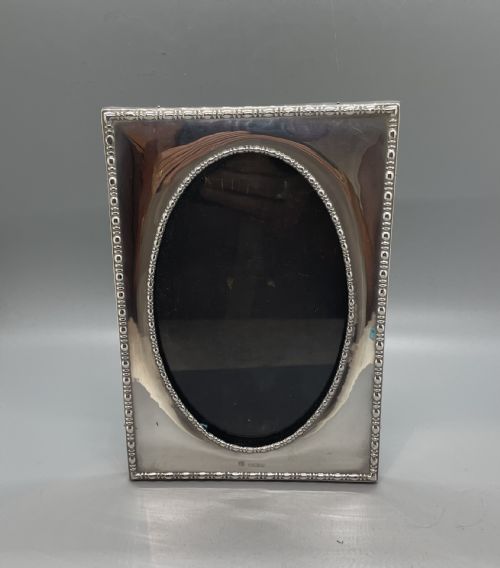
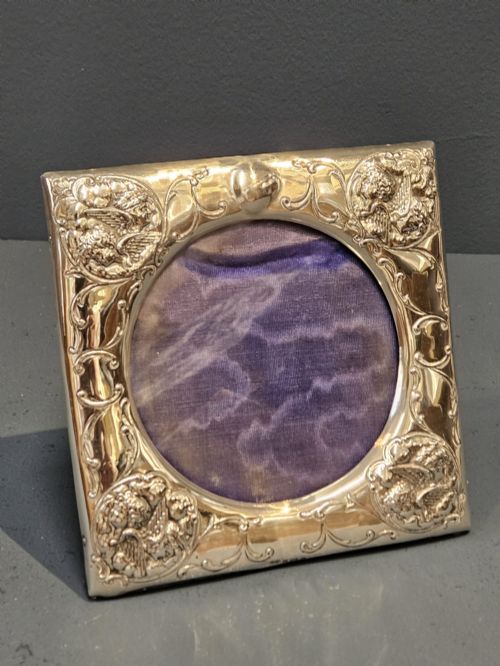
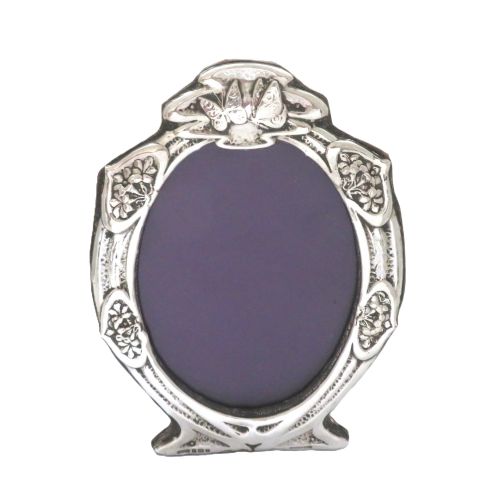
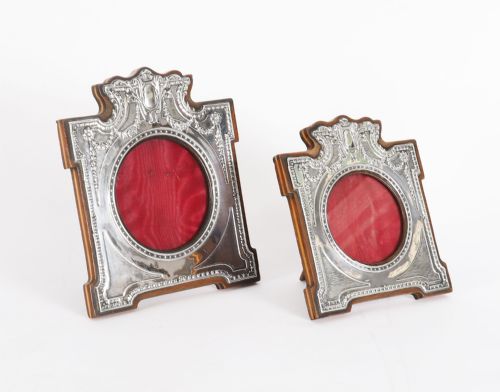
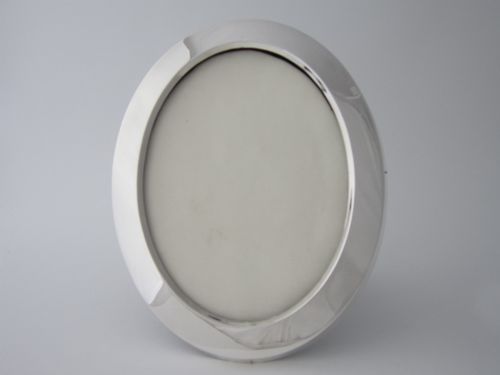
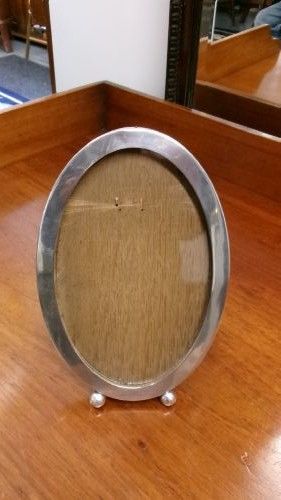
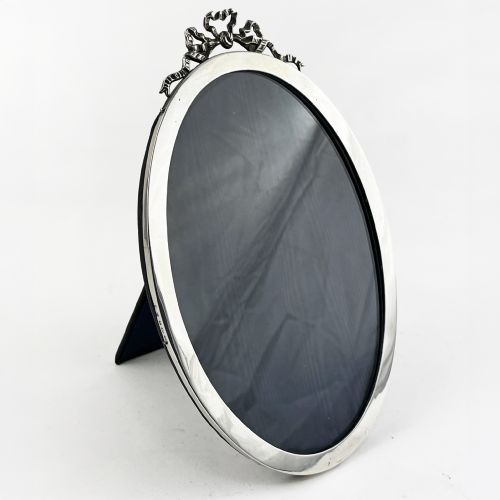
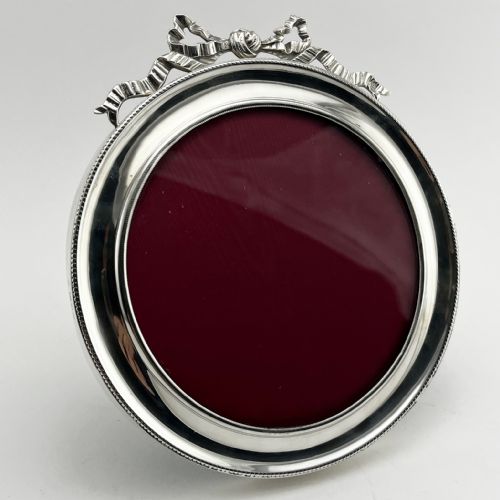
The profile of a silver oval frame ranges from plain polished borders to heavily embossed surfaces adorned with cherubs, ribbons, or floral motifs. Makers often adapted the geometry of the oval aperture to vertical or horizontal formats depending on the portrait within.
Materials and construction
The construction of a silver oval frame typically relies upon a thin sheet of sterling silver shaped by stamping or embossing over a rigid core. Assay marks stamped near the outer edge record the city, date letter, and standard of the metal.
Support structures behind the metal face frequently utilise wood, leather, or velvet to back the glass and secure the photograph. Easel stands hinged to the reverse allow the frame to tilt upright on a flat surface.
Specialised examples incorporate subsidiary materials such as glass mirror plates, parcel gilt finishes, or enamel panels. Bevelled glass protects the image aperture, held in place by small metal tabs within the silver housing.
Many Edwardian frames feature whimsical ribbon bows cast at the top, pretending to hang by a thread while standing firmly on an easel.
Assessing quality in silver frames
Quality in a silver oval frame rests upon the thickness of the metal sheet and the crispness of any embossed or chased decoration. Substantial gauge silver resists denting and maintains structural integrity around the hinged easel back.
The integrity of the backing materials and the presence of original glass contribute significantly to the wholeness of the piece. Replacements to the wooden or fabric backing alter the original state of the object.
Distinction also arises from the maker and the complexity of the border design, whether featuring hand-tooled engine turning, pierced wirework crests, or cast ribbon motifs.
William Comyns·Mappin Bros·J C Vickery·Sanders Macckenzie·A & J Zimmerman
The Silver Oval Frame Glossary
- Assay mark
- A stamped symbol indicating the purity of the precious metal, the assay office of origin, and the year of testing. These stamps provide the primary method for dating British silver.
- Engine turning
- A decorative technique of precise geometric patterns mechanically engraved into the metal surface. This finish frequently appears on George V examples.
- Easel back
- A hinged support strut attached to the reverse of the frame to enable upright display on a table. They are commonly covered in leather, velvet, or wood.
- Parcel gilt
- A surface treatment where portions of the silver object are coated in a thin layer of gold. This technique highlights specific decorative elements against the silver background.
Silver Oval Frame: Frequently Asked Questions
How do I date a silver oval frame?
Dating relies primarily on the hallmark stamped into the silver border, which indicates the specific assay office and year letter. Stylistic clues such as embossed cherubs or plain geometric borders further point to Edwardian or George V periods.
Comparing the construction of the backing and the shape of the easel strut helps confirm the era of manufacture.
What is the backing usually made of?
Most period frames utilise a wooden board covered in dark fabric, velvet, or leather to hold the glass and photograph secure. A hinged metal arm attached to this backing allows the frame to stand upright.
Original backings often feature manufacturers' stamps or retailer labels from the early twentieth century.
Can these frames hang on a wall?
While the majority of these pieces are designed as free-standing table accessories with easel backs, some larger examples and mirrors feature suspension loops. Wall mirrors and specific picture frames included in this group are built for hanging.
Checking the reverse reveals whether the object relies on a desk strut or a wall fixing.
How should I clean the silver?
Maintenance requires a soft cloth and a gentle, non-abrasive silver polish to preserve the stamped details and hallmarks. Care must be taken to avoid harsh rubbing on thin sheet silver and to keep moisture away from fabric or wooden backs.
Regular light dusting prevents the accumulation of tarnish in the crevices of embossed borders.