





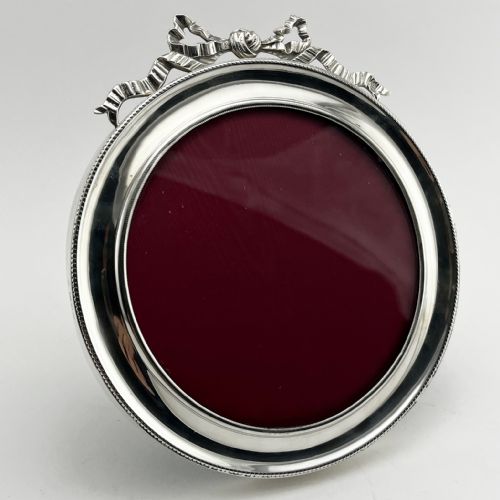


Oval Silver Portrait Frame
An oval silver portrait frame brings character to a desk or mantel, housing miniature paintings and cherished photographs with undeniable elegance.
Oval Silver Portrait Frame
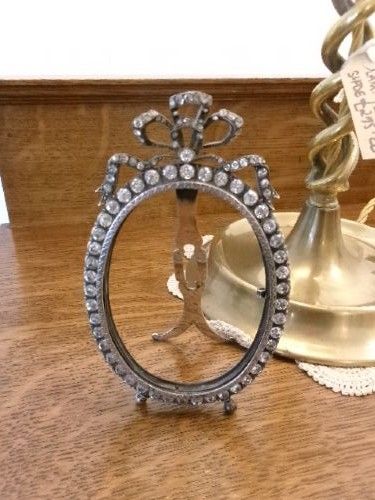
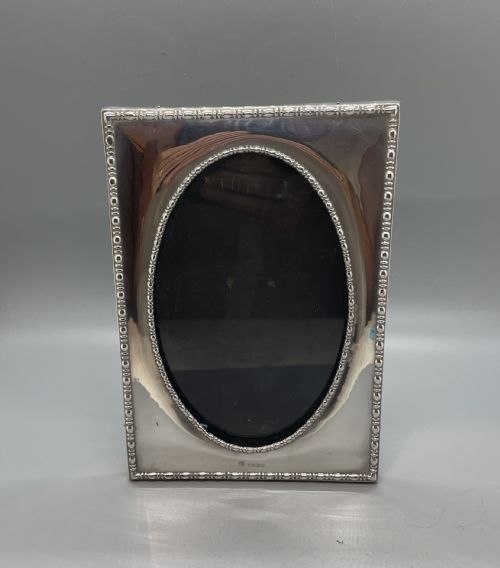
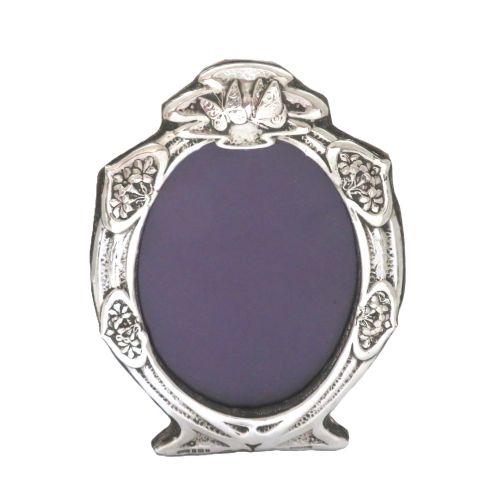
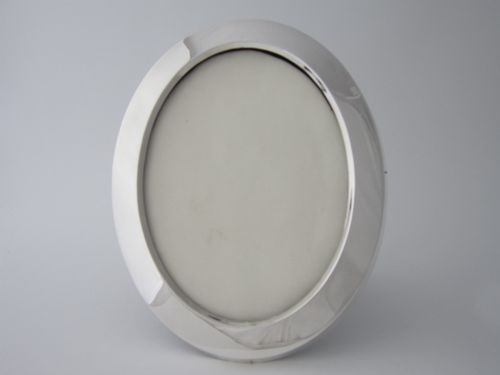
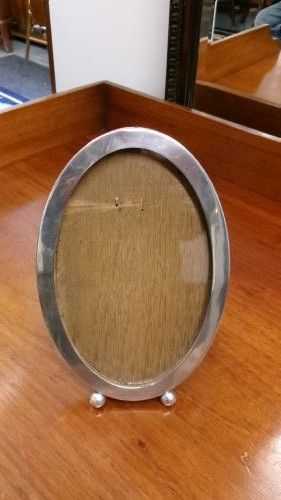
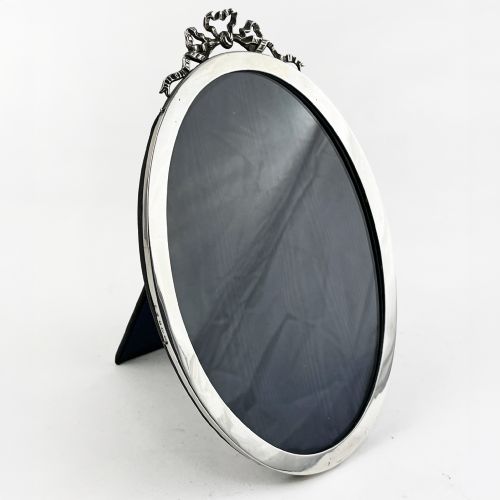
An oval silver portrait frame serves to display photographs, watercolours, and portrait miniatures with traditional grace. Buyers seeking an oval silver portrait frame will frequently encounter Edwardian and George V pieces alongside later Art Deco designs.
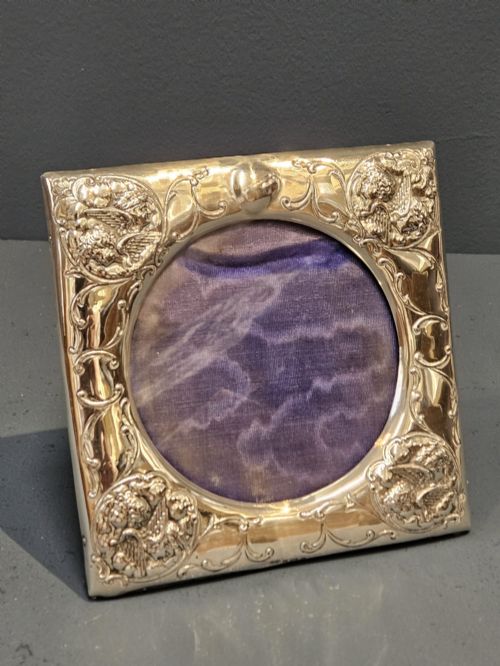
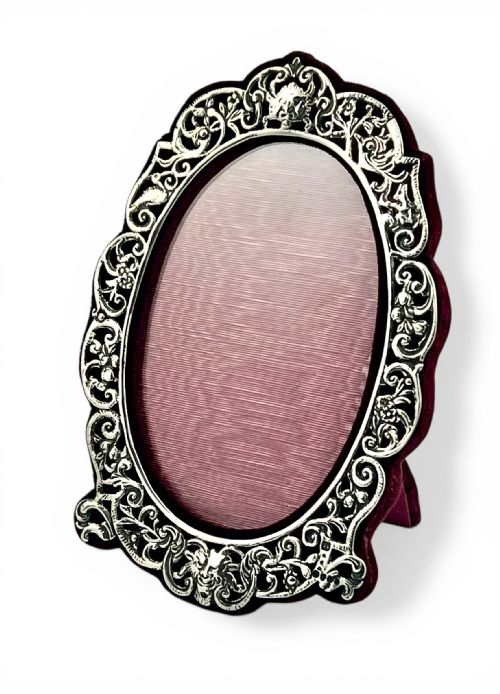
The selection ranges from plain sterling silver borders to ornate embossed Victorian and Art Nouveau examples. Many incorporate wooden backs, glass fronts, and velvet stands to support the piece.
Early twentieth-century British assay office hallmarks frequently appear on these items, pointing to silversmiths working in Birmingham, Sheffield, and Chester. French and Italian versions also feature among the selection.
Assessing craftsmanship and condition
The distinction between standard production and superior quality lies in the crispness of the embossed detail and the weight of the silver. Finer examples retain clear hallmarks, substantial metal thickness, and original backing materials.
Structural integrity of the hinge mechanism and the quality of the wood or velvet support backing significantly influence the overall standard. Pieces that preserve their original glass and uncompromised bezels represent the highest tier.
Oval Silver Portrait Frame Retail Price Guide 2026
Typical asking prices for oval silver portrait frame among the pieces listed under this phrase on Sellingantiques today, from the lower quarter to the upper quarter. They describe what is for sale here now, not the wider market.
Several frames shelter the gaze of long-forgotten gentlewomen who watched over nineteenth-century desks.
Emile Langlois
The Oval Silver Portrait Frame Glossary
- Hallmark
- Official stamps marked on precious metals indicating the assay office, standard of purity, and year of manufacture. These marks provide definitive historical context for British silver.
- Sterling silver
- An alloy consisting of silver and other metals, usually copper, containing 92.5 percent pure silver. This standard alloy dominates British picture frame production.
- Portrait miniature
- A small, highly detailed painting on vellum, card, or ivory, often housed precisely within these compact frames. They date from earlier centuries through the Georgian era.
- Bezel
- The grooved rim that holds the glass and picture securely within the frame perimeter. In oval frames, this curved metal edge requires careful formation.
- Assay office
- An official body that tested and certified the purity of precious metal items before sale. Towns such as Birmingham, Sheffield, and Chester operated prominent offices.
Oval Silver Portrait Frame: Frequently Asked Questions
How do I date an oval silver portrait frame?
Examination of the hallmarks stamped on the silver border provides the most reliable date, connecting the piece to specific assay office letters and years.
Style also offers clear clues, as Edwardian, Art Nouveau, and Art Deco designs each utilise distinct decorative motifs and manufacturing techniques.
Can these frames be displayed both vertically and horizontally?
Most oval portrait frames are engineered specifically for vertical display to complement the natural alignment of a face or miniature portrait.
Certain later or reversible examples feature adjustable stands that accommodate landscape orientation, though traditional oval formats remain predominantly portrait-oriented.
What is inside a portrait miniature frame?
These frames often house delicate watercolours, oil paintings on panel, or detailed miniatures depicting family members and historical figures.
Artists painted these small works on materials such as ivory, vellum, or heavy paper, protected behind original curved glass.
How should I clean a silver photo frame?
Gentle dusting with a soft, dry microfibre cloth helps maintain the polished surface without damaging delicate embossed details or surrounding velvet.
Harsh chemical dips should be avoided to preserve the integrity of any aged patina, hallmarks, and backing materials.