




Silver Table Picture Frame
These silver table picture frames bring heavy sterling silver and glass to a desk or mantelpiece, offering a sturdy frame for family photographs.
What silver table picture frames are
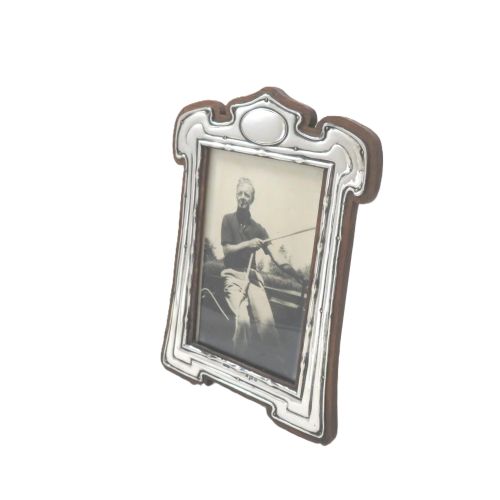
A silver table picture frame provides a solid metal border to support a cherished photograph on a desk, bureau or dressing table. These domestic objects hold portraits behind glass, backed by wood and covered in velvet.
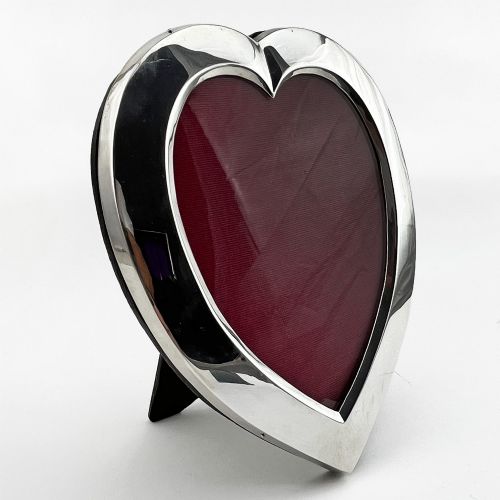
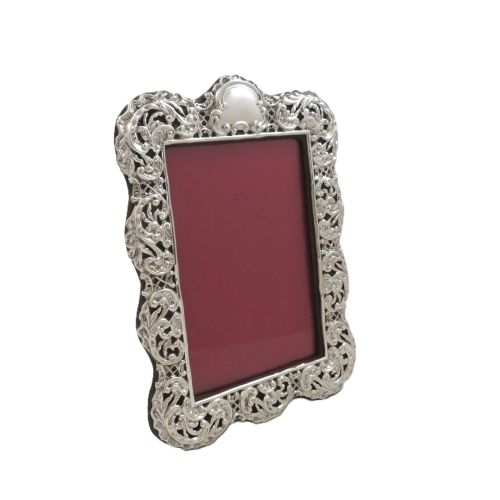
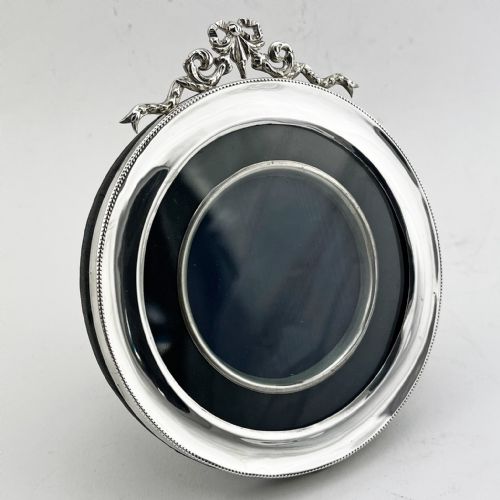
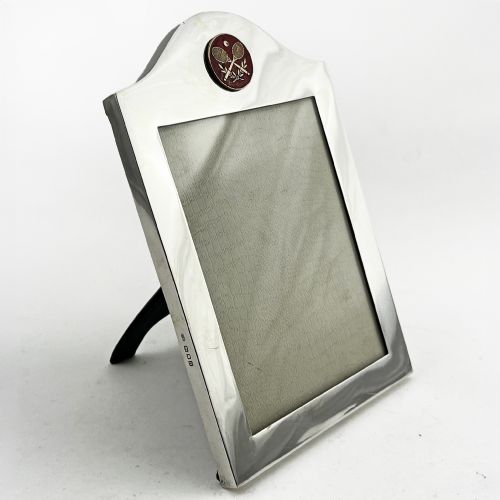
The pieces on this page span the late Victorian, Edwardian and George V periods, covering styles from classic English to Art Deco and Edwardian Rococo Revival. Most examples take rectangular or heart shapes, including two-way designs and thematic pieces such as tennis-related motifs.
How they were made
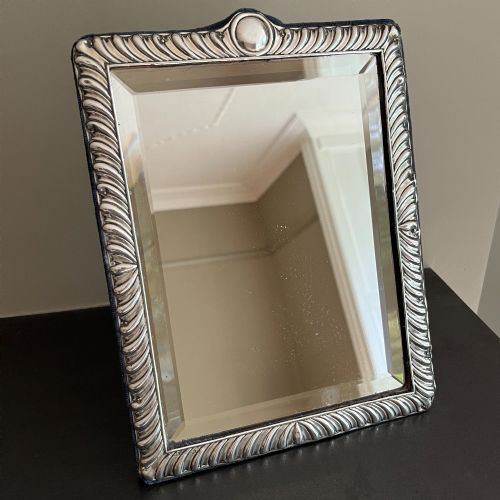
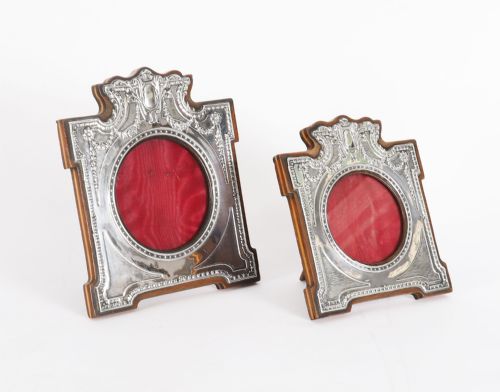
Silversmiths constructed these frames using sterling silver, often shaping the metal through embossing and stamping to create detailed borders and decorative motifs. The metal front mounts onto a wooden backing structure, frequently lined with velvet.
A clear glass pane sits in front of the picture to protect the paper image from dust and handling. Support stands fixed to the reverse allow the frame to rest securely on flat surfaces in portrait or landscape orientations.
Retail Price Guide 2026
Typical UK retail prices for silver table picture frame, calculated from the Sellingantiques database of over a million retail prices indexed since 2003. This retail price guide relies exclusively on Sellingantiques data; no external sources or auction records are used, so the figures do not describe the wider market.
What varies in quality
Quality rests in the weight of the sterling silver and the crispness of the embossed or chased decoration around the aperture. Finer makers achieve sharper detail in cast or pressed ornamentation, while simpler frames rely on plain polished surfaces.
The integrity of the original wooden backing and the quality of the velvet lining contribute significantly to an example's overall character. Substantial gauge silver resists dents and holds its structural rigidity far better over decades of use.
William Comyns
The Silver Table Picture Frame Glossary
- Sterling silver
- A silver alloy containing 92.5 percent pure silver and 7.5 percent other metals, usually copper, chosen for durability in tableware and decorative objects. This standard metal forms the primary face of these frames.
- Embossed decoration
- Raised ornamental designs hammered or pressed into sheet metal from behind to create relief patterns. This technique decorates many Edwardian and Victorian borders.
- Two-way picture frame
- A frame engineered to stand in either a portrait or a landscape orientation using a versatile easel mechanism. This design accommodates photographs of different formats.
- Velvet
- A tufted fabric with a dense pile used traditionally to cover the wooden backs and struts of better quality frames. It protects wooden furniture surfaces from scratches.
Frequently Asked Questions
How do I clean a silver picture frame?
Use a soft microfiber cloth specifically formulated for sterling silver to gently remove tarnish from the embossed areas. Avoid harsh abrasive polishes that can wear away thin silver layers or damage adjacent glass and velvet.
Keep silver polish away from the wooden backing and fabric components to prevent staining. Regular light dusting maintains the natural lustre of the metal without requiring aggressive cleaning sessions.
How do I date a silver picture frame?
Examine the hallmarks stamped directly onto the silver border, which indicate the assay office, metal standard and year of manufacture. British hallmarks provide precise letters corresponding to specific assay years.
Stylistic cues such as Art Deco geometric lines or Edwardian Rococo revival scrolls also help narrow down the period of production. Comparing the construction of the wooden strut and velvet backing offers further clues to the age.
Are all antique frames made of solid silver?
Many desk frames feature a thin sheet of sterling silver mounted over a wooden or composition core for stability. Fully solid silver examples exist but tend to be heavier and require robust structural support behind the glass.
Hallmarks on the front bezel confirm the presence of sterling silver rather than plated alternatives. The backing materials typically consist of wood, card and velvet rather than precious metal.