




Art Deco Silver Frame
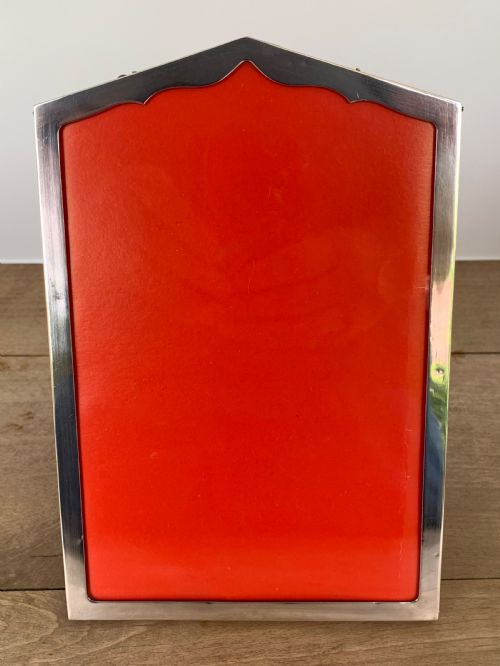
An art deco silver frame brings geometric precision and polished metalwork to family portraits and desks.
Art Deco Silver Frame
When searching for an art deco silver frame, collectors encounter pieces primarily originating from the 1920s and 1930s, often bearing hallmarks from Birmingham or other major assay offices.
The objects take the form of easel-backed photograph holders and picture frames, rendered in sterling silver or nickel-plated silver with characteristic clean lines.
Many examples span the transition from Edwardian styles into full modernist geometries, incorporating rectangular, oval, or stepped skyscraper profiles.
Materials and construction
Silversmiths constructed these objects using solid sterling silver or base metals finished with heavy silver plating, often mounting them on sturdy wooden easel backs covered in velvet or watered silk.
Surface decoration frequently relied on machine-led precision, utilising engine-turning to engrave repetitive geometric patterns across the silver plane.
Makers integrated glass viewing panels held securely by bezels and metal clips behind hinged backing struts.
Art Deco Silver Frame Retail Price Guide 2026
Typical asking prices for art deco silver frame among the pieces listed under this phrase on Sellingantiques today, from the lower quarter to the upper quarter. They describe what is for sale here now, not the wider market.
Soldiers carved into mirrors and vending machines keep company with the photographs on display.
Evaluating craftsmanship
Quality rests heavily on the crispness of the engine-turned patterns and the structural integrity of the easel mechanism, which should support the weight of the frame without loosening.
Substantial gauge silver and intact, original glass viewing panels distinguish superior examples from lighter, mass-produced alternatives.
The clarity and legibility of maker marks and date hallmarks provide the definitive measure of authenticity and provenance.
Deakin & Francis·W. G. Sothers Ltd·Green & Cadbury Ltd·Mappin & Webb·Sanders & Mackenzie·Baldwin & Marriott·James Deakin & Sons·Saunders & Shepherd
The Art Deco Silver Frame Glossary
- Engine-turning
- A mechanical method of engraving precise geometric patterns onto metal surfaces. This technique creates textured, light-reflecting designs common on modernist accessories.
- Hallmark
- An official stamp indicating metal purity, assay office, and date of manufacture. These small impressions verify the silver content and origin of the piece.
- Easel back
- A hinged support strut attached to the reverse of a picture frame allowing it to stand upright. It enables tabletop display.
- Skyscraper style
- An architectural aesthetic influencing decorative arts with stepped profiles and vertical emphasis. This motif defines many vertical picture frames.
- Sterling silver
- An alloy consisting of ninety-two point five percent silver and seven point five percent other metals, usually copper. It provides durability while maintaining a bright metallic lustre.
Art Deco Silver Frame: Frequently Asked Questions
How do I date a silver picture frame?
Dating relies on reading the assay office marks and date letters stamped into the silver border. These small symbols reveal the exact year the item was tested and certified.
Additional clues come from the style of the wooden backing, the hinge mechanism, and the shape of the aperture, which shift from Edwardian flourishes to sharp modernist geometries.
Are these frames meant for wall hanging or tabletop display?
Most examples utilise an attached easel strut designed specifically for placement on desks, dressing tables, or mantelpieces.
Some variations feature rings or loops allowing vertical or horizontal wall mounting, though desktop easel stands remain the dominant configuration.
What is engine-turned decoration?
Engine-turning is a precision engraving technique executed with a lathe to cut intricate, repetitive geometric patterns into the metal. It catches ambient light and deters fingerprints.
This method was widely utilised during the 1920s and 1930s to give metallic surfaces texture without adding applied ornaments.
How should I clean antique silver frames?
Maintenance requires a soft microfiber cloth and a mild, non-abrasive silver cream to remove tarnish gently. Care must be taken around glass panels and fabric-covered wooden backs.
Aggressive rubbing will wear down thin silver plating or soften the crisp edges of engine-turned patterns.