




Birmingham Silver Photo Frame
A birmingham silver photo frame brings midland assay office precision to the desk or mantelpiece.
Birmingham Silver Photo Frame
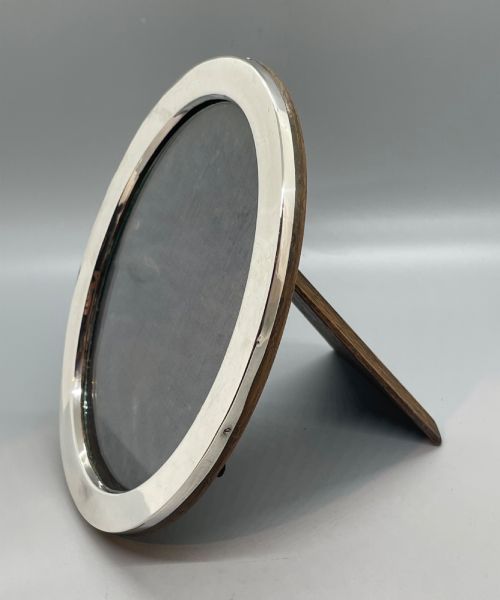
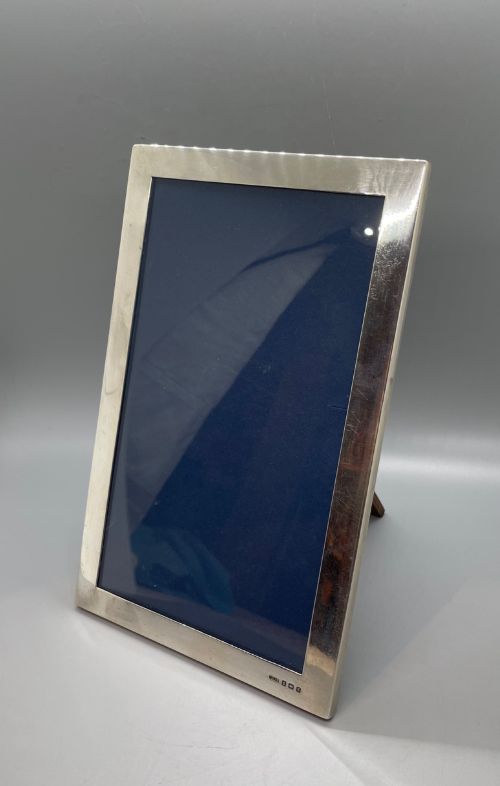
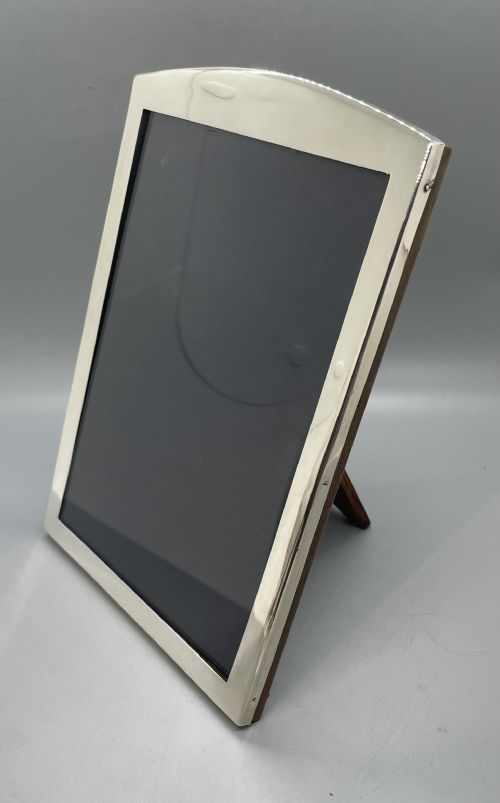
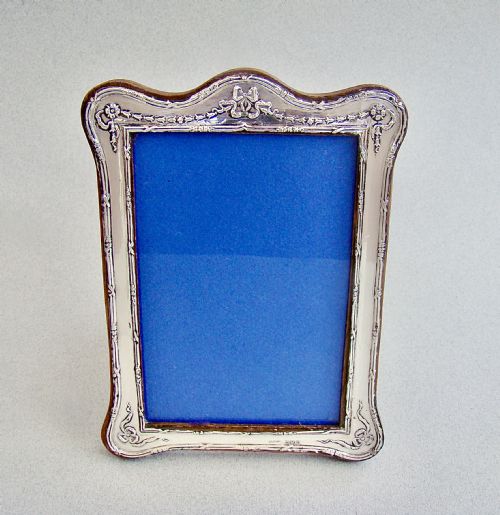
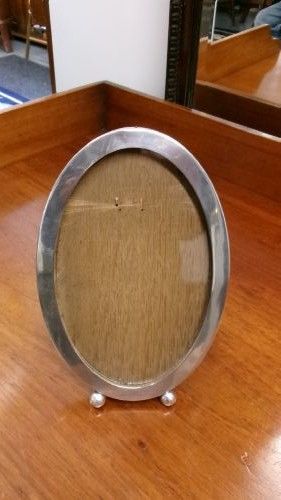
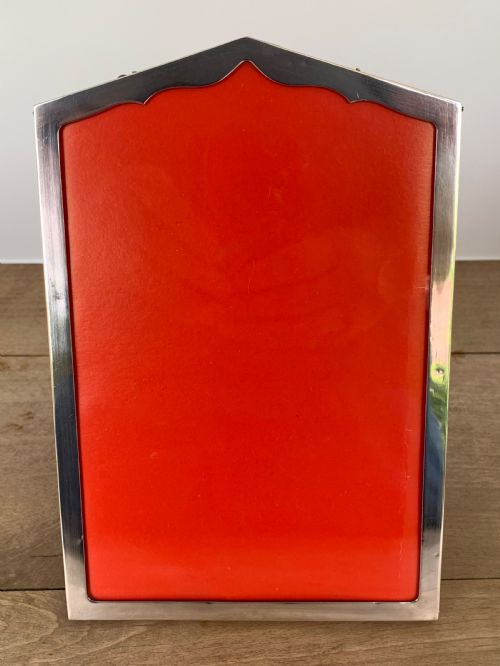
A birmingham silver photo frame combines sterling silver fronts with structural wooden backs and folding easel stands. These items protect and display portrait or landscape photographs using glass apertures held within decorated metal borders.
Most examples encountered on this page date from the Edwardian period and the George V reign, spanning the early decades of the twentieth century. Forms range from simple rectangular shapes to heart-shaped designs, circular formats, and occasional combination pieces housing vesta cases.
Materials and Construction
Makers stamp sheet sterling silver into various styles, incorporating wood panels for rigidity alongside glass to cover the image. Interiors often feature fabric linings such as velvet, silk, or leatherette to cushion the backing boards.
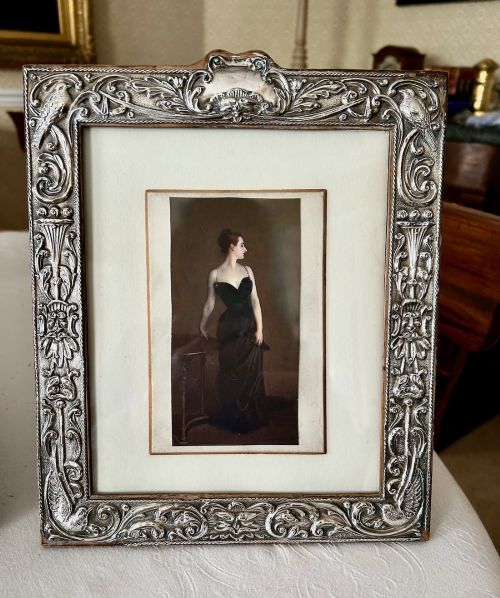
Surface decoration relies on embossing, engraving, planishing, and engine-turning to create geometric patterns or floral motifs. Some pieces apply a gold wash over the silver surface for heightened visual contrast.
Makers occasionally squeezed tiny photograph frames into vesta cases so smokers could keep sweethearts close while striking matches.
Distinctions in Quality
Superior quality rests in the crispness of the hallmarking and the depth of the metal ornamentation, whether through hand-engraving or precise engine-turned lines. Heavy-gauge silver resists denting and maintains structural integrity far better than thin metal pressings.
The refinement of the supporting structure dictates overall utility, seen in sturdy wooden backs, intact hinging mechanisms, and well-preserved velvet or silk linings. Subtle decorative elements like ribbon crests and bow details show greater artisanal care than plain borders.
W.I. Broadway & Co·Henry Matthews·Minshull & Latimer·Deakin & Francis·A&J Zimmerman·John Edward Wilmot·Mappin & Webb·Horton & Allday·Green & Cadbury Ltd·William Haseler·A.W. Pennington·Laurence Emanuel·Henry Williamson Ltd·Sanders & Mackenzie·Charles Green & Co·Baldwin & Marriott·Bishton's Ltd·Deakin & Sons
The Birmingham Silver Photo Frame Glossary
- Sterling silver
- A metal alloy consisting of ninety-two point five percent silver and seven point five percent other metals, typically copper. This standard composition governs British hallmarked items.
- Hallmark
- A series of official marks stamped onto precious metals indicating the maker, purity standard, assay office, and date letter. Birmingham items carry the anchor symbol.
- Engine-turning
- A mechanical technique for engraving intricate geometric patterns into metal surfaces using a lathe. This finish creates textured light-reflecting designs popular in Art Deco pieces.
- Planishing
- A hammering technique used to smooth sheet metal and leave subtle, flat facets across the surface. This finish provides a distinctive handcrafted texture distinct from polished brightness.
- Vesta case
- A small pocket box designed for holding matches, occasionally integrated directly into desk accessories or combination photo frames.
Birmingham Silver Photo Frame: Frequently Asked Questions
How do I date a silver frame?
Dating relies on the specific date letter stamped within the Birmingham anchor hallmark cluster on the silver border. Comparing the letter shape against official assay office tables reveals the exact year of production.
Stylistic cues such as Edwardian ribbon motifs or Art Deco geometric engine-turning also help narrow the manufacturing decade.
What wood backs are original?
Original backing boards usually consist of mahogany, oak, or pine covered in velvet, silk, or leatherette to match the era of the silver front. These panels fit snugly into the metal rebate and hold the folding easel stand.
Replacement backs often lack the aged patina, appropriate textile coverings, or original barrel hinges found on period pieces.
How do I clean tarnished silver?
Cleaning requires a soft microfiber cloth and a mild, non-abrasive silver polish formulated specifically for sterling items. Gentle circular motions remove oxidation without wearing away thin embossed details.
Harsh chemical dips and abrasive brushes damage the delicate wooden backs, glass apertures, and fabric linings housed behind the frame.
Are easel stands usually original?
Most surviving frames retain their original hinged wooden or metal support struts attached to the backing board. These struts allow the piece to rest securely at an angle on flat surfaces.
Loose or missing stands often indicate past repairs or replacements, which can affect the overall stability and presentation of the display.