
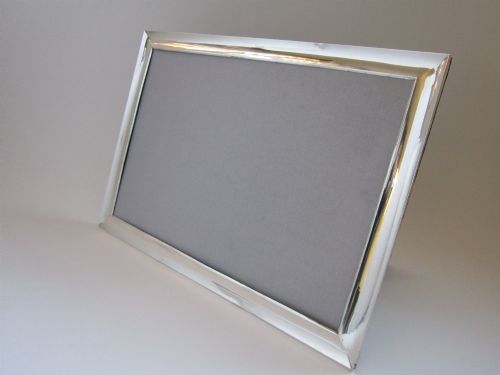
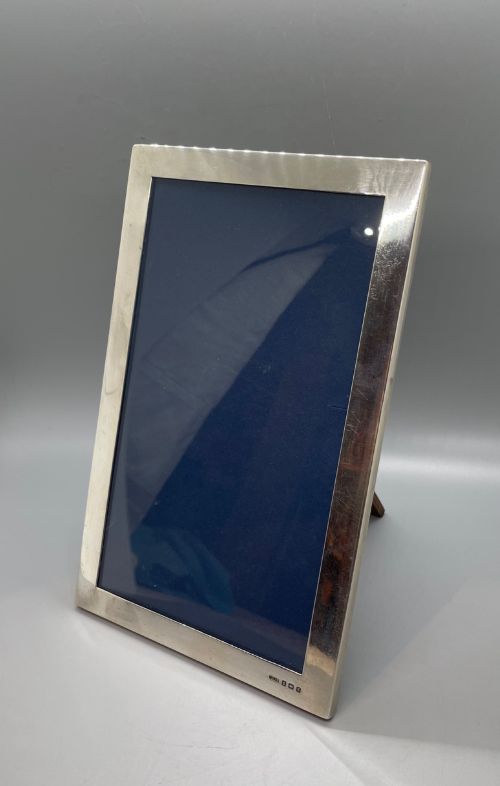
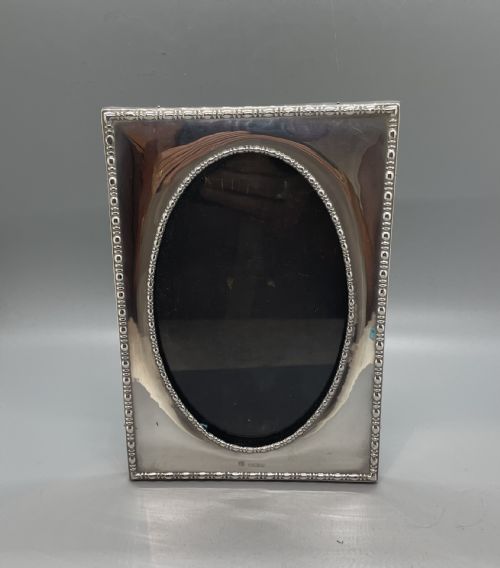
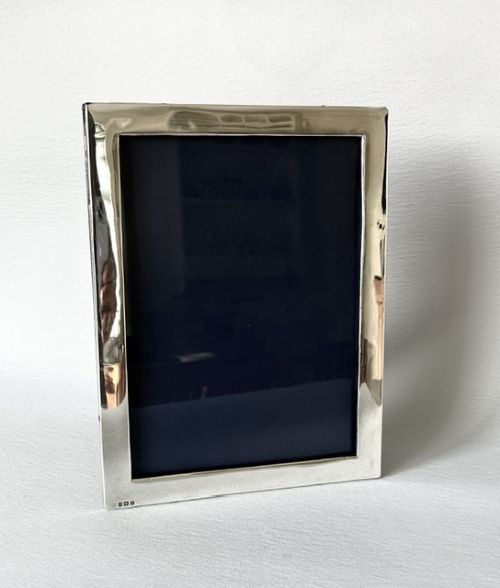

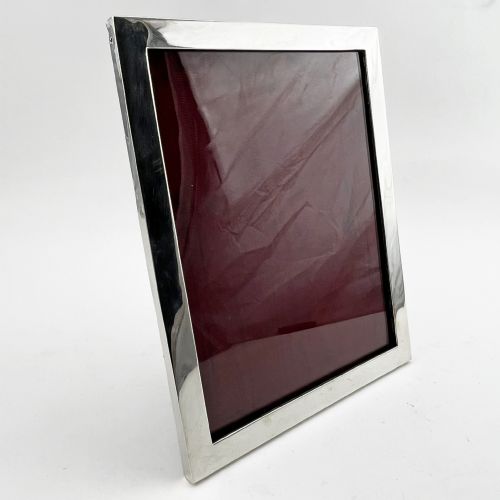
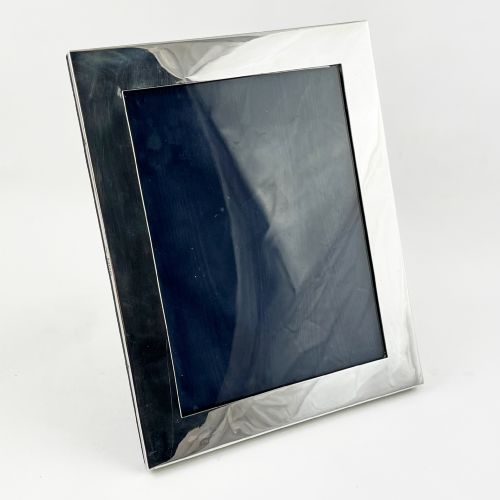


Solid Silver Picture Frame
These solid silver picture frame examples bring sterling metal and glass together in Edwardian, George V and Art Deco designs.
What a solid silver picture frame is
A solid silver picture frame houses a photograph behind glass, supported by a backing material such as wood, velvet, leather or fabric. When you search for a solid silver picture frame, you encounter rectangular forms shaped in George V, Edwardian and Art Deco styles.
The pieces listed on this page span several decades from the early twentieth century, specifically covering periods around nineteen hundred, nineteen ten, and nineteen thirty. Makers utilised sterling silver for the primary mount, creating objects designed to sit upright on desks or tables.
Most items take the form of standard photograph frames with plain borders, though dimensions vary significantly from compact sizes up to larger twenty inch pieces. The surviving examples demonstrate how households displayed portraits during the Edwardian and interwar eras.
How they were made
Silversmiths constructed the outer face from sterling silver, shaping plain borders and decorative frames through traditional metalworking techniques. Assay offices in locations such as Birmingham stamped the metal to denote its silver standard.
Makers integrated glass to protect the photograph surface, securing it within the metal rebate. The reverse side typically received a supporting structure built from wood, leather, velvet or fabric, often fitted with a fold-out strut for display.
Retail Price Guide 2026
Typical UK retail prices for solid silver picture frame, calculated from the Sellingantiques database of over a million retail prices indexed since 2003. This retail price guide relies exclusively on Sellingantiques data; no external sources or auction records are used, so the figures do not describe the wider market.
One historical archive piece arrived with a charming contemporary picture still tucked safely inside its silver border.
What varies in quality
The calibre of a piece rests on the thickness of the sterling silver sheet and the crispness of the border design. Substantial gauge metal resists bending and maintains structural integrity around the glass aperture over decades of use.
Attention to detail on the reverse backing distinguishes finer examples, where quality leather, velvet or fitted wooden struts complement the precious metal front. Maker marks and clear hallmarks from assay offices add historical certainty to the construction.
Sanders and Mackenzie
The Solid Silver Picture Frame Glossary
- Sterling silver
- A silver alloy containing ninety-two point five percent pure silver by mass, forming the primary material for these frames. This standard ensures durability and a bright reflective finish.
- Hallmark
- An official mark stamped onto precious metal items to indicate the standard of purity, the assay office, and the year of manufacture. Birmingham examples feature prominently in this category.
- Strut
- A hinged support attached to the back of a frame that allows it to stand upright on a flat surface. These supports are frequently covered in leather, velvet or fabric.
- Rebate
- The recessed channel behind the inner edge of the frame that holds the glass and the picture securely in place. It prevents the photograph from shifting forward.
Frequently Asked Questions
What periods do these frames come from?
The available selection spans the early twentieth century, specifically representing the Edwardian era, the George V period, and the nineteen thirties.
Assay dates and style characteristics help date each piece accurately to these decades.
What materials support the silver front?
Makers used various backing materials including wood, leather, velvet and fabric to give the frames rigidity and weight.
A glass panel sits directly behind the silver border to protect the photograph.
How do I identify the silver standard?
Sterling silver pieces carry official hallmarks stamped by British assay offices, such as Birmingham, indicating the purity of the metal.
These tiny stamped marks also reveal the specific year the frame was tested and entered the market.
How are these frames displayed?
Each piece is designed as a photograph or picture frame intended to stand upright on a desk, mantelpiece or table.
A hinged strut attached to the rear backing material holds the frame at a stable viewing angle.