


English Sterling Silver Frame
These English sterling silver frame examples offer enduring elegance for desks and mantels, combining precious metal with practical display.
English sterling silver frame forms and periods
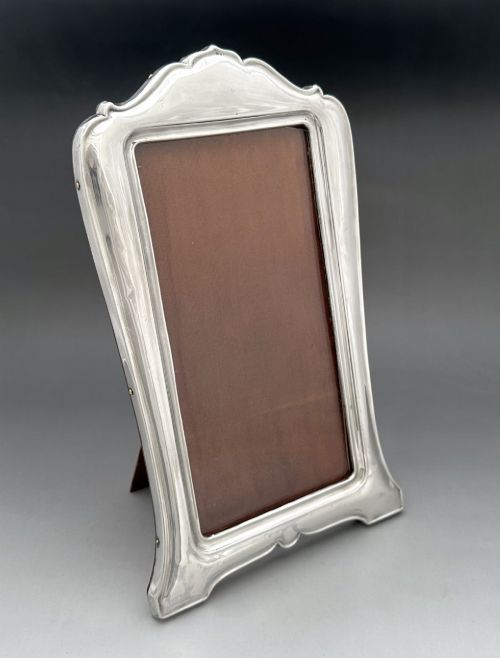
An English sterling silver frame is a functional desk or mantel accessory designed to display photographs and pictures. The pieces seen here span the Edwardian, George V, and Art Deco periods, reaching from nineteen-hundred into the nineteen-thirties.
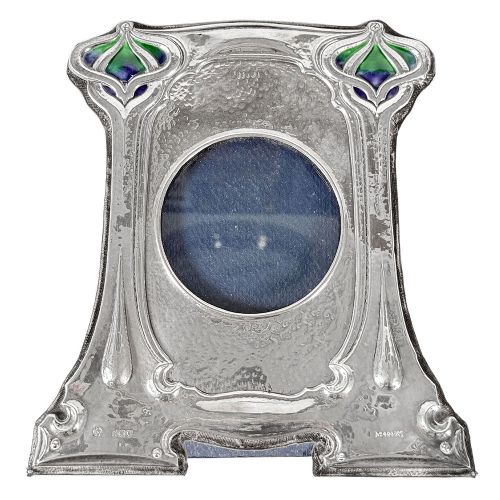
Most examples function as picture or photograph frames in landscape or portrait orientation, occasionally featuring two-way design versatility. Heart shapes, bow motifs, and clean geometric geometries appear alongside traditional rectangular formats.
The archive demonstrates that these objects were produced extensively across the early twentieth century. Makers worked within prevailing stylistic movements, transitioning from flowing Edwardian and Art Nouveau aesthetics to streamlined Art Deco designs.
Defining characteristics of quality
Quality rests upon the weight of the sterling silver and the crispness of decorative elements like engine turning or pierced work. Heavier gauge metal resists bending and maintains structural integrity over decades of use.
The refinement of the backing materials, including polished wood and intact velvet or fabric linings, distinguishes standard production from superior examples. Maker marks and clear hallmarks also contribute to the distinction of finer pieces.
Retail Price Guide 2026
Typical UK retail prices for english sterling silver frame, calculated from the Sellingantiques database of over a million retail prices indexed since 2003. This retail price guide relies exclusively on Sellingantiques data; no external sources or auction records are used, so the figures do not describe the wider market.
Some Edwardian frames feature tiny pierced bows that look ready to untie themselves.
James Dixon And Sons·Walker And Hall·Mappin And Webb·Deakin And Francis
The English Sterling Silver Frame Glossary
- Sterling silver
- A silver alloy containing ninety-two point five percent pure silver by mass, with the remainder consisting of other metals like copper. This standard composition guarantees durability while retaining a bright metallic lustre.
- Engine turned
- A decorative technique involving precise geometric patterns engraved mechanically into the silver surface. This method creates repetitive micro-textures that catch the light.
- Planished
- A surface finish achieved by hammering the metal with a rounded tool to create small, controlled facets. This process hardens the silver while producing a subtle, light-diffusing texture.
- Pierced
- A method where sections of the silver sheet are cut away to form openwork designs or patterns. This technique lightens the visual weight of the frame.
- Two-way
- A structural design allowing the frame to stand in either portrait or landscape orientation. This flexibility is accommodated by pivoting easel stands or alternative strut placements.
Frequently Asked Questions
How do I date an English sterling silver frame?
Dating relies heavily upon the assay office hallmarks stamped into the sterling silver. These marks include letters corresponding to specific years and symbols identifying the testing city.
Stylistic cues also help determine the period. Pieces featuring organic floral motifs typically align with the Edwardian and Art Nouveau eras, while linear patterns point toward Art Deco.
What is engine turned decoration?
Engine turning is a mechanical engraving process that cuts precise, repeating geometric patterns into the metal surface. It produces fine lines that reduce glare and add texture.
This technique appeared frequently on frames from the nineteen-twenties and nineteen-thirties. It requires specialist machinery to execute uniformly across the silver.
How were the backs constructed?
Most frames utilise a supportive wooden backing, often oak, placed behind the glass and photograph. This rigid core provides stability for the silver frontage.
The wood is typically covered in velvet or fabric to present a neat finish. A hinged easel strut is usually attached to support the frame on flat surfaces.
Can these frames sit both ways?
Certain models are engineered as two-way frames, featuring multiple strut placements or rotating mounts. This allows the user to display either portrait or landscape photographs.
Standard rectangular and heart variants usually maintain a fixed orientation. Checking the back reveals how the easel stand accommodates different viewing angles.