




Silver Mounted Horn
Silver mounted horn pieces combine organic texture with bright metal, spanning snuff mulls, beakers, and desk accessories from the eighteenth to the early twentieth century.
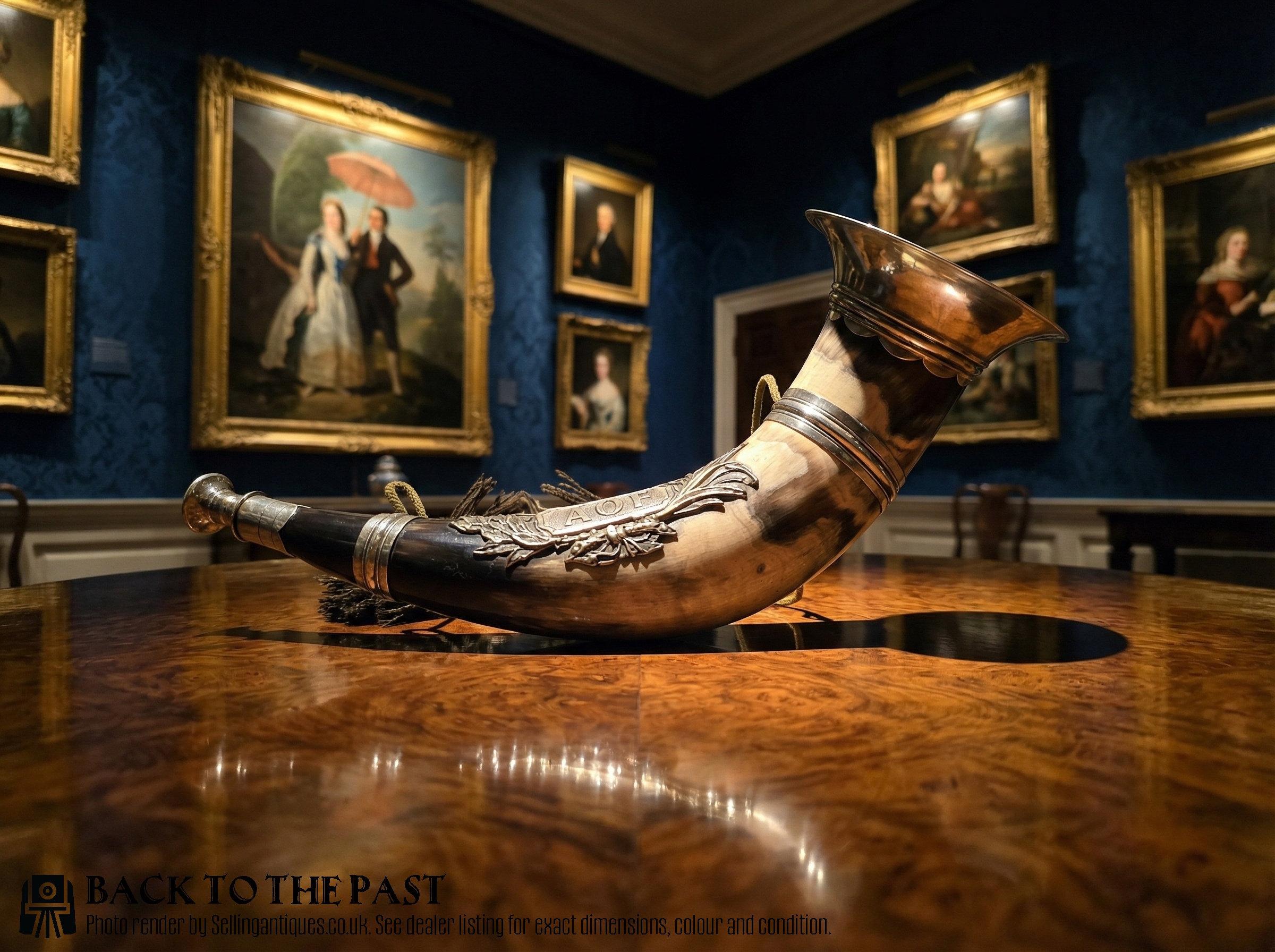
Silver Mounted Horn
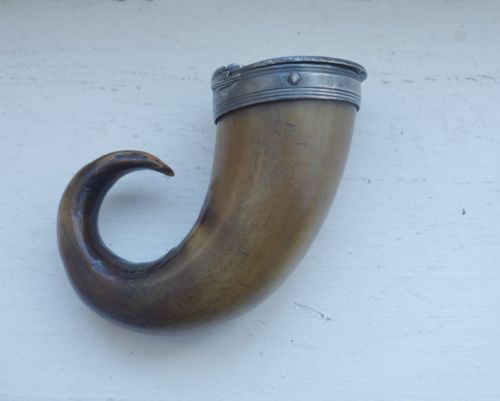
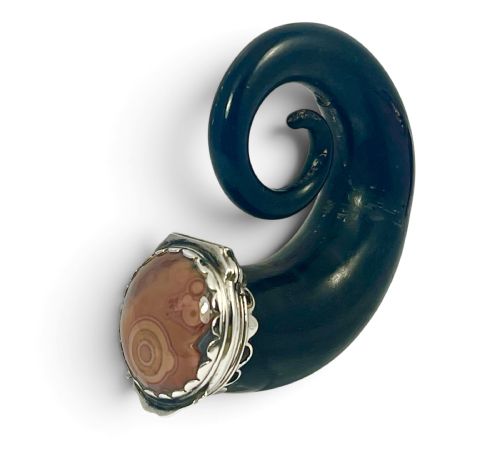
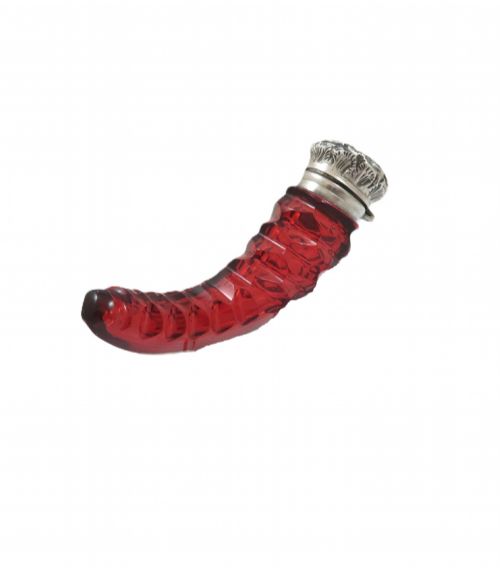
When you search for silver mounted horn, you encounter practical and decorative objects fashioned from natural keratin and fitted with sterling silver or silver plate. These items range from Scottish snuff mulls and drinking beakers to desk accessories and equestrian equipment.
The pieces appearing on this page originate predominantly from the nineteenth and early twentieth centuries, with Victorian and Edwardian examples forming the largest share. Scottish provincial styles and English country items recur frequently among the desk stands, inkwells, and walking sticks.
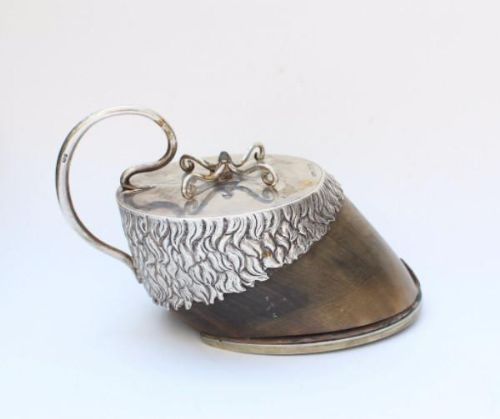
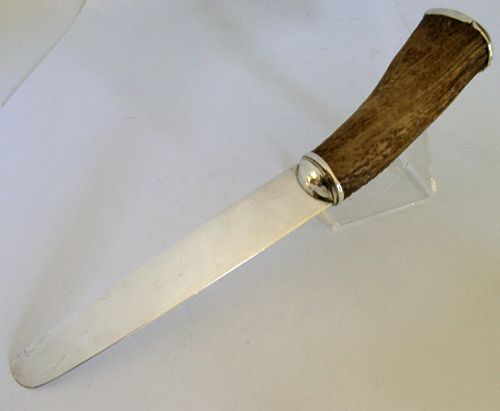
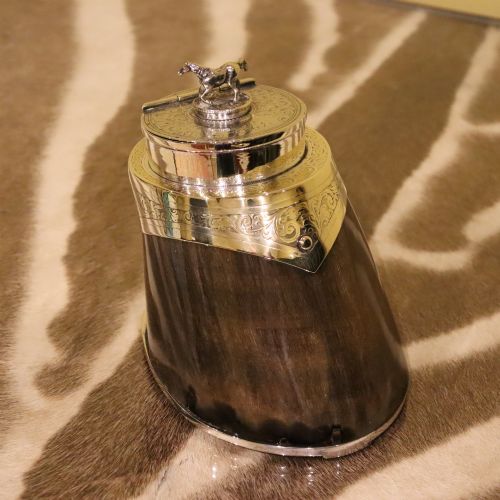
Functional drinking vessels and smoking accessories dominate the selection, alongside taxidermy hoof pieces and ceremonial horns. Collectors also find domestic items such as dinner gongs, bowls, and page turners utilising the distinct tonal variations of natural horn.
How they were made
Craftsmen shaped natural cattle, ram, or stag horn by applying heat and pressure to flatten, bend, or expand the material into vessels, handles, and desk accessories. The organic horn is frequently paired with oak, leather, or glass to build structured items like inkwells and dinner gongs.
Silversmiths applied sterling silver or silver plate to rims, shields, collars, and hinges, securing the mounts with pins or adhesive. Engraving and chasing often decorate the silver components, particularly on Scottish snuff mulls and presentation beakers.
Listings feature eighteenth-century folk art pieces alongside nineteenth-century Scottish provincial beakers and Edwardian desk accessories.
What varies in quality
Quality rests in the harmony between the organic material and the metalwork, distinguishing utilitarian items from presentation pieces. Superior examples exhibit clear horn translucency, deep natural grain, and substantial gauge silver mounts rather than thin plating.
The precision of the fit between the silver rim and the horn determines the craftsmanship level of the object. Pieces featuring detailed chasing, distinct hallmarks, and well-executed joinery separate standard domestic gear from finer workshop output.
Swaine Adeney·John Meek
The Silver Mounted Horn Glossary
- Snuff mull
- A container used for holding and dispensing dry snuff tobacco, often featuring a hinged lid and fitted with small spoons or brushes. These items frequently utilise curled ram or cow horn.
- Quaich
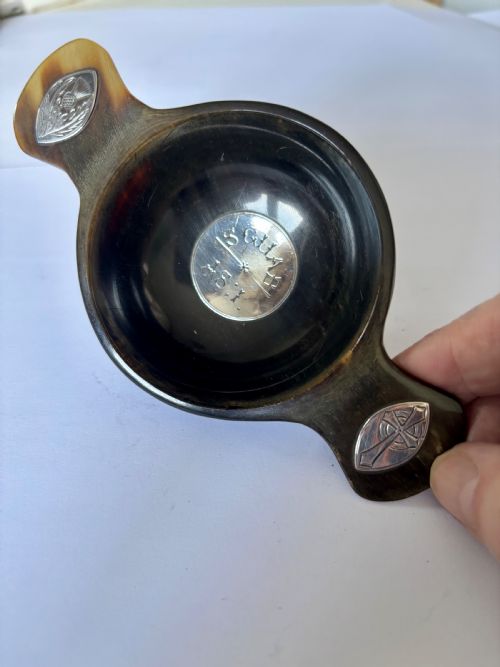
- A traditional Scottish two-handled drinking vessel, which in these listings is constructed from horn and bordered with silver mounts along the rim.
- Beaker
- An open, straight-sided drinking cup shaped from a section of hollow horn and reinforced with a flat metal base and a shaped rim band.
- Hallmark
- An official stamp applied to silver items indicating the standard of purity, the assay office, and the date of manufacture. These marks help verify the period of the mount.
- Desk tidy
- A desk accessory compartment designed to hold writing instruments, ink bottles, and stationery, often incorporating horse hooves or staghorn into the assembly.
Silver Mounted Horn: Frequently Asked Questions
What are silver mounted horn beakers?
Silver mounted horn beakers are drinking vessels formed from natural animal horn with fitted metal rims and bases. They were widely used for dining and social occasions during the Victorian period.
The natural grain of the horn ensures that every drinking cup possesses a unique pattern of amber, brown, and translucent tones, accentuated by the polished silver edging.
How do I care for horn objects?
Horn requires stable humidity and protection from extreme heat and direct sunlight to prevent warping and cracking. Keep the organic material nourished with light mineral oil rather than harsh chemical polishes.
Polish the silver mounts separately using a soft cloth, taking care to avoid getting abrasive cleaning pastes onto the surrounding horn surface.
How are periods identified?
Periods are determined by examining the style of the silver mounts, any stamped hallmarks, and the construction methods used. Victorian and Edwardian pieces often display specific aesthetic traits such as Celtic Revival motifs or heavy equestrian detailing.
Reference marks on the silver provide the most precise indication of the date, while eighteenth-century items usually rely on distinct folk art construction techniques.
Were these items used daily?
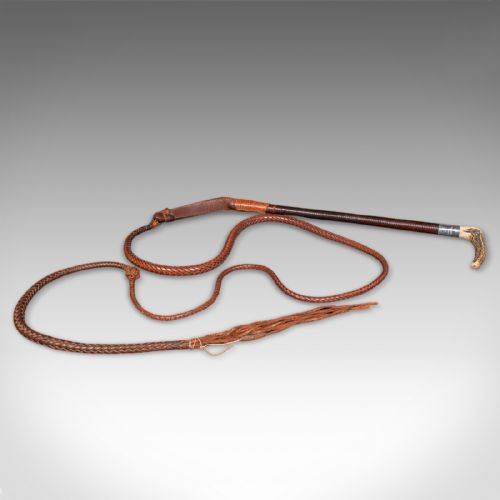
Many of these pieces served practical functions in nineteenth-century homes, offices, and stables. Items like riding crops, hunting bugs, inkwells, and walking sticks were made for regular daily utility.
Other objects, such as elaborate presentation snuff mulls and ceremonial horns, were reserved for special social gatherings, club events, or formal displays.