

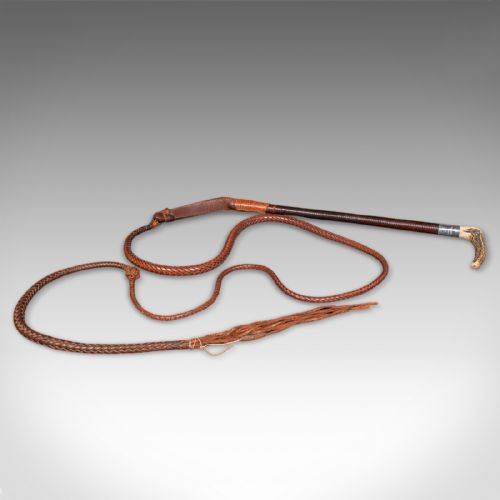


Silver Mounted Hunting Horn
A silver mounted hunting horn brings together the raw texture of natural horn and the gleam of sterling silver for the field.
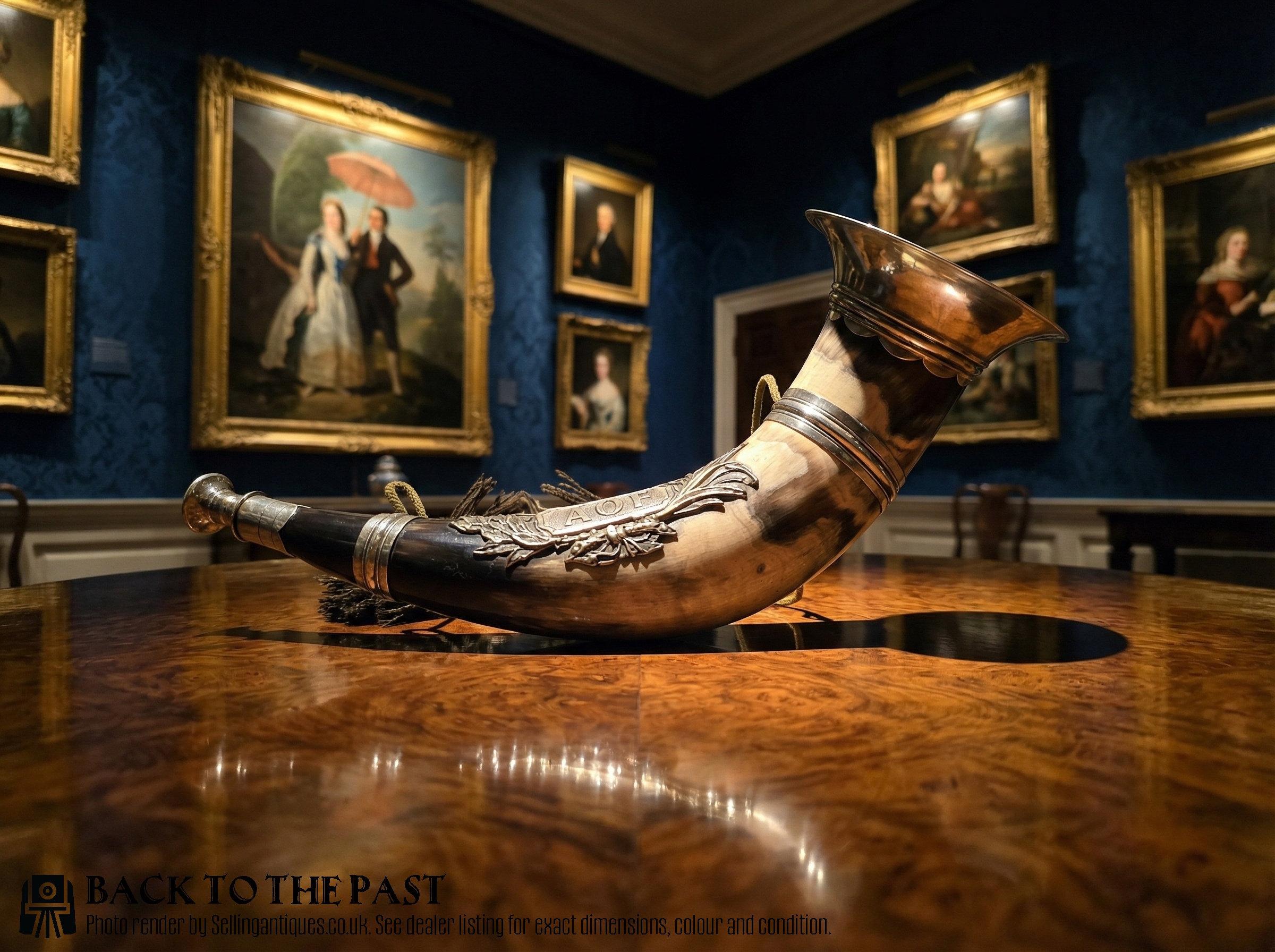
Silver Mounted Hunting Horn
A silver mounted hunting horn represents the intersection of equestrian sport, folk art, and functional metalwork from the eighteenth century into the early twentieth century. When collectors search for this phrase, they encounter a variety of forms including hunting whips, bugles, ceremonial horns, and riding crops.
The pieces on this page span the Georgian era through to the 1920s, with Victorian sporting examples appearing most frequently alongside English country items and German pieces.
Materials and construction
The makers utilised natural horn, stag horn, and leather as the primary organic foundations for these objects, shaping the animal material while it was pliable or carving it from solid sections. Silver and silver plate form the mounts, collars, and decorative fittings that reinforce and finish the pieces.
Metal components often bear hallmarks or detailed engraving, joining securely to the leather shafts of whips or the rims of beakers and bugles with pins and specialised adhesives.
Materials appearing across the site include natural horn, staghorn, leather, silver plate, and sterling silver.
Judging quality in these items
Quality rests in the harmony between the organic horn and the applied silver work, where crisp hallmarks and detailed engraving elevate a utilitarian object into a decorative piece. The tactile quality of the leather braiding on whips and the natural grain of the staghorn or cow horn distinguish superior items.
Makers such as Swaine Adeney and John Meek demonstrate the level of finish that separates standard country wares from workshop pieces designed for specific ceremonial or equestrian use.
Swaine Adeney·John Meek
The Silver Mounted Hunting Horn Glossary
- Silver collar
- A band of silver fitted around the neck or handle of a whip, horn, or crop to strengthen the material and often carry maker marks or inscriptions.
- Staghorn
- The shed antler of a stag utilised for handles and grips due to its dense texture and distinctive knobbly surface. It provides a secure grip for equestrian accessories.
- Hallmark
- An official stamp applied by an assay office to indicate the purity of silver, the maker, and the year of testing. These marks help date the metal mounts accurately.
- Ceremonial horn
- A horn adapted from its field use for formal, civic, or fraternal displays, often embellished with extensive metalwork and heraldic engraving.
Silver Mounted Hunting Horn: Frequently Asked Questions
What were silver mounted hunting horns used for?
These items served practical functions in the field for signalling during equestrian pursuits, driving game, or organising hunts across rural estates.
Over time, many pieces transitioned into ceremonial objects, decorative table items, or prized possessions associated with country sports and fraternal orders.
How do I date a silver mounted piece?
Dating relies heavily on identifying silver hallmarks, which record specific assay office symbols and date letters corresponding to the year of manufacture.
Stylistic indicators, such as Victorian equestrian motifs or Georgian folk art carvings, also help place the object within a broader historical period.
How should I care for natural horn and silver?
Natural horn requires occasional treatment with neutral oils or waxes to prevent drying and splitting in centrally heated environments. Silver mounts benefit from gentle cleaning with a soft cloth to maintain the metal without abrading the adjacent horn or leather.
Are hunting whips and crops considered hunting horns?
While whips and crops serve different equestrian functions than acoustic horns, they share the same material vocabulary of leather, horn, and silver mounts. Makers frequently applied similar silver collars and handle techniques across all these related sporting accessories.