






Traditional Hunting Horn
Traditional hunting horn pieces range from brass coaching horns to natural horn powder flasks, offering a distinct piece of sporting heritage for any room.
Traditional Hunting Horn
When you search for traditional hunting horn, you encounter items shaped by equestrian and field sports across several centuries. The pieces on this page span the eighteenth century to the mid twentieth century, covering both brass and copper horns as well as related items like hunting whips and powder flasks.
You are most likely to meet nineteenth-century brass or copper coaching horns alongside riding crops and equestrian accessories. The forms include decorative metalwork, dinner gongs, and drawings of American foxhounds, reflecting a broad material culture of rural sport.
The origins stretch from Georgian craftsmanship through Victorian sporting life into later twentieth-century drawings and accessories. Each object carries the functional design of its original use, whether for signalling in the field or mounting on a wall.
How they were made
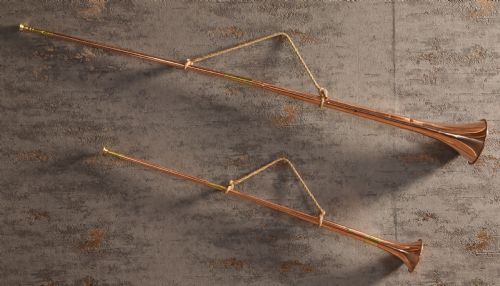
Makers shaped sheet brass and copper into long, tapered tubes for coaching horns, often joining sections with soldered seams. These metal instruments frequently paired with silver plate mounts or collars to reinforce the mouthpiece and bell rim.
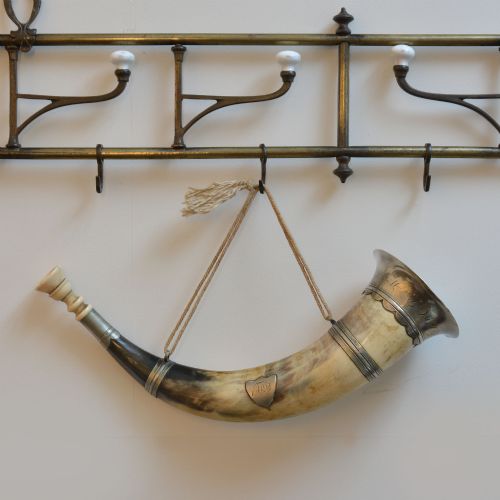
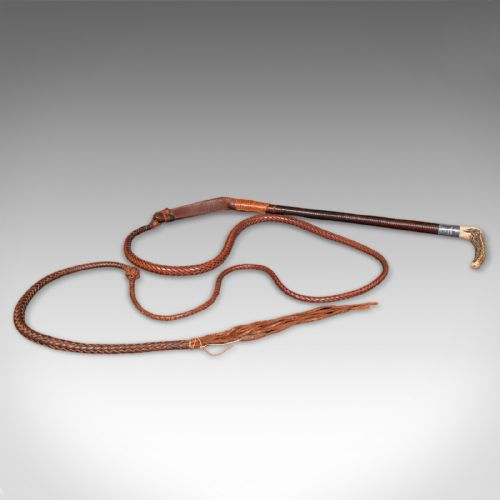
Organic materials like cattle horn and natural horn were shaped and polished for powder flasks and dinner gongs, sometimes mounted on oak bases. Leather and silver appeared on riding crops and hunting whips, combining flexible braided cores with precious metal hardware.
Traditional Hunting Horn Retail Price Guide 2026
Typical asking prices for traditional hunting horn among the pieces listed under this phrase on Sellingantiques today, from the lower quarter to the upper quarter. They describe what is for sale here now, not the wider market.
A Victorian dinner gong brings the booming call of the country house dining room straight to your modern hallway.
What varies in quality
The distinction between ordinary and superior pieces rests on the crispness of metalwork and the integrity of organic materials. Heavy gauge brass and well-preserved copper retain their structural form better over time than thinner metals subject to denting.
Workmanship shows in the precision of silver mounts and collars, as well as the careful stitching on leather equestrian gear. Pieces carrying maker attribution or specific period characteristics demonstrate higher levels of original craftsmanship.
Swaine Adeney·Michael Lyne
The Traditional Hunting Horn Glossary
- Coaching horn
- A long, straight brass or copper horn historically used by coachmen to signal arrival and clearance along roads. These instruments require significant lung capacity to sound clearly.
- Powder flask
- A container fashioned from animal horn or metal used to hold gunpowder for firearms. Eighteenth-century examples often feature carved detailing and secure nozzles.
- Dinner gong
- A percussion instrument formed from a resonant disc or horn mounted in a wooden frame. They were struck with a mallet to announce meals in large country houses.
- Equestrian accessories
- Items related to horseback riding and horse-drawn transport, including riding crops, whips, and harness fittings. These combine practical utility with durable materials like leather and silver.
Traditional Hunting Horn: Frequently Asked Questions
What is a traditional hunting horn?
A traditional hunting horn is a wind instrument historically used in field sports to signal hounds and riders. They are typically fashioned from brass, copper, or natural horn.
Over time, these objects transitioned from active field use into decorative items and sporting art. Their forms reflect the specific demands of equestrian culture across the eighteenth and nineteenth centuries.
How were coaching horns used?
Coaching horns were sounded by coachmen on horse-drawn stagecoaches to warn other road users of their approach. The long metal tube produced a loud, carrying tone suitable for open country.
Today, surviving examples serve as wall displays or decorative metalwork in homes with an interest in transport history.
What materials are common?
Brass and copper predominate among the metal instruments, often accented with silver plate mounts. Natural materials like cattle horn appear in powder flasks and dinner gongs.
Leather and wood also feature heavily in related equestrian gear such as riding crops and whips, creating a varied tactile range.
How do I display a horn?
Horns look best mounted horizontally on wall brackets that support the long copper or brass body safely. Ensure the placement avoids direct sunlight to protect any mounted leather or silver elements.
Pairing a coaching horn with related sporting drawings or riding crops helps establish a cohesive period context in a room.