
Silver Mechanical Watch
A silver mechanical watch brings together traditional craftsmanship and functional engineering, offering the enduring appeal of a manually wound or automatic movement housed in precious metal.
Silver Mechanical Watch
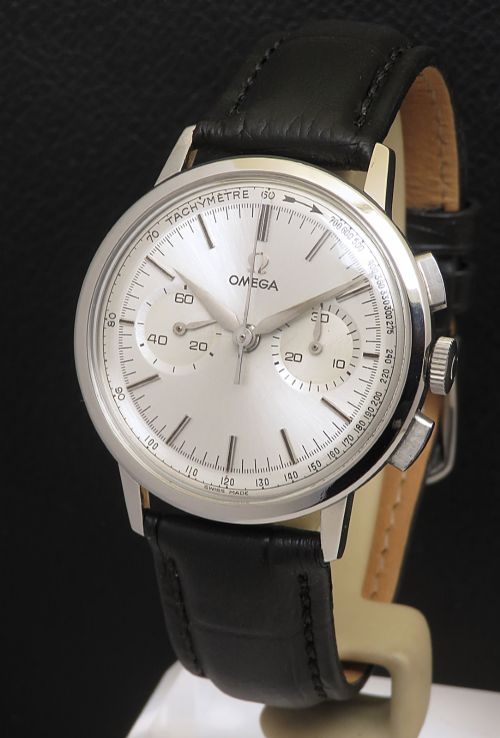
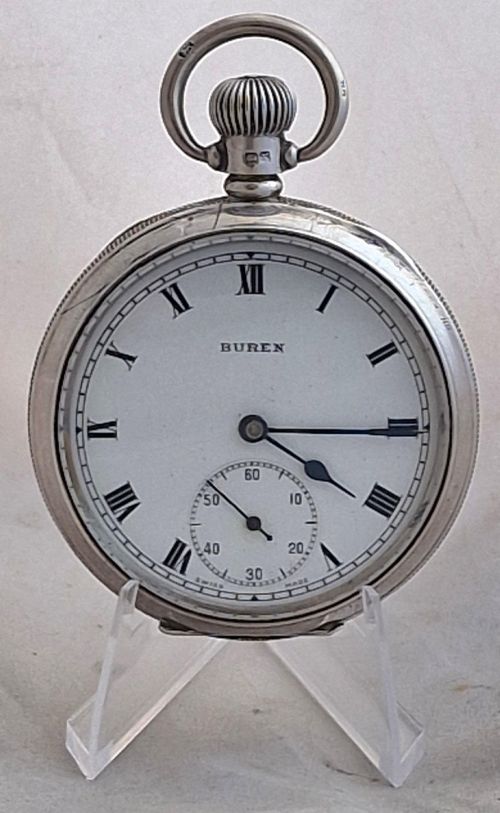
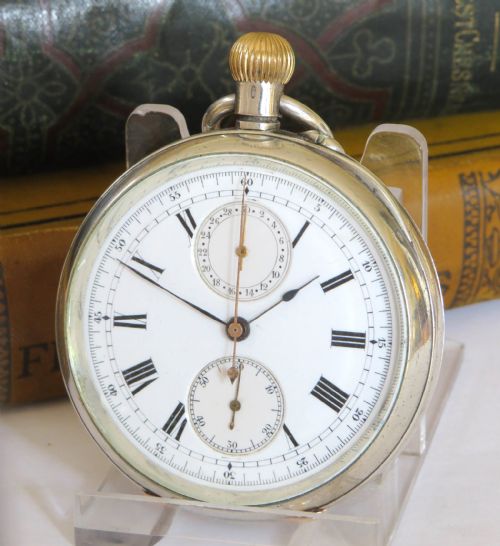
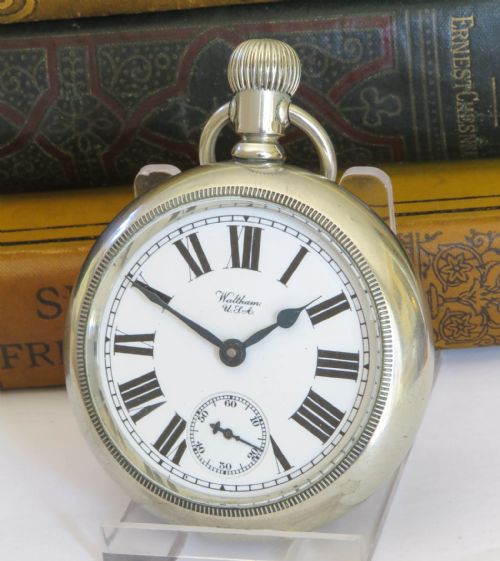
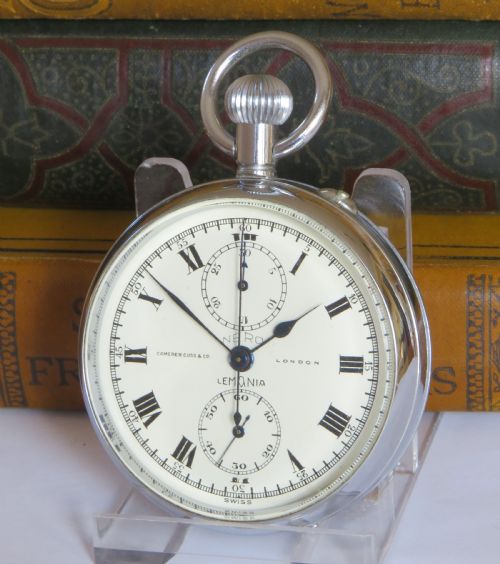
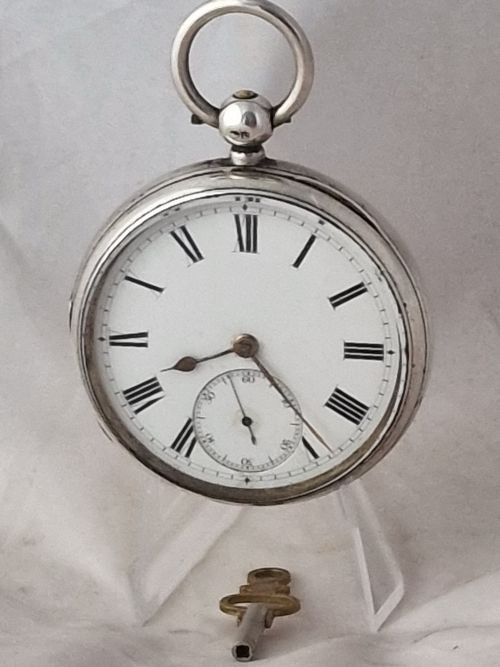
A silver mechanical watch encompasses both pocket watches and wristwatches produced across various decades, uniting portable timekeeping with silver cases.
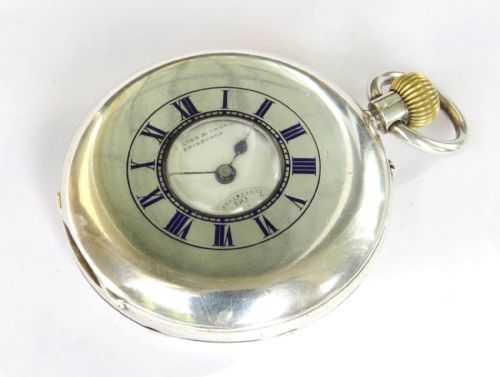
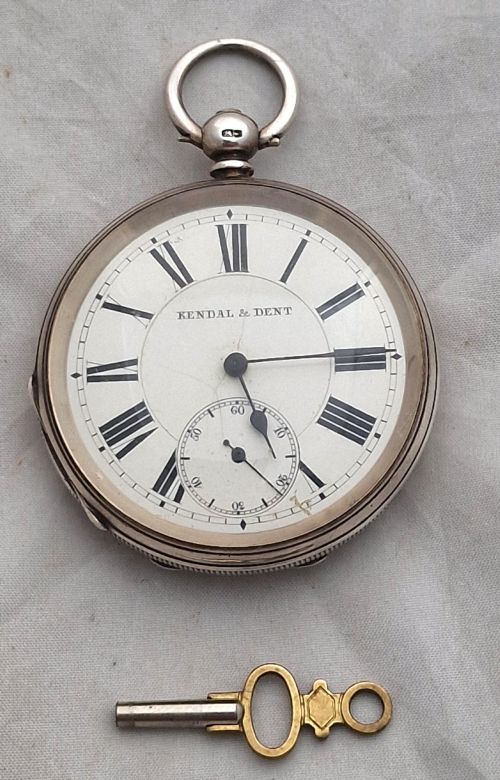
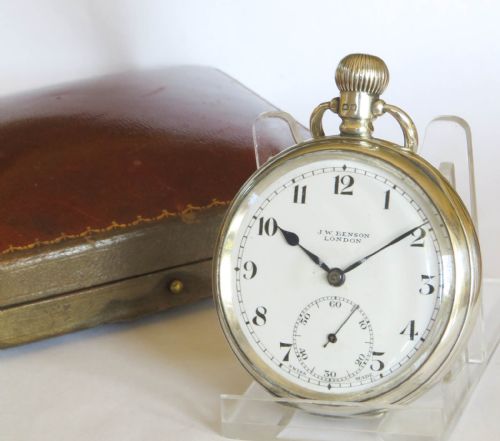
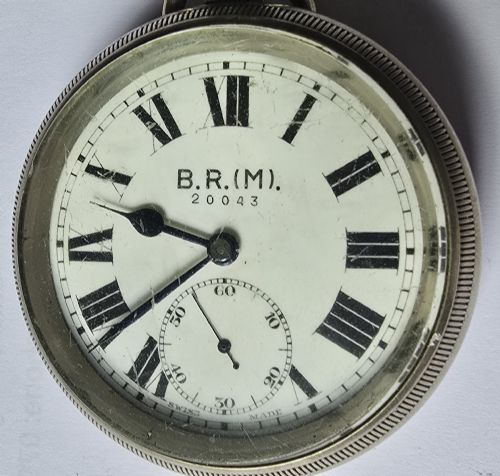
The selections available here span from Victorian and Edwardian pocket watches to mid-century wristwatches and railway timepieces.
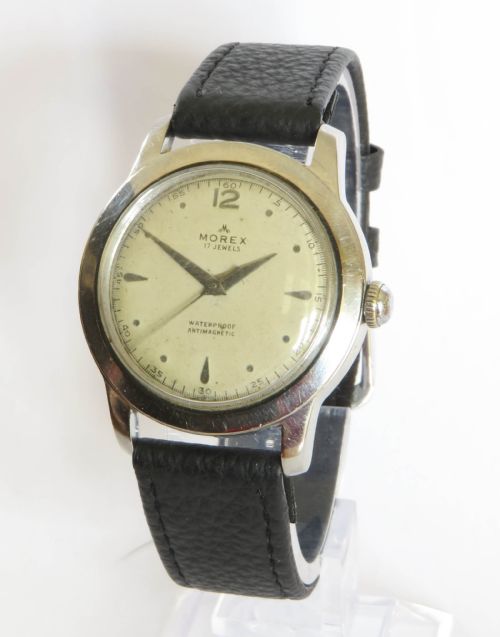
Pocket watches dominate the earlier eras, while wristwatches emerge more frequently as the mid-twentieth century progresses.
How They Were Made
Cases utilise solid silver alongside glass crystals to protect the dial, often complemented by enamel dials with painted numerals.
Internal movements rely on brass and steel components assembled with mechanical gears, springs, and escapements requiring careful manual winding or automatic self-winding rotors.
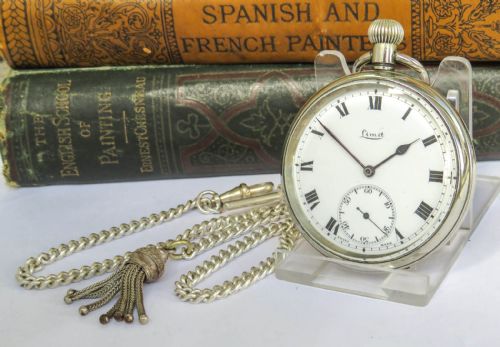
Some examples incorporate leather straps or metal chains, particularly for pocket watches paired with albert chains.
Materials documented across the inventory include silver, brass, steel, glass, enamel, and leather.
What Varies in Quality
The refinement of the mechanical movement dictates overall quality, with specialised mechanisms like chronographs and multi-jewelled calibres standing above standard time-only movements.
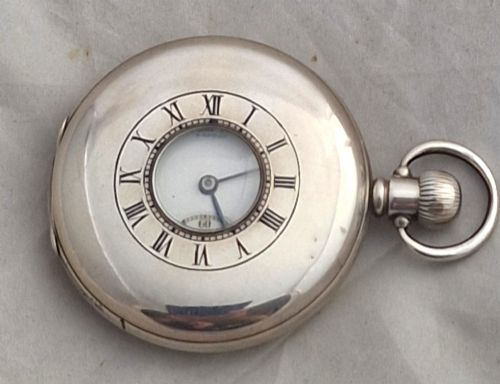
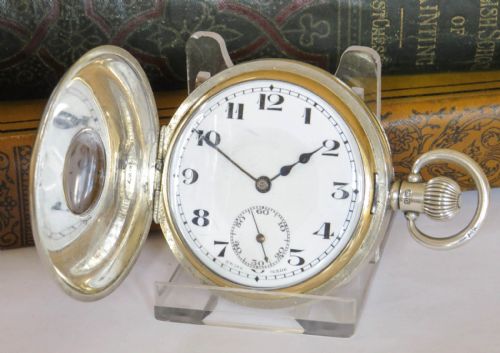
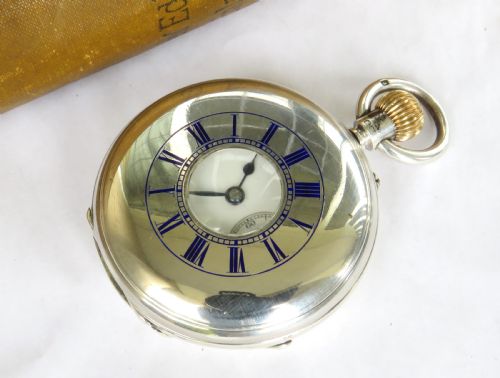
Case execution and hallmarks also define standard, where crisp silver hallmarks, half hunter covers, and fine enamel work elevate an individual piece.
The legibility of the dial, the preservation of original hands, and the integrity of the glass or acrylic crystal contribute to the sustained desirability of each watch.
Kendal & Dent·Hinds London·J W Benson·Omega·Buren·Guinand·Waltham·Lemania·Morex·Elgin·Hamilton·Bulova·Cyma·Octava·Revue·Eterna·Silvana·Gruen·Longines·Bravingtons·Stauffer
The Silver Mechanical Watch Glossary
- Half Hunter
- A pocket watch case featuring a closed metal outer lid with a glass or open centre aperture, allowing the time to be read without opening the case.
- Chronograph
- A watch equipped with a complication that measures elapsed time, typically utilising an independent sweep second hand.
- Fusee
- A conical pulley device connected to the mainspring by a chain, designed to equalise the torque as the spring unwinds.
- Calibre
- A specific model designation used by watchmakers to identify the internal movement design.
- Albert Chain
- A short chain attached to a pocket watch, traditionally secured to a waistcoat or belt loop.
Silver Mechanical Watch: Frequently Asked Questions
How do I wind a mechanical watch?
Wind the crown gently between your thumb and forefinger in a clockwise direction until you feel firm resistance. Stop immediately at that point to avoid damaging the internal mainspring.
For daily wear, establish a consistent routine to wind the watch at roughly the same time each morning.
What is the difference between a hunter and an open face watch?
An open face pocket watch has a naked dial protected only by a crystal glass cover. A hunter pocket watch includes a hinged metal lid that springs open to reveal the dial.
The metal cover on a hunter design offers extra protection to the glass face during transport in a pocket.
Can I wear a vintage pocket watch daily?
Many people carry pocket watches daily by securing them to a garment using a chain. Ensure you handle the winding and setting mechanisms with care to preserve the antique components.
Keep the watch away from strong magnetic fields and moisture to maintain accurate timekeeping.
How do I identify the production period?
Examine the hallmarks stamped inside the silver case, which often indicate the assay office and the year of manufacture. Stylistic cues on the dial, such as typography and hand shapes, also help narrow down the decade.
Movement serial numbers can sometimes be cross-referenced against historical records for a more precise date.