
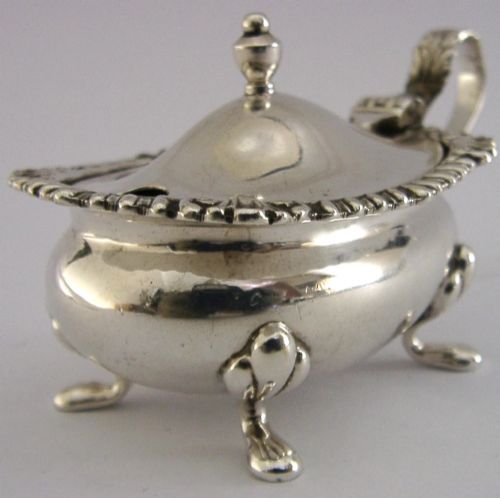
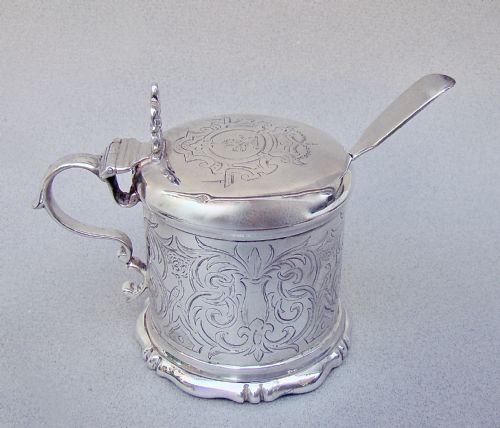
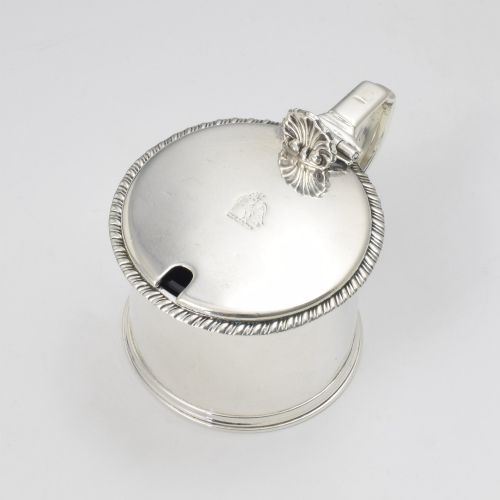


Silver Lidded Mustard Pot
A silver lidded mustard pot brings sharp distinction to any table, combining gleaming metal with the practical utility of a fitted interior liner.
Silver Lidded Mustard Pot
A silver lidded mustard pot is a small dining table condiment vessel designed to hold and serve prepared mustard securely beneath a hinged or lift-off cover. These items appear across several distinct historical periods, most notably in Georgian, Victorian, Edwardian and mid-century forms.
Makers ranged from notable silversmiths operating in London and Sheffield to regional Birmingham workshops. Whether styled in the restrained manner of the Georgian revival or the cleaner lines of the 1960s, each piece reflects the dining customs of its era.
How they were made
Silversmiths utilised sterling silver sheet and cast components, shaping bodies through hammering, soldering and turning on a lathe. Hinges and finials were soldered to the lids with precision to ensure smooth operation during daily use.
Cut glass and moulded glass liners were produced separately to fit snugly inside the silver frames, protecting the metal from corrosive mustard acids. Silversmiths then applied hallmarks to certify the metal standard, assay office and date of manufacture.
Current listings demonstrate materials spanning sterling silver, cut glass, and ruby red or blue glass liners across Georgian, Victorian, Edwardian, and mid-century styles.
What varies in quality
The distinction between standard examples and superior work lies in the weight of the silver and the crispness of the chased or pierced decoration. Pieces bearing the marks of prominent silversmiths command greater interest due to their refined proportions and superior finishing.
The survival of the matching glass liner, particularly in coloured varieties like blue or ruby red, adds significantly to the integrity of the piece. Substantial gauge metal and tight hinge mechanics further separate everyday table wares from exceptional cabinet examples.
Charles and George Fox·Charles Fox II·Robert Hennell I·Walker and Hall·Heath and Middleton
The Silver Lidded Mustard Pot Glossary
- Sterling silver
- A silver alloy containing 92.5 percent pure silver and 7.5 percent other metals, usually copper, chosen for durability. This standard metal forms the primary body of most traditional condiment vessels.
- Hallmark
- An official stamp applied to precious metals indicating the standard of purity, the assay office, and the year of manufacture. These small marks allow historians to date items accurately.
- Liner
- A removable glass insert placed inside a metal condiment container to hold the mustard and prevent chemical corrosion of the silver. These liners are frequently coloured in shades such as blue or ruby red.
- Drum mustard pot
- A cylindrical form of mustard container with straight vertical sides and a flat hinged lid, popular during the eighteenth and nineteenth centuries. This silhouette provides a stable and clean profile on the dining table.
- Finial
- A small decorative knob or ornament fixed to the top of a lid for lifting. Silversmiths shaped these elements to complement the overall style of the vessel.
Silver Lidded Mustard Pot: Frequently Asked Questions
What is a silver lidded mustard pot?
A silver lidded mustard pot is a small table vessel created to serve prepared mustard cleanly and elegantly.
These items usually feature a hinged lid and an interior glass liner to protect the metal.
How do you clean silver mustard pots?
Cleaning requires warm soapy water and a soft cloth to remove residues without damaging the soft metal surface.
Harsh abrasive dips should be avoided, particularly on pieces with glass inserts or delicate hinge mechanisms.
Did all mustard pots have glass liners?
Many examples utilised removable glass liners to prevent mustard from staining or corroding the interior silver.
Some solid silver versions relied on gilt interiors instead of glass.
How do I date an antique silver mustard pot?
Dating relies on the stamped hallmarks which indicate the specific assay office and year letter.
Stylistic cues such as drum shapes or mid-century forms also point towards specific eras like the Georgian period or the 1960s.
How were these pots used on the table?
They sat alongside other condiment vessels to allow diners to help themselves during meals.
A small spoon would rest inside or beside the pot for serving.