





Silver Lidded Mug
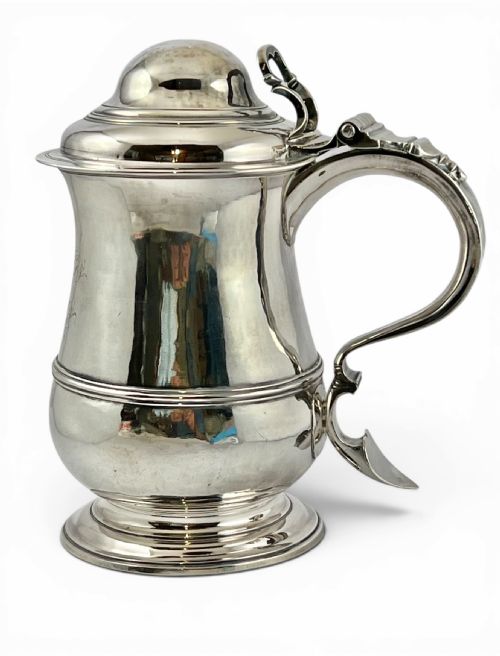
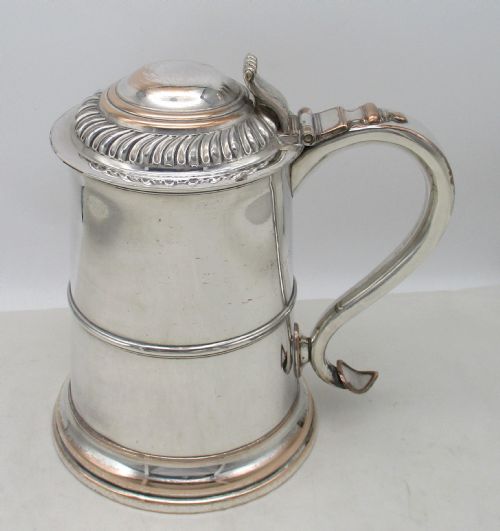
A silver lidded mug is a robust drinking vessel with a hinged cover, offering a tangible connection to early dining habits.
Silver Lidded Mug
A silver lidded mug is also known as a tankard, designed with a secure hinged lid to keep contents covered during use. These vessels appear in forms reflecting historical periods from the seventeenth century through to the Georgian era and later revivals around nineteen hundred.
The pieces listed on this page span several distinct eras, including Charles II, George III, and Queen Anne Revival styles. Each example demonstrates the heavy proportions and functional cylindrical bodies typical of antique drinking vessels.
How they were made
Makers shaped these vessels from solid sterling silver or applied metal over a base metal core using silver plate and electroplated nickel silver techniques. Metalworking methods involved hammering, rolling, and soldering sheet metal to form the distinct cylindrical bodies and attached handles.
Lids required precise metalworking to fit flush with the top rim and operate smoothly on small hinges, often featuring thumbpieces for easy opening. Surface details and maker marks were then punched or engraved directly into the metal.
Listings on this page include sterling silver, silver plate, and electroplated nickel silver across Georgian, seventeenth century, and nineteen hundred periods.
What varies in quality
Quality in a silver lidded mug rests upon the integrity of the metalwork and the weight of the material used. Solid sterling silver examples from the seventeenth and eighteenth centuries demonstrate substantial heft and hand-hammered character, whereas later silver plated pieces rely on base metals.
The precision of the hinge mechanism and the clarity of maker marks or hallmarks also distinguish superior examples. Pieces executed in solid sterling silver carry greater historical substance than electroplated nickel silver revivals.
John Payne London
The Silver Lidded Mug Glossary
- Tankard
- A tall, cylindrical drinking vessel with a single handle and a hinged lid. These objects were principal forms for drinking ale or beer in domestic and tavern settings.
- Sterling silver
- A silver alloy containing 92.5 percent pure silver by mass and 7.5 percent other metals, usually copper. This standard ensures durability while maintaining a bright metallic lustre.
- Silver plate
- A layer of silver applied to a base metal such as copper or brass. This method offered a bright finish at a lower cost than solid precious metal.
- Electroplated nickel silver
- An alloy of copper, nickel, and zinc coated with a thin layer of pure silver using an electrical current. This technique became common for producing durable tableware in the nineteenth and twentieth centuries.
- Thumbpiece
- A small projection attached to the edge of a tankard lid. It allows the drinker to lift the lid easily with the thumb while holding the handle.
Silver Lidded Mug: Frequently Asked Questions
What is a silver lidded mug?
A silver lidded mug is a cylindrical drinking vessel fitted with a hinged cover to keep contents secure. These pieces function as historical drinking vessels and decorative display objects.
Examples range from solid sterling silver seventeenth-century pieces to later silver plated revivals.
How do I tell periods apart?
Periods are identified through stylistic details, construction methods, and official hallmarks stamped into the metal. Seventeenth and eighteenth-century pieces display hand-wrought sterling silver characteristics.
Later revival pieces from around nineteen hundred often utilise silver plate or electroplated nickel silver materials.
What materials were used?
Makers constructed these objects using solid sterling silver, silver plate, or electroplated nickel silver. Solid silver pieces date from early periods like the seventeenth and eighteenth centuries.
Later nineteenth and twentieth-century interpretations often employ plated base metals.