
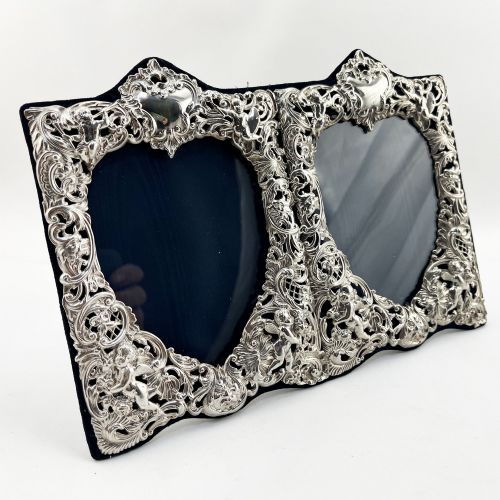
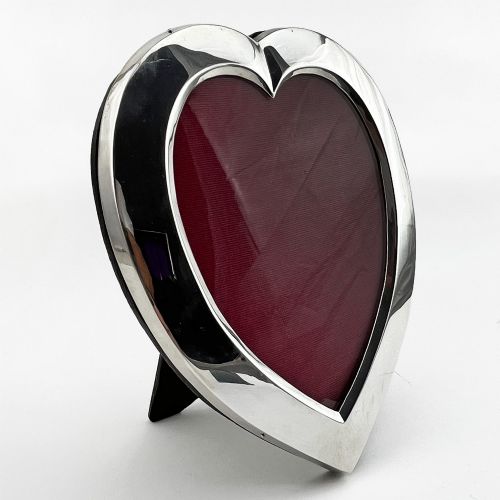
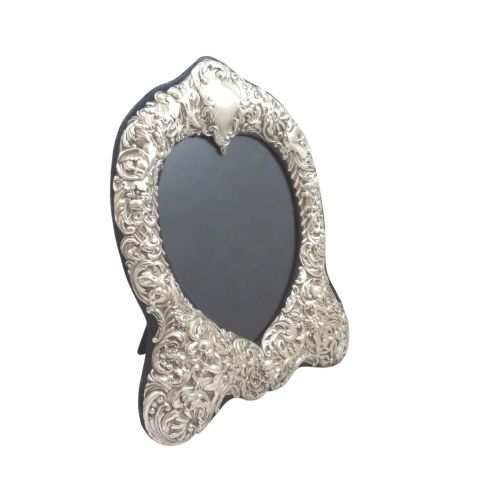
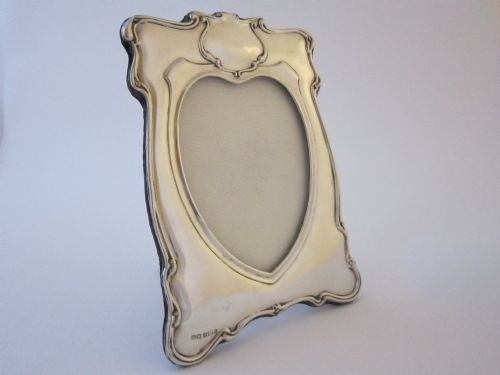

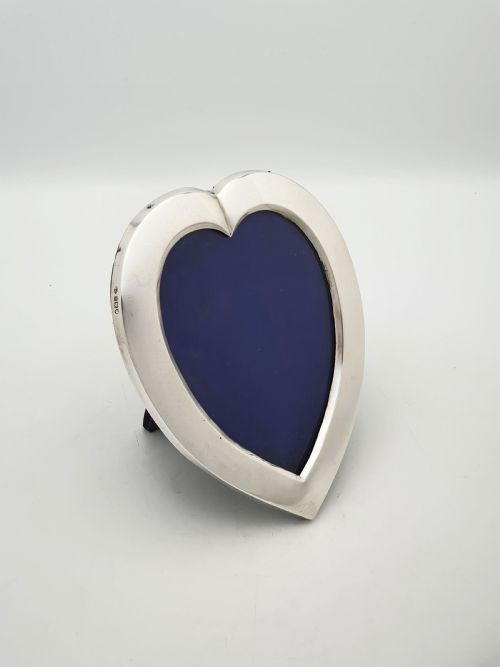


Silver Heart Photo Frame
These silver heart photo frames carry sentiment from the Victorian and Edwardian eras, offering a charming way to display a treasured portrait.
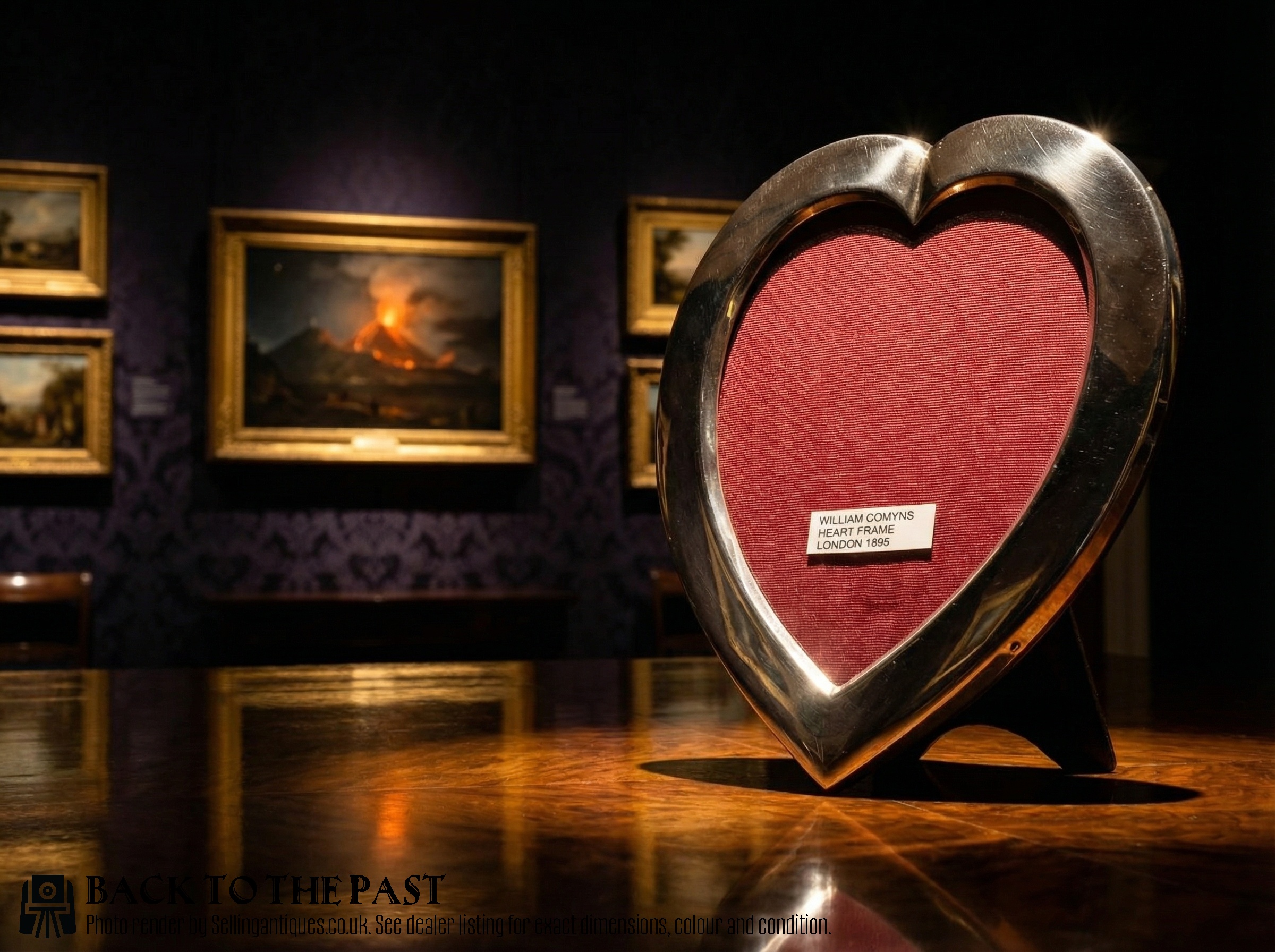
Silver Heart Photo Frame
A silver heart photo frame is a decorative object designed to hold a small portrait behind glass, shaped in the unmistakable outline of a heart. When searching for a silver heart photo frame, buyers encounter pieces originating predominantly from the late nineteenth century through to the Edwardian period and the early twentieth century.
The selection here encompasses items fashioned as picture frames, photograph frames, and occasional vanity mirrors. Pieces appear in various sizes, from miniature examples intended for intimate spaces to larger formats, occasionally formed as double frames.
Victorian and Edwardian workshops produced the majority of these objects in sterling silver, often pairing the precious metal with supportive backing materials. They serve both a practical domestic function and a decorative role on dressing tables and mantelpieces.
How they were made
Silversmiths shaped sterling silver into heart contours using pressing, hammering, and repoussé techniques, sometimes applying a planished finish for textural contrast. The metal front mounts onto a rigid structure typically lined with wood, fabric, or velvet on the reverse.
Transparent glass protects the photograph within the frame, while easel stands or folding hinges allow the object to rest upright on a flat surface. Makers integrated mirror glass instead of clear panes when constructing vanity mirrors.
Some miniature frames doubled as pill boxes, letting Victorian owners keep small secrets tucked quietly behind a loved one's portrait.
What varies in quality
The depth and clarity of the embossing distinguish finer examples from simpler production, particularly where floral motifs or scrollwork decorate the silver border. Heavier gauge sterling silver provides greater structural rigidity to the heart shape, preventing distortion around the edges.
The integrity of the backing materials, whether original velvet, wood, or leather, contributes significantly to the overall preservation of the piece. Crisp hallmarks stamped into the silver confirm the maker and assay office, adding historical substance to the object.
William Comyns·Syner & Beddoes·Henry Matthews·A.W. Pennington·Goldsmiths & Silversmiths Co.
The Silver Heart Photo Frame Glossary
- Sterling silver
- An alloy containing a high proportion of pure silver combined with other metals to increase durability. This material forms the primary front surface of the frames.
- Repoussé
- A metalworking technique where the silversmith hammers the silver from the reverse side to create a raised design on the front. This method frequently creates floral and scroll patterns on frames.
- Planished
- A surface finish achieved by hammering the metal with a smooth round-headed tool, leaving subtle overlapping facets. This technique creates a distinctive textured appearance on the silver.
- Assay office
- An official body that tests precious metals and stamps hallmarks onto items to guarantee their purity. Marks indicate the town of testing, such as Birmingham or Sheffield.
- Easels
- The hinged support struts attached to the reverse of frames allowing them to stand upright. These supports often retain their original fabric or leather coverings.
Silver Heart Photo Frame: Frequently Asked Questions
What periods do these frames come from?
The pieces span the Victorian and Edwardian eras, with examples dated from the late nineteenth century up through the George V period in 1920.
Most items originate around the turn of the twentieth century, reflecting the popularity of romantic and sentimental silver accessories during that time.
How were these frames used originally?
Owners placed these objects on dressing tables, desks, and mantelpieces to display likenesses of family members, friends, or romantic partners.
Smaller variants sometimes functioned as miniature keepsakes or pendants, while double configurations allowed two portraits to sit side by side.
What materials support the silver fronts?
Silversmiths mounted the delicate silver front plates onto sturdy wooden backings or supportive frames lined with fabric, velvet, or leather.
Glass protects the photograph beneath the metal aperture, while hinged metal struts allow the entire assembly to stand securely.
How do I identify the maker?
Makers marked their work with stamped sponsor's marks or initials alongside the assay office symbols and purity standards impressed directly into the silver.
Prominent silversmith firms like William Comyns and Henry Matthews stamped their specific enterprise details onto the frames during production.