




Antique Silver Display Frame
An antique silver display frame offers a tangible piece of history, designed to hold photographs, mementos, and small treasures safely.
Antique Silver Display Frame
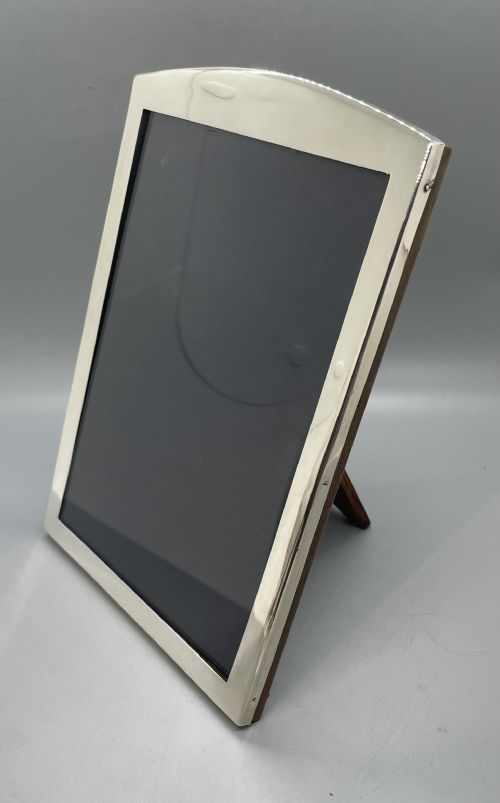
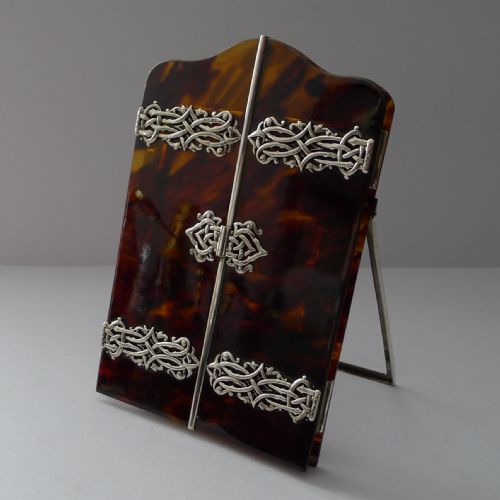
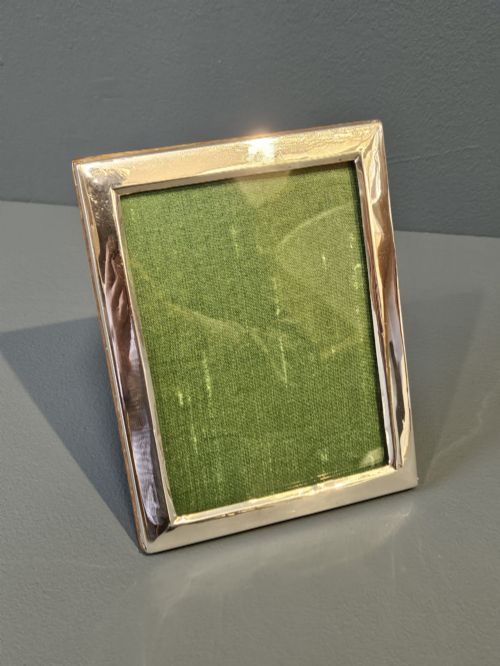
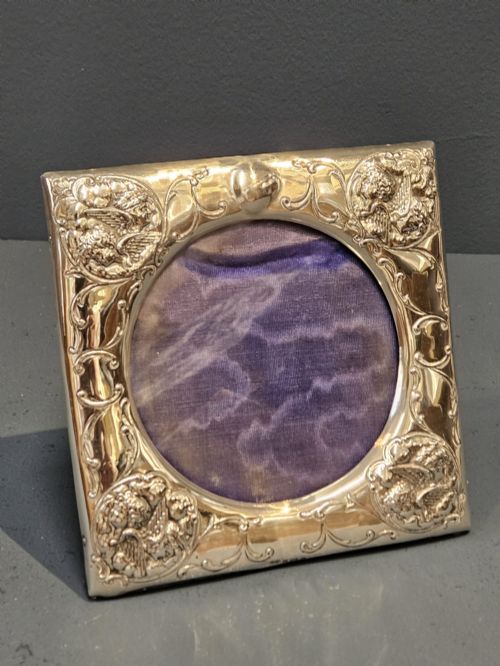
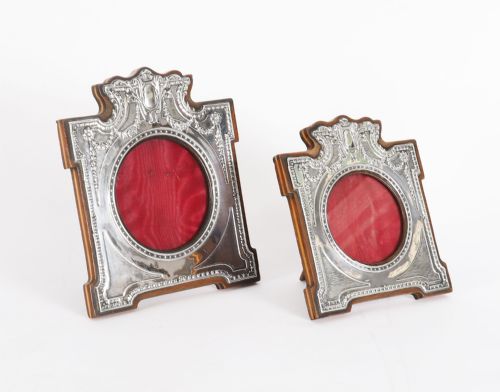
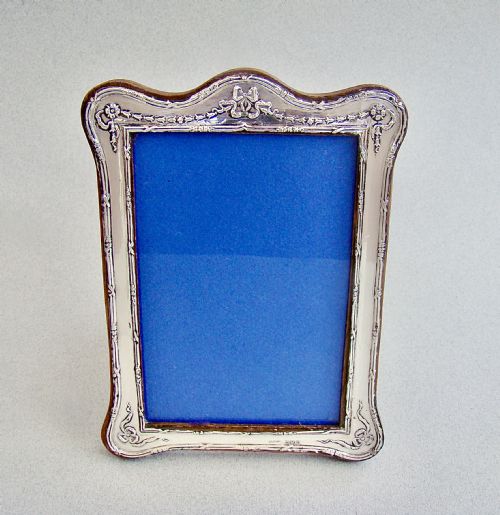
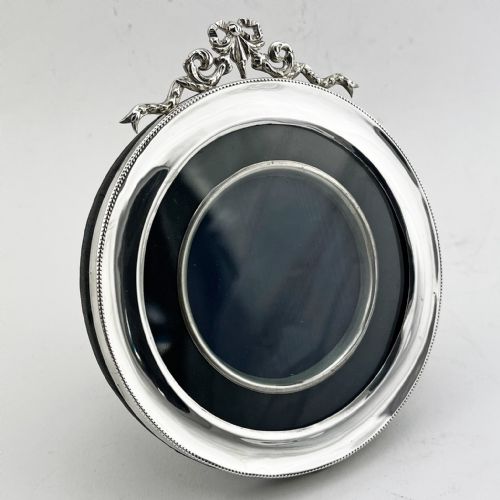
When you search for an antique silver display frame, you encounter objects primarily intended to hold photographs, alongside desk accessories and pocket watch holders. The selection spans the Victorian and Edwardian periods through to the Art Deco era of the 1930s.
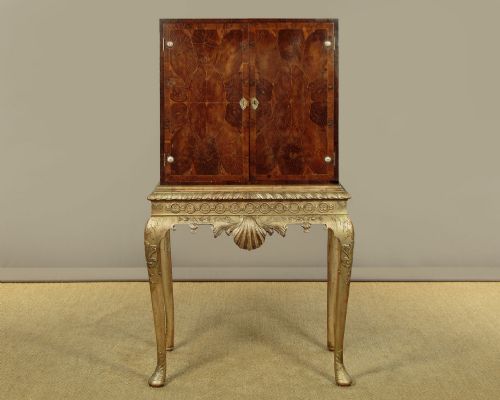
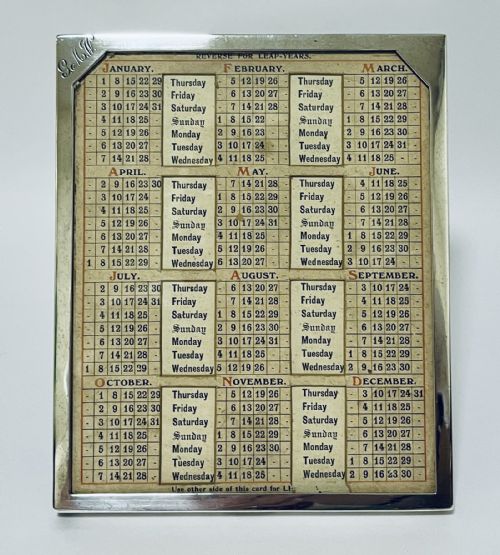
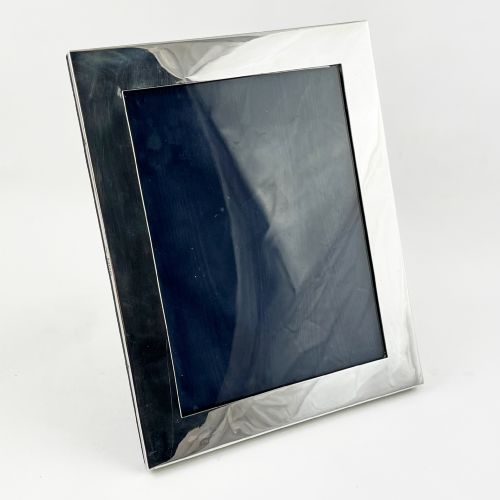
Picture and photo frames dominate the selection, often rendered in sterling silver with embossed floral borders or smooth planished surfaces. Alongside these are specialised items like pocket watch holders, perpetual desk calendars, and small cabinets on silver gilt stands.
Origins stretch from the late nineteenth century into the twentieth, encompassing distinct revivals such as Queen Anne, Neoclassical, and Gothic styles. Makers in Birmingham feature prominently alongside London houses.
Materials and construction
Silversmiths constructed these frames using sterling silver mounted over wooden carcasses, frequently utilising oak or walnut to provide structural rigidity. Interiors often incorporate fabric backings such as velvet alongside protective glass panes.
Surface decoration relied on traditional techniques including embossing, engraving, and planishing by hand. Backs were frequently finished with supportive wooden struts and fitted with materials like black leather.
Several frames immortalise Reynolds Angels, letting cherubic Renaissance faces peer out from Edwardian mantelpieces.
Distinctions in quality
The standard of an antique silver display frame depends upon the crispness of the chased or embossed decoration and the weight of the metal used. Pieces produced by established makers demonstrate superior finishing to the interior bezels and hinges.
The preservation of original backing materials, whether velvet, leather, or wood, influences the integrity of the object. Heavier gauge sterling silver and well-preserved hallmarks provide a clear indication of original craftsmanship.
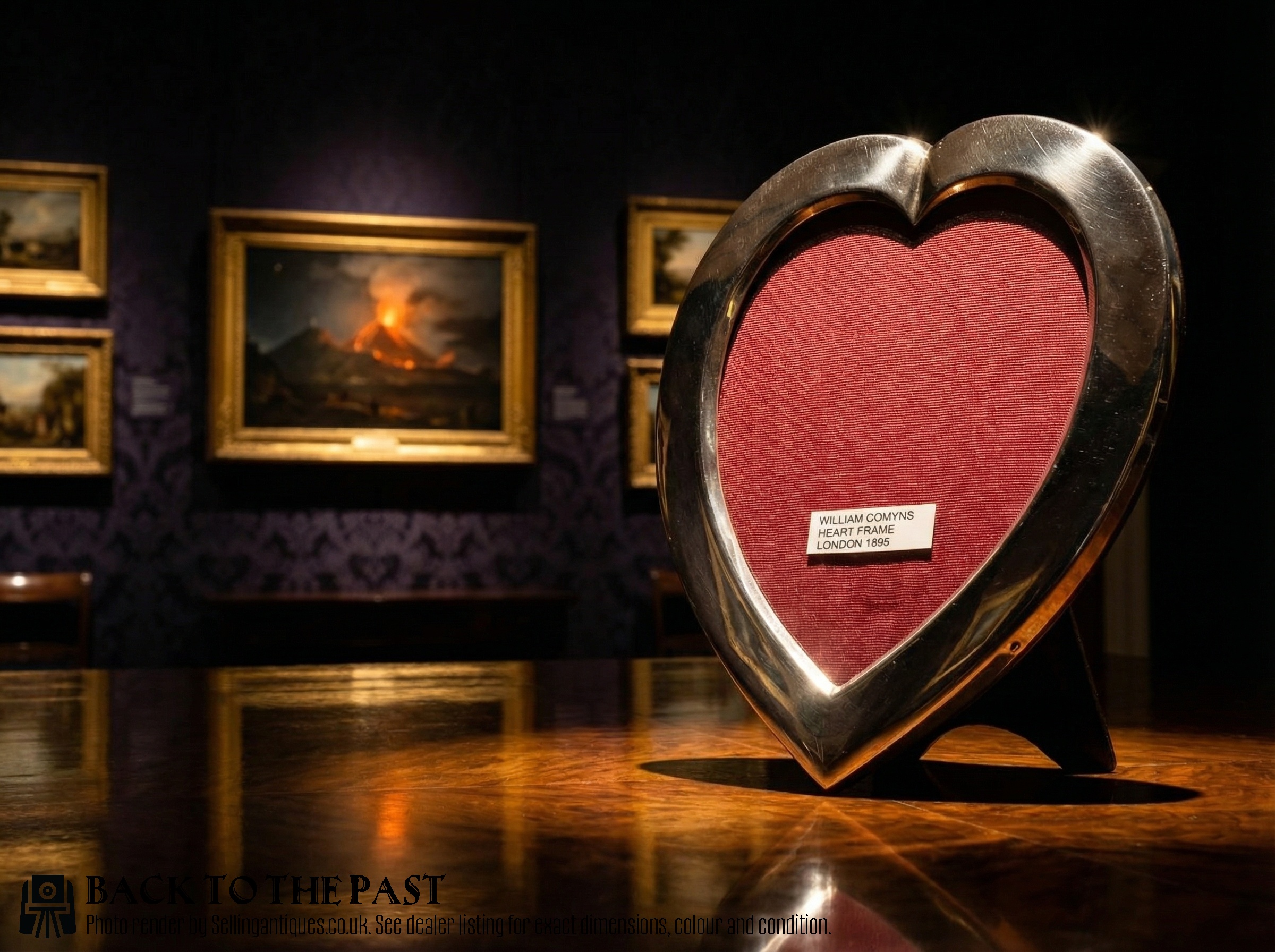
Mappin Bros·W.I.Broadway & Co·William Comyns
The Antique Silver Display Frame Glossary
- Sterling silver
- A silver alloy containing 92.5 percent pure silver and 7.5 percent other metals, typically copper. This standard was universally adopted across British silver manufacturing.
- Hallmark
- A series of official marks stamped on items made of precious metals, indicating the maker, assay office, and year of production. Birmingham and Chester offices appear frequently in this category.
- Planished
- A metalworking technique involving light hammering with a polished tool to create a smooth, faceted surface texture. This finish is characteristic of Art Nouveau silver design.
- Embossed
- A method of raising a design in relief from the surface of the metal by hammering from the reverse side. Floral and cherub motifs were commonly applied using this process.
- Tantalus
- A locking wooden stand holding decanters, designed to prevent access while permitting visibility of the contents. These pieces often incorporate silver mountings.
Antique Silver Display Frame: Frequently Asked Questions
How do I date a silver frame?
Dating relies heavily on the assay office hallmarks stamped directly onto the silver mount. These marks identify the specific year letter and the town where the piece was tested.
Stylistic cues such as Art Nouveau whipped lines or Victorian embossed floral motifs also help narrow down the decade of manufacture.
What materials are behind the silver?
Most frames utilise a wooden core, typically oak or walnut, to give the object structural depth and weight. The reverse is then commonly finished with leather or coloured velvet.
Protecting the photograph itself required a fitted pane of clear glass held securely within the silver bezel.
How should I clean antique silver?
Cleaning requires a soft microfibre cloth and a specialist silver polish designed to be non-abrasive. Care must be taken around embossed details and velvet or leather backs to avoid moisture damage.
Gentle maintenance preserves the dark highlights in the recesses of the chased decoration which accentuates the age of the piece.
Are all frames made of solid silver?
While the front mount is typically solid sterling silver, the internal structure relies on wood to maintain rigidity. Some later examples or display counters may incorporate aluminium or chrome instead.
Checking the hallmarks confirms whether the metal mount meets the sterling standard.