

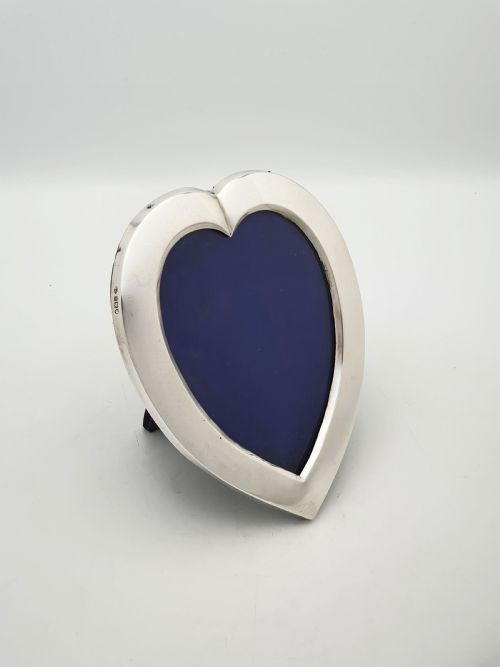


Antique Heart Photo Frame
An antique heart photo frame carries sentimental weight in sterling silver, shaped for keepsakes.
Antique Heart Photo Frame
An antique heart photo frame is a domestic object designed to display a portrait of someone dear. These pieces emerge predominantly from the late nineteenth century and the early twentieth century, spanning the Victorian and Edwardian periods.
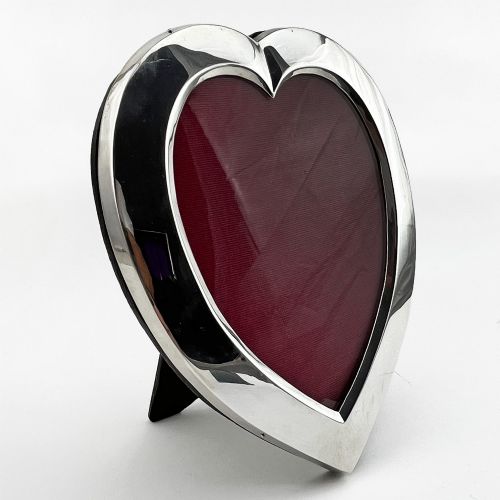
The version most commonly encountered on this page is formed from sterling silver, shaped into a distinctive heart contour. Makers cast or stamp these silhouettes to hold photographs, often backed with fabric or velvet to protect the image inside.
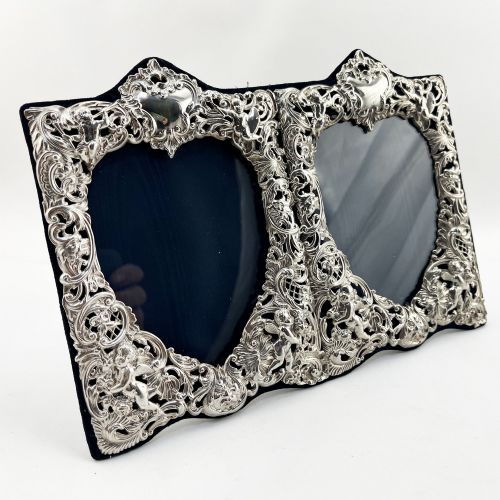
Beyond single portraits, variations include double frames and items paired with mirror glass or tortoiseshell. They function as both decorative dressing table accessories and intimate tokens of affection.
Materials and Construction
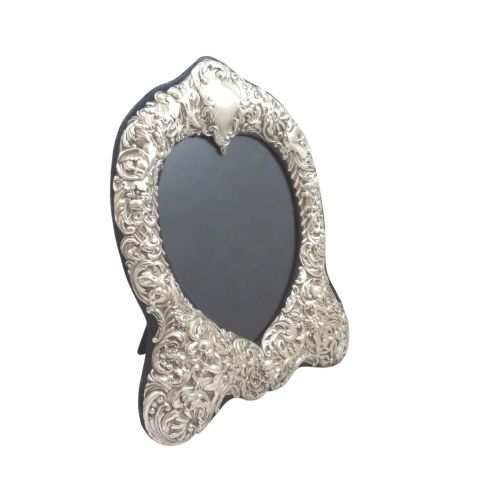
Sterling silver forms the primary structural body of these frames, worked through techniques such as repoussé and planishing. Silversmiths shape the metal sheet to create raised motifs like cherubs, florals, and scrolling Art Nouveau lines.
Internal support relies upon wooden backing boards covered in fabric, typically red velvet or similar textiles, secured by small metal turn-buttons. Glass panels protect the photograph surface, held flush against the silver aperture.
Many Victorian sweethearts chose these frames to house miniature portraits, ensuring their beloved remained permanently fixed in shiny, winged devotion.
Distinctions in Quality
Quality rests upon the crispness of the silversmith's chasing and the weight of the metal itself. Finer examples display deeply struck ornamentation, where motifs like roses or cherubs retain sharp relief rather than wearing flat through over-cleaning.
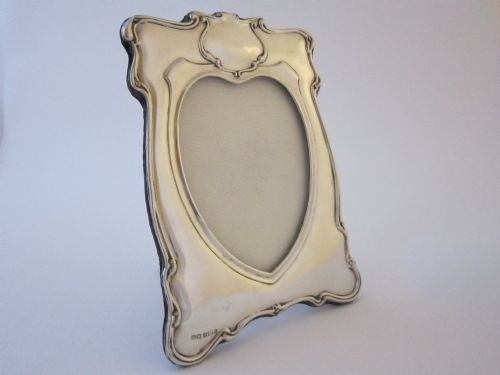
The integrity of the structural components also dictates standing. Superior items retain their original bevelled glass, stable velvet backs, and legible hallmarks that confirm the maker and assay office without distortion.
William Comyns·Syner & Beddoes·Henry Matthews
The Antique Heart Photo Frame Glossary
- Sterling silver
- A silver alloy containing 92.5 percent pure silver and 7.5 percent other metals, usually copper. This standard provides the durability required for intricate repoussé frame manufacture.
- Repoussé
- A metalworking technique where the smith hammers the silver from the reverse side to create a raised design on the front. It defines the ornate floral and cherub borders seen on many Victorian frames.
- Art Nouveau
- An international style of art and architecture prevalent around 1900, characterised by undulating asymmetrical lines and organic motifs. Frames from this era often incorporate whiplash curves and stylised plant forms.
- Velvet
- A type of woven tufted fabric with a dense pile, frequently utilised for the backing boards of these frames. It provides a soft, protective surface against which the photograph rests.
- Hallmark
- A series of official marks stamped on precious metals by an assay office to indicate purity, maker, and year of manufacture. These small stamps allow exact dating of Victorian and Edwardian silver.
Antique Heart Photo Frame: Frequently Asked Questions
What periods do these frames come from?
The pieces originate primarily from the Victorian and Edwardian eras, spanning the late nineteenth century through to the early decades of the twentieth century. Specific dates are frequently confirmed by hallmarks stamped directly onto the silver border.
Craftsmen working during the 1890s and the 1900s produced the vast majority of these heart-shaped designs, reflecting the romantic sentiments and decorative tastes of those periods.
How do I insert a photograph?
Photographs are housed behind a piece of glass held within the silver aperture. Access is gained by releasing small pivoting clips or wooden turn-buttons on the rear.
The original wooden backing, often covered in velvet, lifts away to allow the portrait to be trimmed and placed against the glass before being secured back in position.
Are these frames made of solid silver?
The front facades are formed from sterling silver, marked to denote their metal standard. The internal structure relies upon wooden backing boards to provide rigidity.
Textiles such as velvet cover these wooden supports on the reverse, while easel stands or loops allow the frame to be displayed upright on a surface or hung on a wall.
How do I distinguish Victorian from Edwardian styles?
Victorian frames often feature dense ornamentation involving cherubs, scrolls, and naturalistic roses. The weight tends to be substantial, with deep relief work created through traditional repoussé techniques.
Edwardian and Art Nouveau examples introduce more fluid, stylised lines inspired by organic forms, reflecting a shift in aesthetic preferences around the turn of the twentieth century.