





Vintage Silver Photo Stand
A vintage silver photo stand holds family portraits and watercolours, bringing a gleam of polished metal and glass to a desk or mantelpiece.
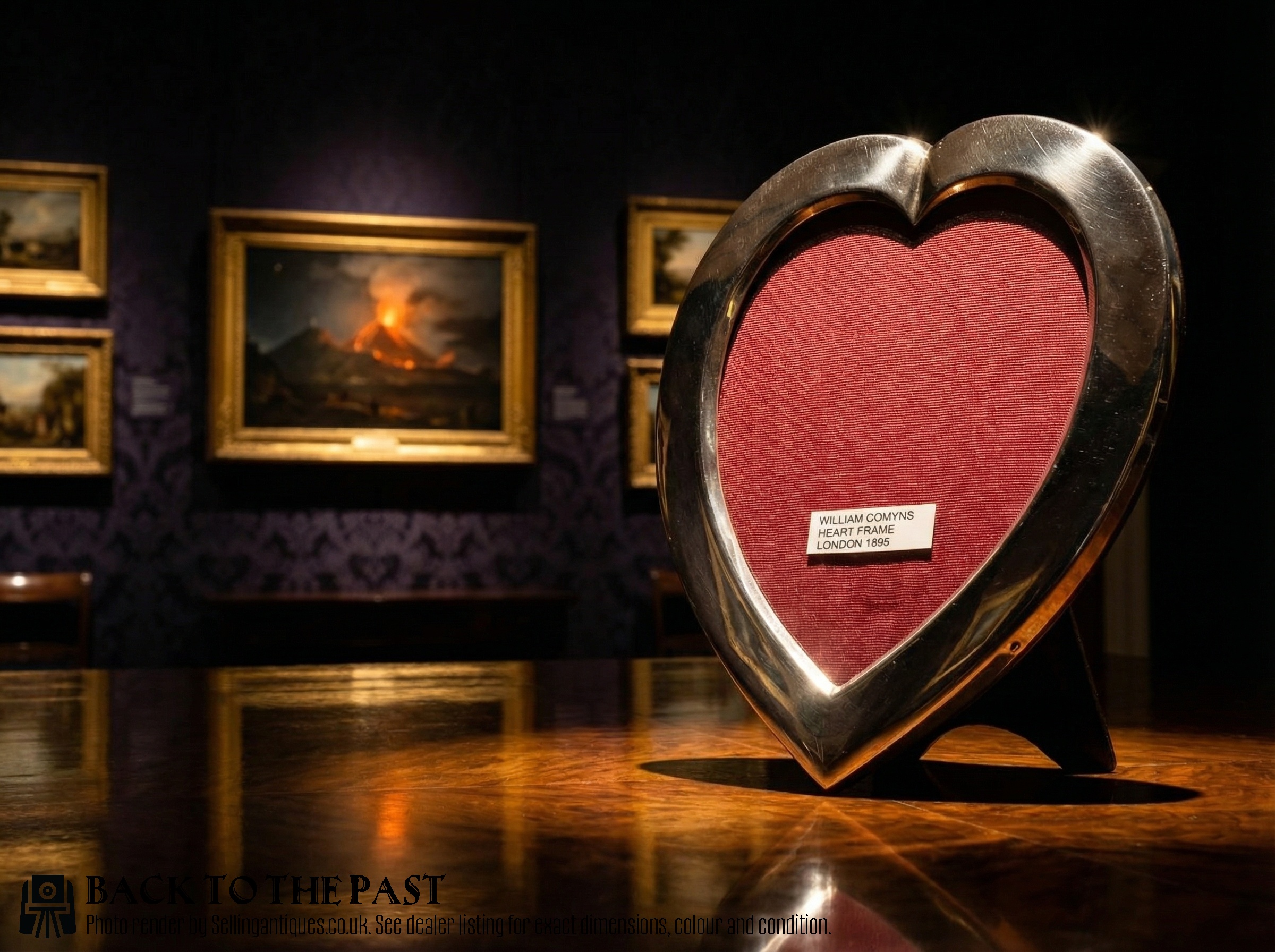
Vintage Silver Photo Stand
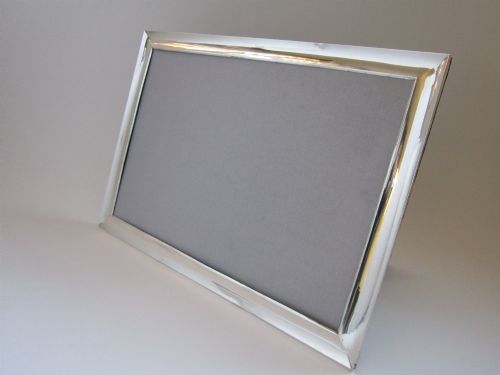
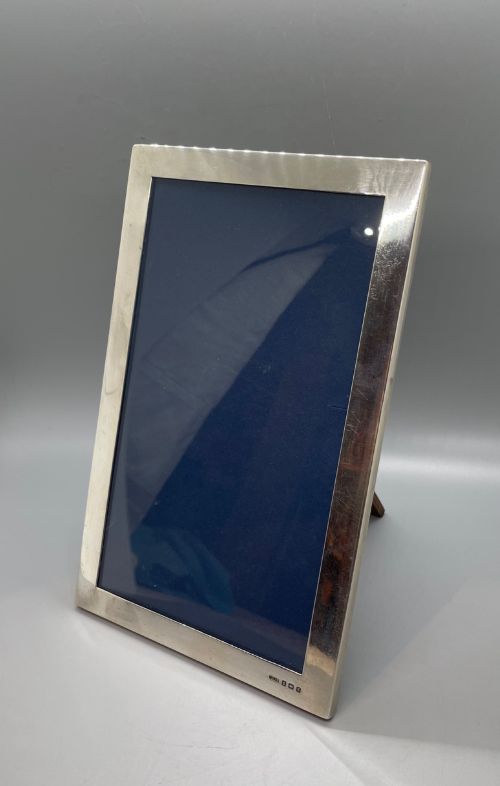
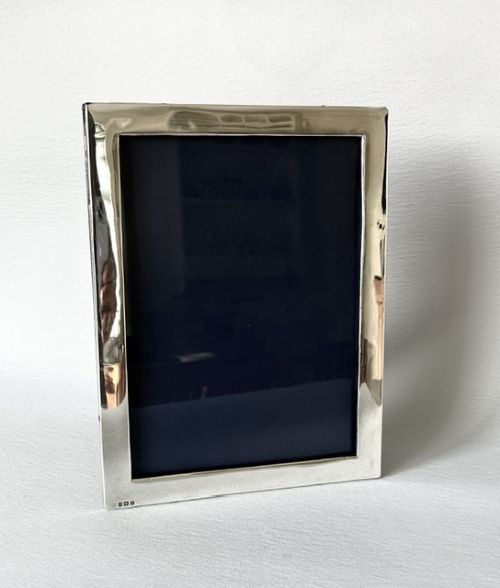
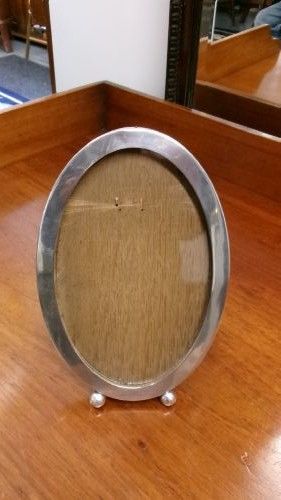
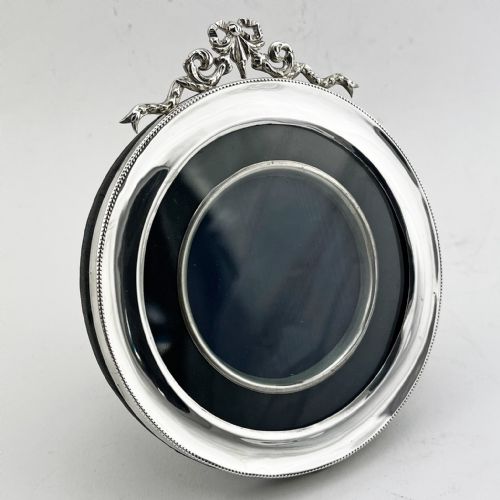
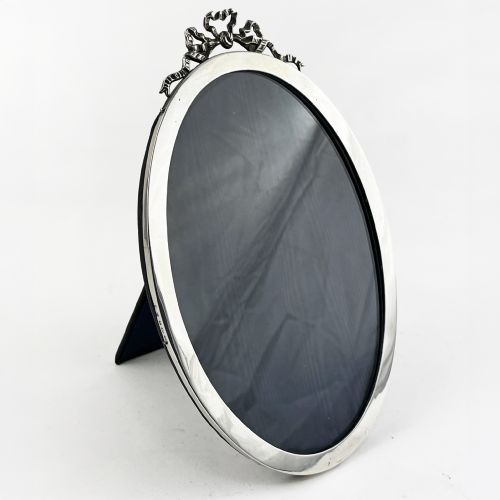
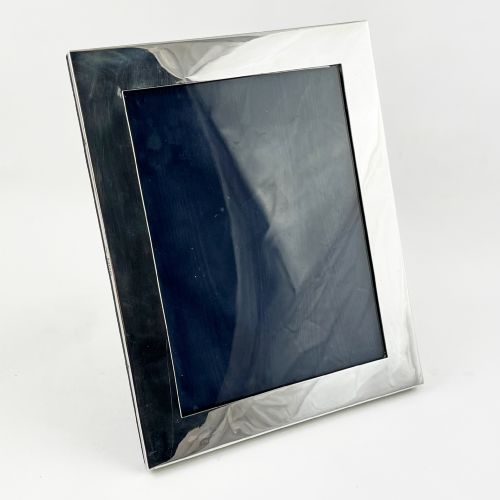
A vintage silver photo stand is a desk or tabletop accessory designed to display a portrait or landscape photograph securely. Buyers searching for a vintage silver photo stand will find items ranging from small round Edwardian pieces to large George V frames and twentieth-century Italian designs.
The objects take the form of picture frames, photograph frames, and occasionally vanity mirrors or novelty miniature furniture. Most examples date from the Edwardian period, the 1910s, and the Art Deco era of the 1930s.
Silver, sterling silver, nickel-plated silver, and chrome form the primary metal components, paired with glass panes and supportive wooden or leather backs. Pieces arrive in rectangular, oval, round, and heart shapes, often designed for portrait or landscape orientation.
How they were made
Makers constructed these frames using sterling silver, 800 silver, or chrome-plated base metals, frequently incorporating glass to protect the image. Structural integrity relied on wooden backs, black leather backings, and fabric supports.
Decoration techniques included hand embossing floral borders, engine-turning for geometric texture, and maintaining plain polished borders in the modernist style. Hallmarks stamped into the silver recorded the assay office, such as Birmingham or Chester, and the year of production.
The selection includes unusual novelty forms such as a miniature furniture George III pole screen alongside standard portrait frames.
What varies in quality
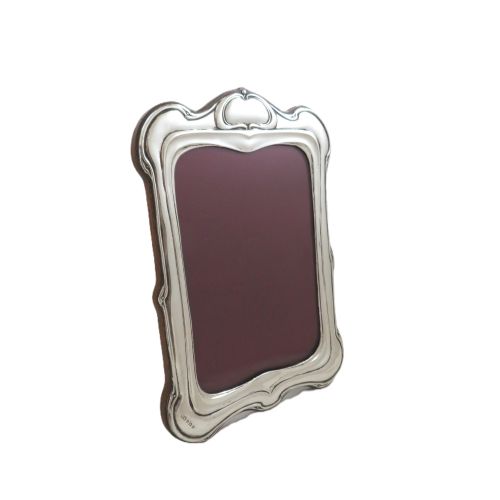
Quality rests in the weight of the metal and the crispness of the chased or embossed decoration. Finer examples display deep, clear floral or art nouveau motifs rather than shallow stamping.
The construction of the reverse side also separates standard items from superior ones. Original wooden backs, sturdy metal hinges, and intact leather or fabric stands indicate careful original manufacture and better survival.
William Comyns·Pinci Roma
The Vintage Silver Photo Stand Glossary
- Sterling silver
- An alloy containing 92.5 percent silver by mass, widely used in British frame production. Hallmarks verify this standard of purity.
- Engine-turned
- A decorative technique involving precise geometric patterns mechanically engraved into the metal surface. It creates a textured background that catches the light.
- Assay office
- An official body that tested precious metals and stamped hallmarks to guarantee purity. Birmingham and Chester are common offices found on these pieces.
- Art Nouveau
- A style popular around the turn of the twentieth century, characterised by flowing organic lines and floral motifs. Frames from this period often feature whipped curves.
- Art Deco
- A design movement prominent in the 1930s favouring streamlined shapes, chrome, and modernist geometry. Pieces from this era utilise nickel-plated silver and clean lines.
Vintage Silver Photo Stand: Frequently Asked Questions
How do I date a silver photo frame?
Dating relies heavily on the hallmarks stamped into the silver border, which indicate the assay office and specific year letter. Stylistic clues such as art nouveau curves or art deco chrome also help narrow down the decade.
Makers often incorporated distinct structural backs and fastening mechanisms characteristic of periods like the Edwardian era or the 1930s.
What materials are used for the backs?
Most frames use wood, black leather, or fabric to support the photograph behind the glass pane. These backing boards usually feature a folding strut or stand.
Original backs add integrity to the piece, though replacement wooden panels are common in older items.
Can these frames display landscape and portrait photos?
Many frames feature versatile struts or multi-directional loops that accommodate both portrait and landscape orientations. Oval, round, and heart-shaped frames generally restrict the image to a fixed vertical or horizontal view.
Checking the orientation of the aperture and the hinge placement clarifies how the frame sits on a desk.
How should I clean a silver photo stand?
Cleaning requires a soft cloth and a gentle silver polish formulated to remove tarnish without abrading embossed details. Care must be taken around glass panes, wooden backs, and leather hinges to avoid moisture damage.
Regular light dusting preserves the polished finish of sterling silver and chrome surfaces.