




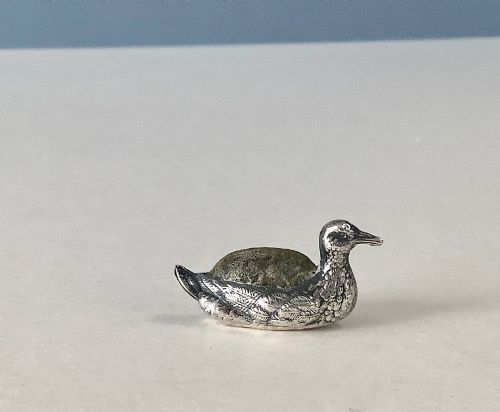

Miniature Silver Ornament
A miniature silver ornament brings small-scale metalwork into focus, offering intricate detail and historical charm for collectors of portable craftsmanship.
Miniature Silver Ornament
When you search for a miniature silver ornament, you enter a diverse field of small-scale decorative objects spanning the Victorian, Edwardian and mid-twentieth-century periods. These pieces take many diminutive forms, from whimsical animals and novelty pin cushions to tiny vehicles, furniture and architectural models.
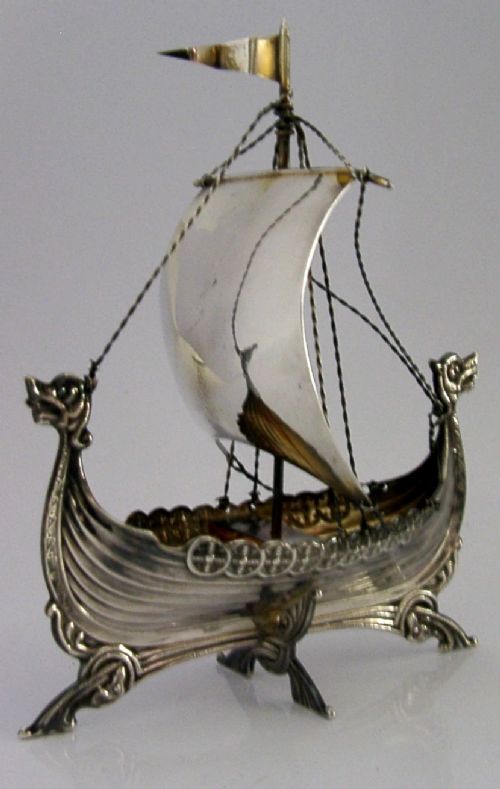
You are most likely to meet solid silver and sterling silver items on this page, alongside specific regional standards such as 833 solid silver. Styles range widely across revivals and movements, including Victorian, Edwardian, Viking Revival, German Renaissance Revival, Scandinavian Revival, and Arts and Crafts.
The objects serve primarily as decorative table ornaments, miniature models, pill boxes, photo frames and pin cushions. Their origins stretch across England, Germany, Norway, the Netherlands and France, reflecting diverse European silversmithing traditions.
How they were made
Makers utilised solid silver and sterling silver, frequently combining the metal with secondary materials like velvet, wood and gold gilt. Vitreous enamel also appears, adding colour and surface contrast to specific presentation pieces.
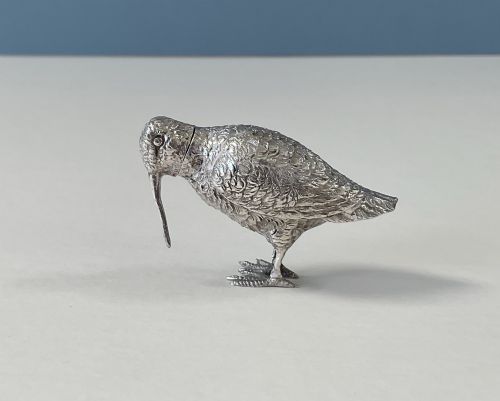
Techniques relied heavily on casting and detailed hand-finishing, as seen in cast musician table figures, birds and novelty pin cushions shaped like animals. Miniature furniture and vehicles demanded precise construction to scale, incorporating hinged elements or fitted display plinths.
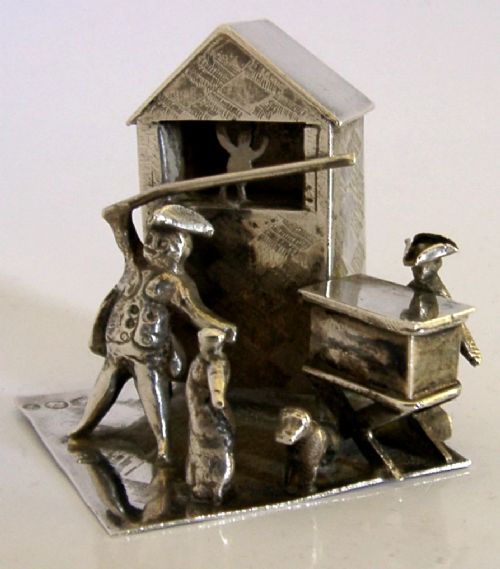
A tiny Punch and Judy show frozen in silver reminds us that Victorians loved their puppet shows quite enough to keep them on the mantelpiece.
What varies in quality
The integrity of secondary materials, such as undamaged vitreous enamel or well-fitted wooden and velvet elements, elevates a piece. Maker marks and clear silver standards also contribute to the distinction between standard commercial output and superior silversmithing.
Berthold Muller
The Miniature Silver Ornament Glossary
- Sterling silver
- A silver alloy containing 92.5 percent pure silver by mass, standard for high-grade domestic silverwork.
- Vitreous enamel
- Glass fused to the surface of metal through high-temperature firing, creating a durable and colourful decorative layer.
- Pin cushion
- A small household accessory designed to hold sewing pins, frequently fashioned into novelty animal shapes during the Victorian and Edwardian eras.
- Gold gilt
- A thin layer of gold applied to the surface of silver metal, adding a contrasting two-tone finish.
- Viking revival
- A decorative style popular in the nineteenth and twentieth centuries that drew direct inspiration from Norse artefacts and longship motifs.
Miniature Silver Ornament: Frequently Asked Questions
What are miniature silver ornaments?
Miniature silver ornaments are small-scale decorative items fashioned from solid silver, sterling silver, or regional silver alloys. They encompass a wide variety of functional and display objects, including animal pin cushions, pill boxes, photo frames, and detailed models of furniture, vehicles, and figures.
These pieces were produced across several decades, spanning the late nineteenth century through the mid-twentieth century. European workshops in England, Germany, Norway, the Netherlands, and France all contributed distinct regional styles to this category.
How were miniature silver ornaments used?
These small objects served primarily as decorative table ornaments, cabinet pieces, and novelty items designed to display the silversmith's skill. Many items combined decoration with a secondary practical use, such as holding sewing pins or storing small pills.
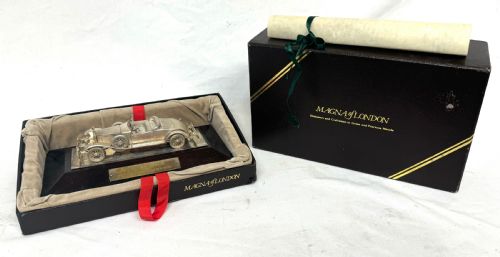
Some pieces functioned as presentation models or desk ornaments, reflecting contemporary interests in motoring, music, or historical revivals. Their portable scale made them popular display items for mantelpieces, display cabinets, and writing desks.
How do I care for silver miniatures?
Silver miniatures require careful handling to preserve delicate soldered joints, fine casting details, and applied materials like enamel or velvet. Dusting with a soft brush helps prevent the accumulation of dirt in intricate recesses without causing abrasive wear.
Polishing should be done sparingly and gently, avoiding harsh chemical dips that can strip away intentional patination or damage delicate secondary materials. Storing pieces in stable environments away from excessive moisture protects both the silver and any organic components.
How can I tell the period of a piece?
Dating a miniature silver ornament relies on observing stylistic markers, manufacturing techniques, and any accompanying hallmarks or maker marks. Victorian and Edwardian pieces often reflect prevailing revival styles or naturalistic novelty themes, while later twentieth-century items may show modernist or streamlined influences.
Comparing the specific object type, such as an Arts and Crafts presentation piece or a mid-century desk model, helps narrow down the era of production. Examining the construction methods, such as casting quality and finishing techniques, provides further chronological clues.