
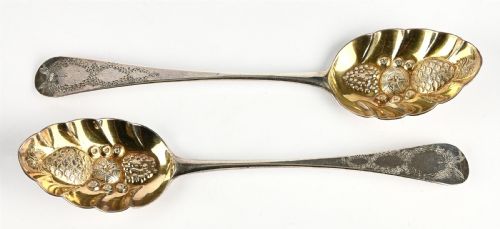


Silver Gilt Serving Spoons
These silver gilt serving spoons bring gravitas to the table, combining functional heft with the rich glow of applied gold over silver.
Silver Gilt Serving Spoons
When you search for silver gilt serving spoons, you encounter substantial tableware designed for formal hospitality, fruit service, and berry presentation. The examples collected here span the Georgian and Victorian eras, alongside Edwardian creations and Continental work from Russia and Germany.
Most pieces on this page appear as matched pairs, frequently housed in fitted presentation cases lined with velvet. Forms range from heavy traditional serving spoons and fruit sets to specialised spoon warmers and deep ladles.
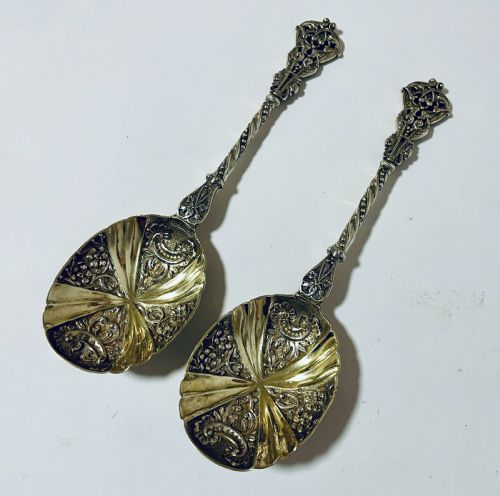
Makers utilised solid sterling silver, silver plate, and German silver as bases, applying a rich gilt layer to the bowls or entire utensils. Collectors find both plain naturalistic leaf designs and heavily chased, engraved surfaces bearing family crests.
Materials and Technique
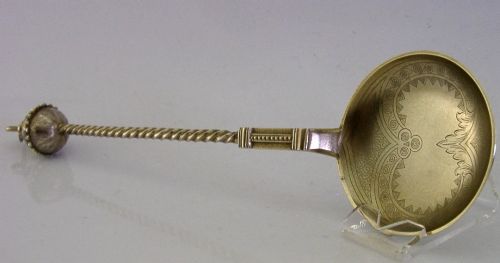
Silversmiths formed the foundation of each utensil using solid sterling silver, silver plate, or German silver, shaping handles by hand or casting them into ornate patterns. Specialised items like Russian spoons integrated niello inlay and cloisonné enamel directly onto the metal body.
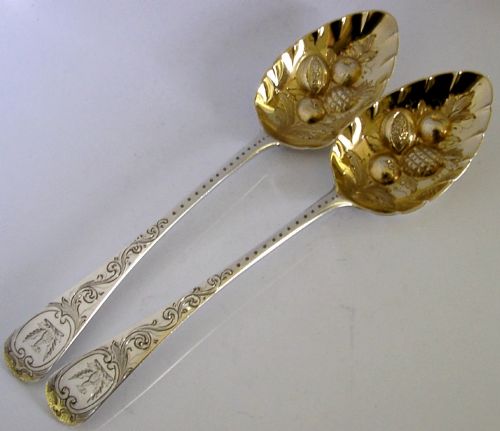
Gilding was applied via fire gilt or electrochemical methods, fusing a thin layer of gold to the silver surface to protect the base metal from sulfur tarnishing. Engravers then chased fruit motifs, family crests, and foliate patterns onto the bowls and handles of Georgian and Victorian pieces.
Listings feature sterling silver, silver plate, and German silver bases paired with rich gold gilding across Georgian, Victorian, and Edwardian periods.
Evaluating Quality
The distinction between ordinary and exceptional pieces lies in the crispness of the chasing and the depth of the gilding. Deeply embossed fruit patterns and intact parcel gilding signal superior workshops and careful historic usage.
Original presentation cases and matched provenance elevate specific pairs, particularly when crests and hallmarks remain sharp and legible after two centuries of handling.
peter & Anne Bateman·William Chawner II·Vasily Agafonov·Sebastian Crespell
The Silver Gilt Serving Spoons Glossary
- Silver Gilt
- Silver that has been coated with a thin layer of gold. This technique protects the underlying metal and creates a warm, two-tone visual effect.
- Berry Spoon
- A large serving spoon chased and engraved with fruit and foliage designs. These pieces were often adapted from earlier spoons during the Victorian period.
- Parcel Gilt
- An object gilded on specific areas only, such as the bowl interior while the handle remains bright silver. It highlights particular design elements.
- Niello
- A black metallic alloy used to fill engraved designs on silver. It creates stark, contrasting geometric or pictorial patterns, common in Russian work.
- Cloisonné
- An enamelling technique where vitreous paste is packed within wire compartments soldered to a metal base. Firing fuses the enamel permanently to the silver.
Silver Gilt Serving Spoons: Frequently Asked Questions
What were silver gilt serving spoons used for?
These utensils served specific dining room functions, including dishing out portions of fruit, berries, and large roasts. The gold wash protected the silver from the acidic juices of fresh fruit.
Over time, many of these spoons became display pieces kept in fitted presentation cases for formal occasions rather than everyday dining.
How do I care for silver gilt?
Cleaning requires extreme caution because aggressive polishing wears away the delicate gold layer resting on the silver. Warm soapy water and a soft cloth suffice for routine maintenance.
Harsh chemical dips and abrasive pastes strip the gilding permanently, destroying the antique finish that collectors value.
How can I tell Georgian from Victorian spoons?
Georgian pieces from the eighteenth and early nineteenth centuries typically feature cleaner lines and hand-engraved crests. Assay office marks and maker's stamps provide exact dates.
Victorian spoons tend toward heavier ornamentation, featuring chased fruit and naturalistic leaf motifs alongside heavier cast handles.
Are cased sets original?
Fitted velvet and silk-lined cases often accompany Edwardian and late Victorian pieces, designed to protect the fragile gilding and delicate engraving. Many retain their original housing from the retailer.
Georgian spoons were occasionally retrofitted into custom cases by later owners who prized the matched pairs for display.