




Silver Gilt Dessert Spoons
These silver gilt dessert spoons bring bright gilt surfaces and fine Victorian and Georgian craftsmanship to the table.
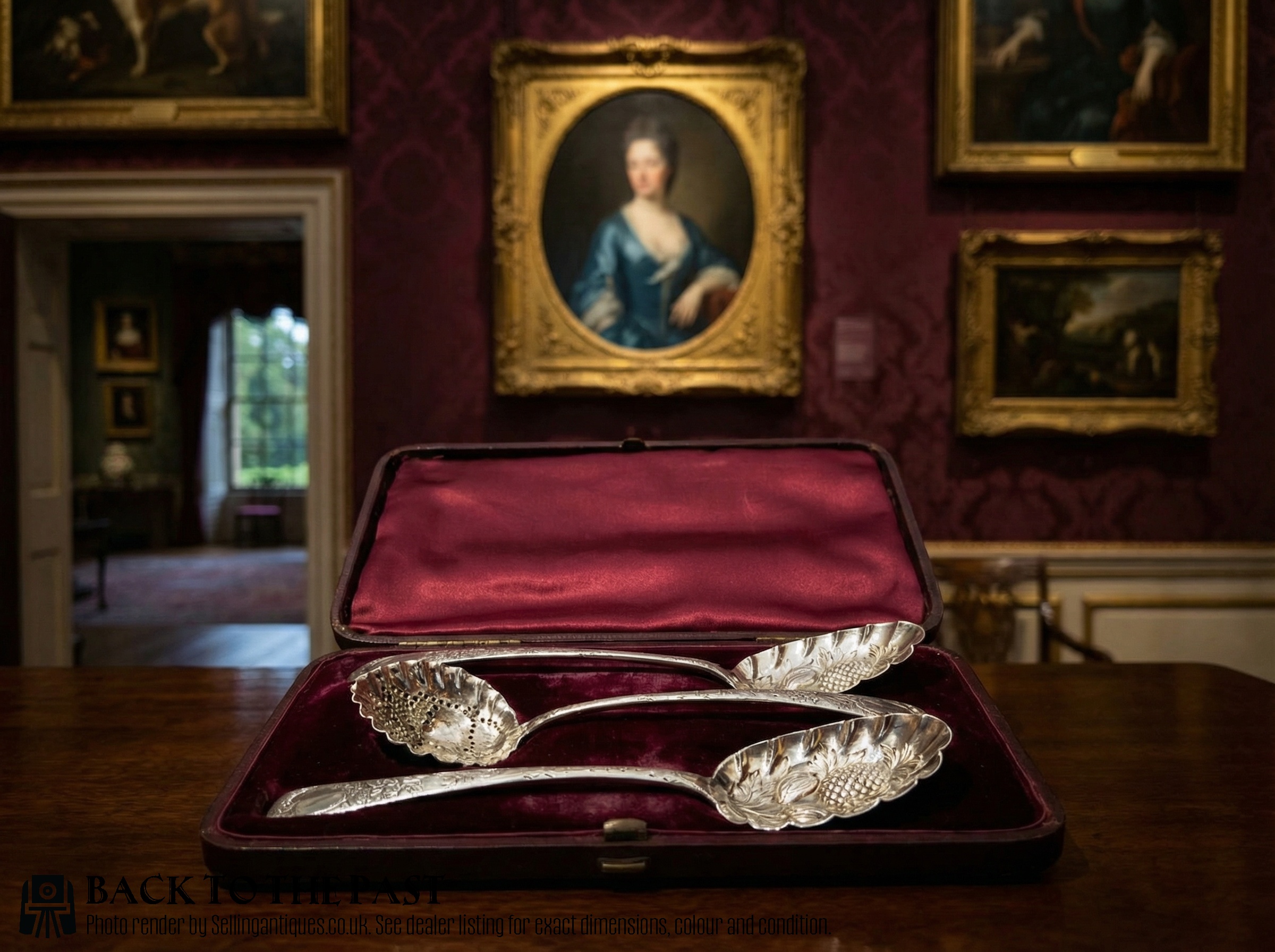
Silver Gilt Dessert Spoons
Silver gilt dessert spoons are serving and dining pieces finished with a layer of gold over silver, combining the brilliance of gold with the structural strength of sterling silver or silver plate. When you search for silver gilt dessert spoons, you are looking at items designed for fruit, dessert, or berries, often featuring ornate engraving or naturalistic leaf forms.
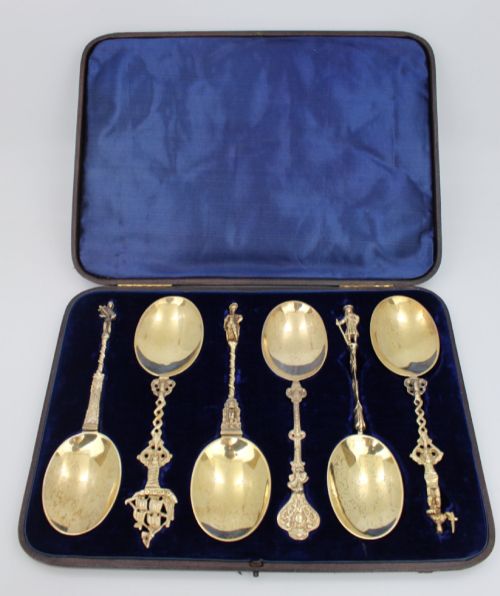
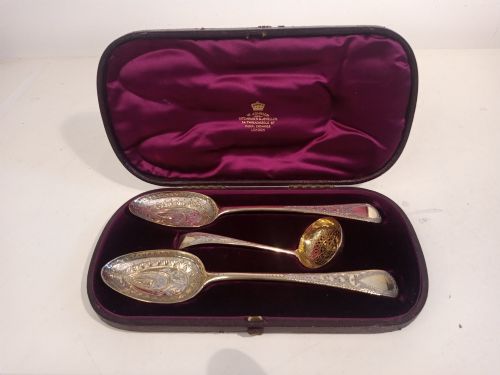
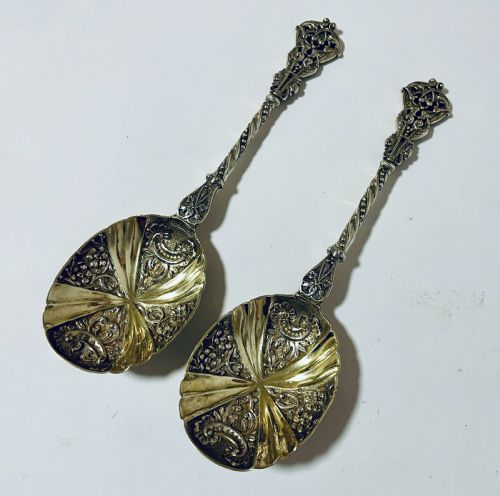
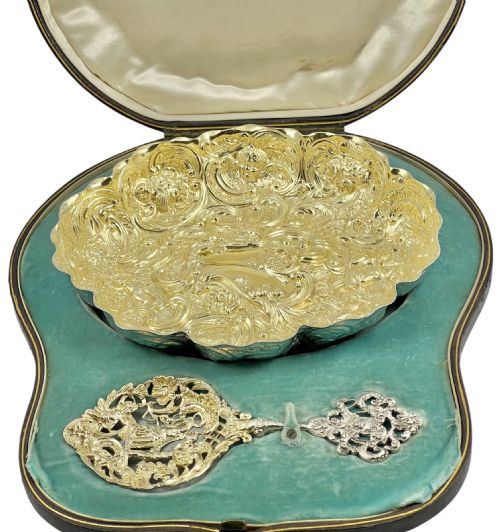
The examples you meet on this page hail primarily from the Victorian and Georgian eras, spanning years such as 1800, 1825, 1842, and the 1890s. Makers and manufacturers produced these utensils both singly and in matched pairs, sometimes housed within velvet or silk lined leather cases alongside sugar bowls or fruit sets.
Forms include dedicated dessert serving spoons, parcel gilt aesthetic style pieces, and naturalistic leaf spoons shaped by makers like William Chawner II and Sebastian Crespell. They reflect the dining customs of the nineteenth century when specialised cutlery elevated the serving of fruit and sweets.
How they were made
The foundation of these pieces rests on sterling silver, silver plate, or solid silver, shaped into bowls and handles before undergoing the gilding process. Gilding involved applying a thin layer of gold to the silver base, creating the rich warm tone known as silver gilt or parcel gilt.
Surface decoration relies on hand engraving, repoussé work, and naturalistic casting to mimic organic forms such as leaves and fruit. Artisans utilised specialised tools to chase intricate patterns along the stems and bowl backs, finishing them with polished or textured highlights.
Listings span the Georgian and Victorian periods, featuring materials such as sterling silver, silver-gilt, silk, velvet, and leather.
What varies in quality
Quality rests on the crispness of the chased and engraved ornament and the retention of the original gold wash across the silver surface. Pieces with deep, unrubbed fruit or leaf detailing and well-preserved gilding sit at the upper end of the range.
The integrity of the construction, whether a solid sterling silver framework or a plated base, dictates durability and weight in the hand. Fitted velvet or silk lined leather cases also influence the desirability of a set by preserving the spoons in original condition.
William Chawner II·Sebastian Crespell
The Silver Gilt Dessert Spoons Glossary
- Silver-Gilt
- Sterling silver or another silver base that has been coated with a thin layer of gold. This technique provides the visual warmth of gold while retaining the rigidity of silver.
- Parcel Gilt
- Silverware where only specific portions, such as the inside of a bowl or parts of the handle, are gilded. It creates a striking contrast between the white silver and the gold highlights.
- Berry Spoon
- A spoon, frequently Georgian or Victorian in origin, featuring embossed fruit and foliage designs added to the bowl at a later date or during manufacture. They were utilised for serving soft fruits.
- Naturalistic Style
- A design approach popular in the nineteenth century that mimics organic shapes such as leaves, vines, and branches. Spoons in this style often feature irregular, plant-inspired outlines.
- Sugar Sifter
- A utensil equipped with a perforated bowl designed for sprinkling loose sugar over fruit or desserts. These frequently appear alongside dessert spoons in fitted presentation cases.
Silver Gilt Dessert Spoons: Frequently Asked Questions
What are silver gilt dessert spoons used for?
These spoons were designed for serving fruit, berries, and desserts at formal dining tables during the Georgian and Victorian periods.
Their decorative gilt bowls and engraved handles made them suitable for presentation as well as daily dining.
How do I clean silver gilt spoons?
Silver gilt surfaces require careful handling because harsh cleaning agents can strip away the thin layer of gold.
Warm water, mild soap, and a soft cloth are sufficient to remove dust without harming the gilt finish.
How can I tell Georgian from Victorian spoons?
Georgian spoons typically display neoclassical restraint or early nineteenth-century chased work from makers like William Chawner II.
Victorian examples often lean towards heavier, ornate engraving, naturalistic leaf motifs, or aesthetic movement styling.
Were these spoons made in sets?
They appear as single pieces, pairs, or matched sets of several dessert spoons sometimes accompanied by sugar sifters.
Many of the surviving sets include original velvet or silk lined leather cases for storage.