



Silver Berry Spoon Set
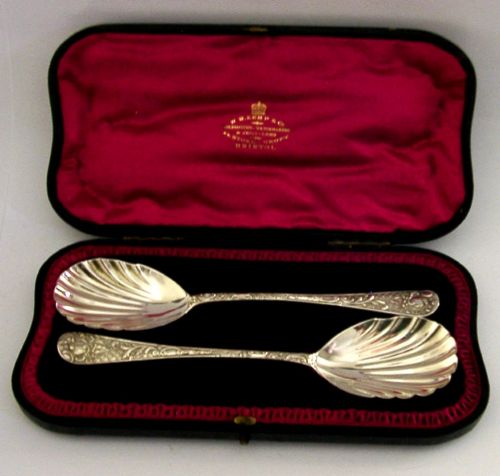
These silver berry spoon sets are matching groups of nineteenth and eighteenth-century serving spoons housed in fitted presentation cases, offering a refined way to serve fruit.
Silver Berry Spoon Set
A silver berry spoon set comprises matching serving spoons, frequently accompanied by a matching sifter spoon, designed specifically for serving soft fruits and desserts. These sets mostly date from the Victorian and Georgian eras, appearing in both sterling silver and silver plate.
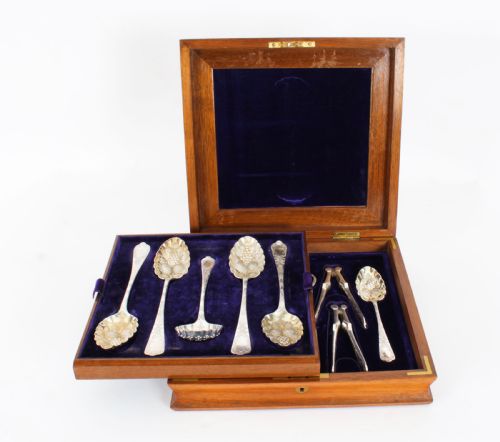
The pieces on this page are most commonly encountered as cased pairs or larger sets containing three, four, or six spoons, often nestled alongside fruit knives, nutcrackers, or grape scissors within original presentation boxes lined in velvet, silk, or satin.
Originating predominantly from English and Scottish silversmiths, these sets reflect formal dining traditions where specialised flatware was utilised for specific dessert courses. The bowls are frequently reshaped or deeply embossed and engraved with fruit and foliage designs.
Materials and construction
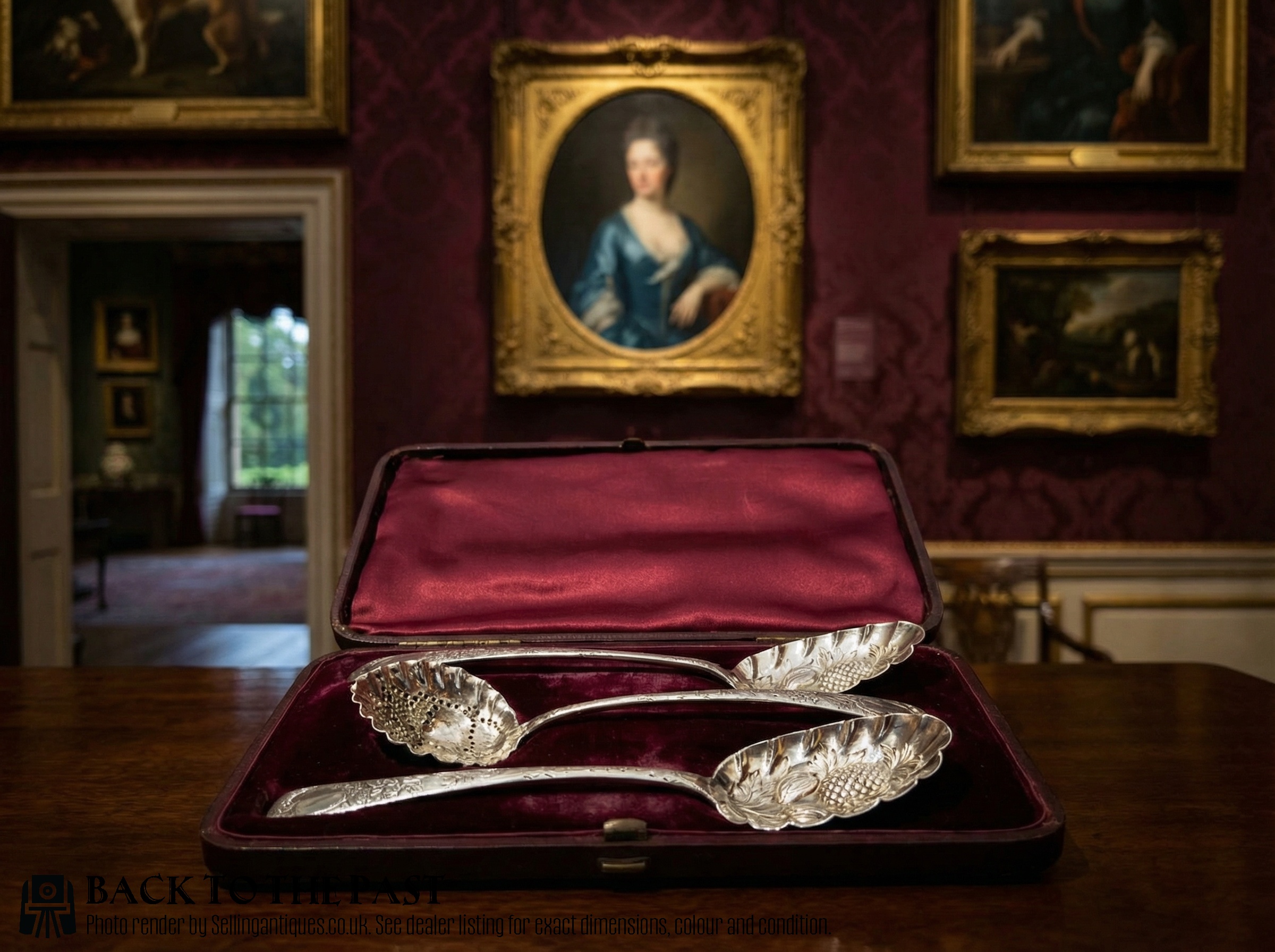
The spoons are fashioned from sterling silver or silver plate, with certain examples featuring silver gilt finishes that provide a rich, gold-coloured sheen across the bowls. Handles display detailed engraving, chasing, or shell-shaped terminals.
Fitted presentation cases utilise sturdy wooden foundations covered in leatherette, housing protective interiors lined with velvet, silk, or satin to cushion the silver flatware during storage and transport.
Distinctions in quality
Quality rests upon the crispness of the hand-engraving and the depth of the repoussé work on the spoon bowls, where finely detailed fruit and leaf motifs demonstrate superior silversmithing skill. Complete sets retaining their original, undamaged presentation cases command greater interest.
The inclusion of matching companion pieces such as sugar sifters, grape scissors, or nutcrackers within a unified fitted case elevates the status of the set, reflecting comprehensive original commission rather than assembled components.
Hukin and Heath·Hester Bateman·George Smith III·William Marshall
The Silver Berry Spoon Set Glossary
- Berry spoon
- A large serving spoon with a wide bowl, typically featuring embossed fruit and chased foliage added to the surface. These were primarily utilised for serving soft fruits.
- Sifter spoon
- A specialised spoon featuring pierced or perforated bowl work designed for dusting sugar over fruit or desserts. It frequently accompanies spoons in larger cased sets.
- Sterling silver
- A silver alloy containing ninety-two point five percent pure silver by mass, ensuring durability and enduring monetary and historic worth. British examples bear official hallmarking.
- Silver plate
- A base metal coated with a thin layer of pure silver through electroplating or older techniques. This provided an accessible alternative to solid silver for formal dining.
- Silver gilt
- Sterling silver that has been coated with a thin layer of gold through a chemical or electrochemical process. This treatment imparts a warm, golden hue to the bowl interior.
Silver Berry Spoon Set: Frequently Asked Questions
How were silver berry spoon sets used?
These sets were brought to the dining table during the dessert course for serving fresh fruits like berries, often accompanied by powdered sugar sifted through a dedicated spoon.
They formed part of formal domestic hospitality, where specific flatware matched the elaborate presentation of seasonal produce.
Are these spoons made of solid silver?
The listings include both solid sterling silver and silver-plated options, with hallmarks on the silver pieces indicating the assay office and year of creation.
Checking the inner case or the reverse of the stems typically reveals standard marks confirming the material composition.
How should I store a cased set?
Keep the spoons inside their original fitted presentation cases away from direct sunlight and damp environments to protect the delicate velvet or satin linings.
Using specialised silver cloths prevents tarnishing without requiring frequent harsh polishing that can wear down fine hand-engraving.
Why do some bowls look heavily embossed?
Many Victorian examples are older Georgian spoons that received later Victorian chasing and repoussé work to transform plain spoons into fashionable fruit servers.
This decorative modification altered the original smooth bowls into textured surfaces depicting fruit and leaves.