
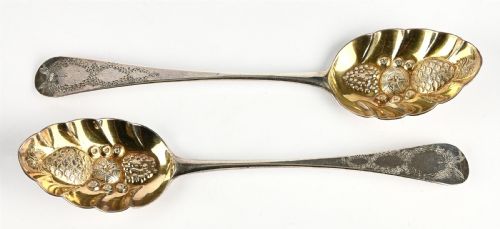


Silver Repousse Fruit Spoon
These silver repousse fruit spoon pieces are distinguished by embossed bowl ornamentation and period craftsmanship, prized by collectors for formal dining displays.
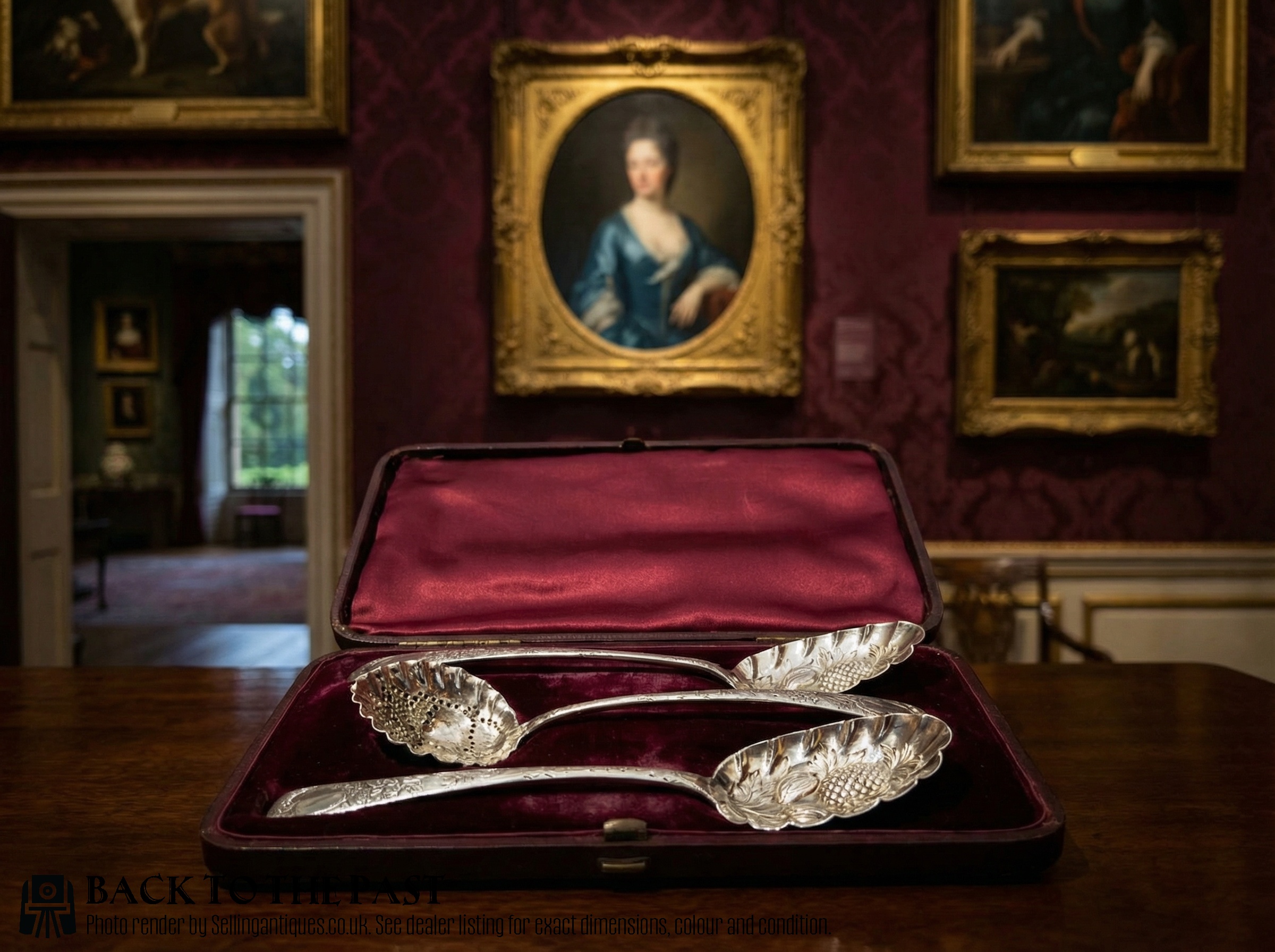
Silver Repousse Fruit Spoon
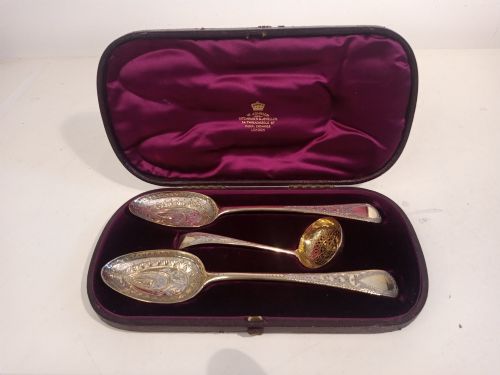
A silver repousse fruit spoon is typically encountered here in Georgian and Victorian forms, including berry spoons and serving spoons. These items often appear in pairs or sets, sometimes accompanied by fitted cases lined in velvet, silk, or leatherette.
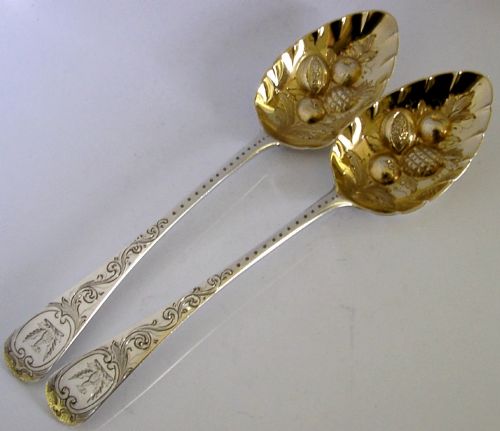
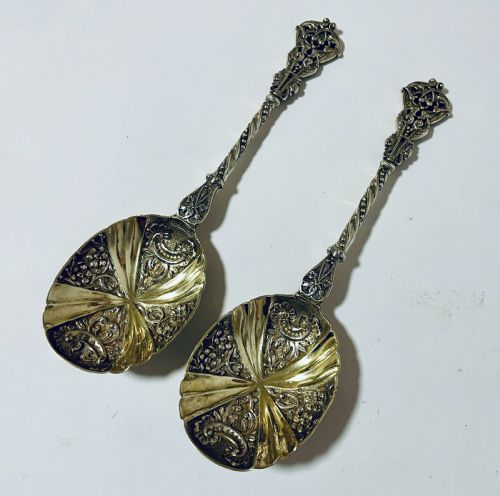
The selection encompasses sterling silver and silver-gilt utensils, ranging from dessert spoons to sugar sifters and caddy spoons. Originating primarily from the eighteenth and nineteenth centuries, these pieces showcase intricate repousse work on the bowl surfaces.
How they were made
Silversmiths utilised sterling silver and silver-gilt, hammering the metal from the reverse side to create the raised repousse ornamentation characteristic of berry spoons. Handles were frequently shaped with detailed engraving and sometimes bore family crests.
Many of these utensils were housed in purpose-built protective boxes featuring velvet, silk, or leatherette interiors. The combination of hollowware hammering and engraved handle detailing defines the manufacturing technique.
The listings here span the Georgian and Victorian periods, featuring sterling silver and silver-gilt materials configured as serving utensils, caddy spoons, and flatware.
What varies in quality
Quality rests upon the crispness of the repousse hammering and the depth of the floral or fruit motifs chased into the spoon bowl. Superior examples maintain sharp relief without thinning the silver plate.
The presence of original fitted cases lined with velvet, silk, or leatherette elevates an assemblage. Engraved handle detailing and clear hallmarks further distinguish finer specimens from standard utility flatware.
Fenwick Family·Peter And Anne Bateman·William Chawner II
The Silver Repousse Fruit Spoon Glossary
- Repousse
- A metalworking technique where the design is hammered into relief from the reverse side. This method creates the characteristic raised fruit and berry patterns on the bowl.
- Silver-Gilt
- Sterling silver that has been coated with a thin layer of gold on the surface. This finish provides a warm tone to the interior of the spoon bowls.
- Caddy Spoon
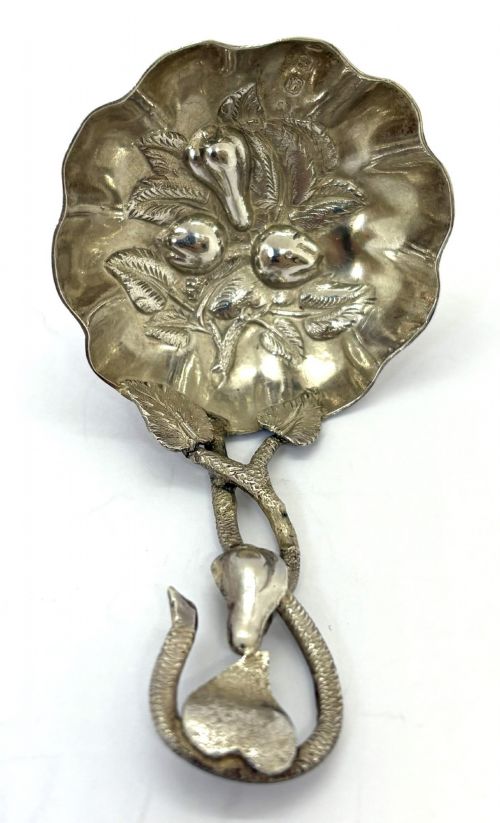
- A small specialised spoon used for measuring tea leaves from a caddy. These compact pieces often feature decorative repousse handles and bowls.
- Sifter
- A perforated spoon designed for dusting sugar over fruit or desserts. They frequently accompany berry spoons in matched cased sets from the Georgian period.
- Hallmark
- An official stamp struck into precious metals to indicate the standard of purity and the assay office. These marks help verify the period and origin of the cutlery.
Silver Repousse Fruit Spoon: Frequently Asked Questions
What are silver repousse fruit spoons?
These items are decorative sterling silver or silver-gilt utensils featuring raised repousse ornamentation on the bowls, frequently referred to as berry spoons.
Originating in the Georgian and Victorian eras, they were designed for serving fruit and desserts during formal dining occasions.
How were these spoons used?
They served as specialist flatware for portioning fruit, berries, and desserts at the dining table. Some variations include sifters specifically intended for sprinkling sugar.
Many were kept in fitted presentation cases lined with silk, velvet, or leatherette, suggesting they also functioned as gift pieces.
How do I identify Georgian pieces?
Georgian specimens date from the eighteenth and early nineteenth centuries, often displaying distinct handle engraving and crests. Examining the stamped hallmarks provides the exact year of assay.
Maker marks also point to this specific historical period of British silversmithing.
How should I display them?
These pieces can be displayed within their original fitted cases or arranged flat in a cabinet tray to showcase the repousse bowls. Keeping them in velvet or silk-lined boxes protects the silver finish from tarnishing.
Pairing matching serving utensils together creates an effective historical display.