


Silver Dredger Shaker
A silver dredger shaker stands ready on the dining table to dust fine sugar or spice over food.
Silver Dredger Shaker
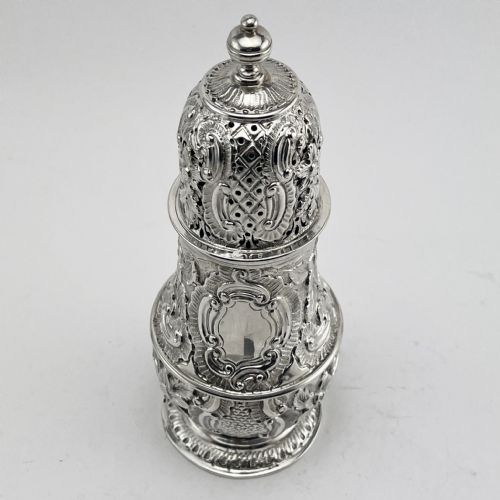
A silver dredger shaker is a small table vessel designed for sprinkling sugar, spice, or pepper, typically featuring a pierced dome lid and a secure footed base. The pieces seen here span centuries of design, taking forms such as sugar casters, sugar sifters, and pepper casters.
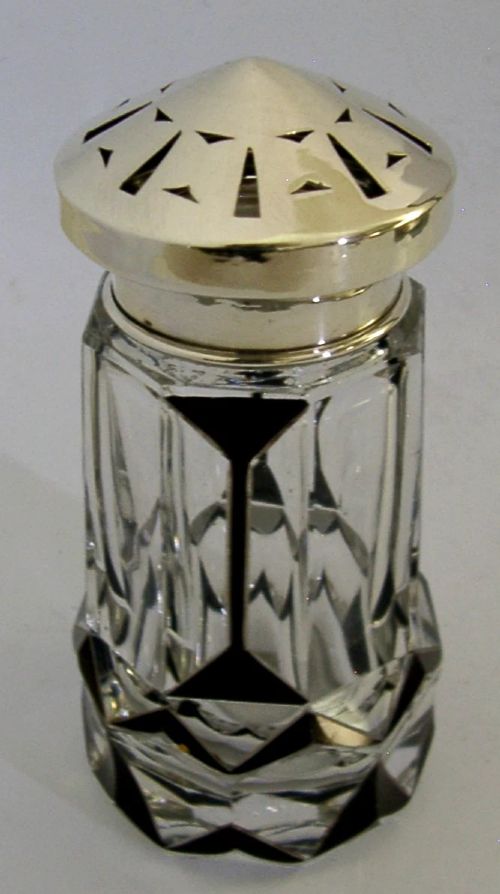
The versions most commonly met on this page range from early eighteenth-century octagonal shapes to Victorian, Edwardian, and mid-twentieth-century examples. Makers shaped these vessels in solid sterling silver, while other variants combine silver tops with cut glass bodies.
Stylistic influences across the collection stretch from the restrained elegance of George I and Georgian revival to ornate Victorian ornamentation, sinuous Art Nouveau curves, and later mid-century minimalism. Each period imparts distinct proportions and piercing patterns to the metal lid.
Materials and construction methods
Silversmiths constructed these vessels primarily from solid sterling silver, often shaping the metal through raising and casting techniques to achieve sturdy octagonal or rounded bodies. The resulting walls provide the necessary weight for balanced table use without relying on excessive thickness.
Lids were meticulously pierced by hand or machine to create intricate patterns of holes for sifting, then fitted securely to the main body via slip-on bezels or threaded collars. Cut glass variants married heavy moulded glass reservoirs with hallmarked silver screw tops to create contrast between the transparent body and the reflective metal cap.
The listings here span the 18th Century, Victorian, Edwardian, and mid-20th-century periods, utilising both solid sterling silver and cut glass materials.
Distinctions in quality
Quality in these vessels rests upon the crispness of the piercing on the lid and the overall balance of the form when held in the hand. Early examples achieve distinction through precise octagonal geometry and heavy-gauge metal that resists denting.
Maker attribution and legible hallmarks significantly elevate a piece, particularly when works originate from prominent silversmiths or Huguenot workshops. The integration of decorative elements, such as armorial engravings or well-executed cast finials, marks the distinction between standard utilitarian items and superior table silver.
Simon Pantin·The Barker Brothers·James Dixon & Sons Ltd·Evald Nielsen·Thomas Pritchard
The Silver Dredger Shaker Glossary
- Caster
- A small container with a pierced lid used for sprinkling sugar or spices onto food. It is also frequently referred to as a shaker or dredger.
- Hallmark
- An official stamp applied to precious metals indicating the standard of purity, the assay office, and the year of manufacture. It provides the primary evidence for dating antique silver.
- Huguenot
- A French Protestant refugee silversmith working in Britain during the seventeenth and eighteenth centuries. These makers brought advanced technical skill and continental design influence to British silver production.
- Armorial
- A heraldic coat of arms engraved onto the surface of silver. Such engravings often record the original owning family and add historical provenance to the piece.
- Bezel
- The rim or collar that secures the lid to the body of the shaker. A well-fitted bezel ensures the cap stays firmly attached during use.
Silver Dredger Shaker: Frequently Asked Questions
What is a silver dredger shaker used for?
These vessels were originally employed at the dining table or tea service for dusting fine caster sugar onto pastries, fruit, or desserts. They also served to dispense powdered spices such as cinnamon or nutmeg before the widespread use of modern spice jars.
Over time, smaller versions were adapted specifically for ground pepper or salt. Their perforated lids allowed diners to control the flow of seasoning evenly across their meal.
How do I date an antique silver shaker?
Dating relies primarily on the stamped hallmarks found on the silver body and lid, which reveal the assay office and the exact year of manufacture. Stylistic clues such as an octagonal Georgian profile, Victorian ornamentation, or Art Nouveau curves also point toward specific eras.
Comparing the weight, form, and construction techniques against documented pieces from known makers helps narrow down the period of origin. Hallmarks remain the most reliable guide for establishing age.
Are silver dredger shakers safe to use daily?
Solid silver vessels are robust enough for regular use provided they are handled with care and washed by hand rather than in a dishwasher. Warm soapy water and a soft cloth keep the metal clean without damaging the historic surface.
Cut glass variants require similar gentle cleaning to protect both the glass body and the fitted silver top. Regular polishing removes tarnish and preserves the reflective finish of the metal.
How do I tell George I shakers apart from later revivals?
Early eighteenth-century pieces display heavier gauge sterling silver, sharper octagonal facets, and understated forms characteristic of the period. They frequently feature work by notable Huguenot makers and carry early hallmark formats.
Georgian Revival items, produced in later decades such as the twentieth century, often imitate these earlier shapes but display modern assay marks and different manufacturing signatures. Examining the interior construction and hallmarks clarifies whether a piece is original or a later revival.