


Baluster Sugar Caster
A baluster sugar caster is a curvaceous silver vessel designed to dust fine sugar over food, bringing gleaming historic elegance to the dining table.

Baluster Sugar Caster
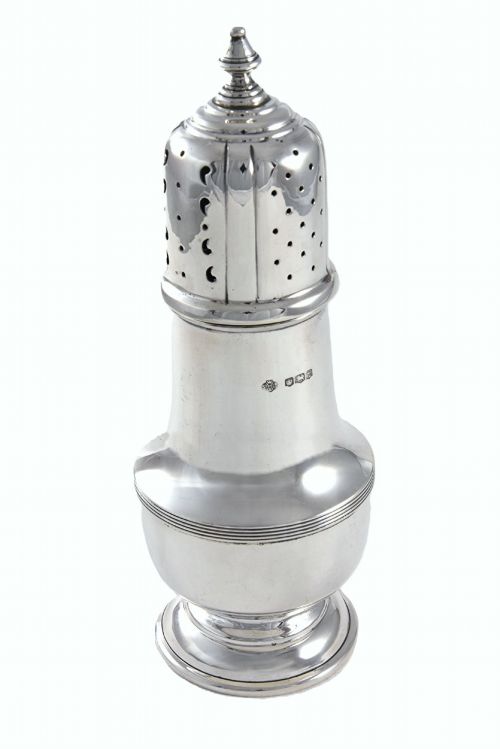
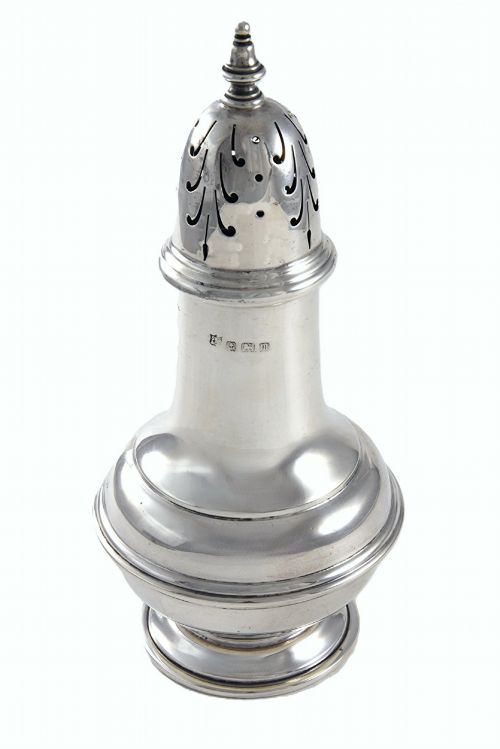
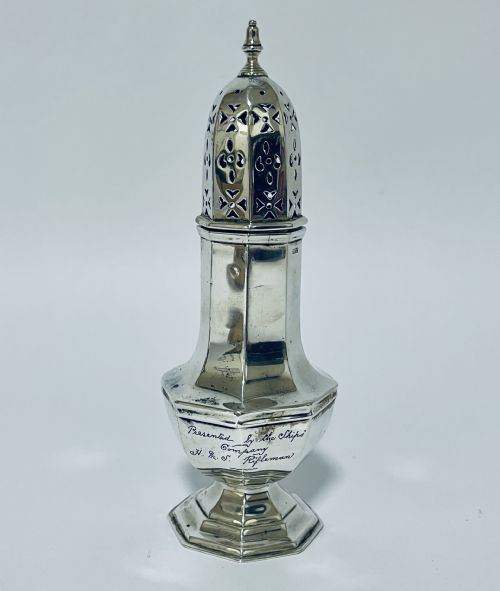
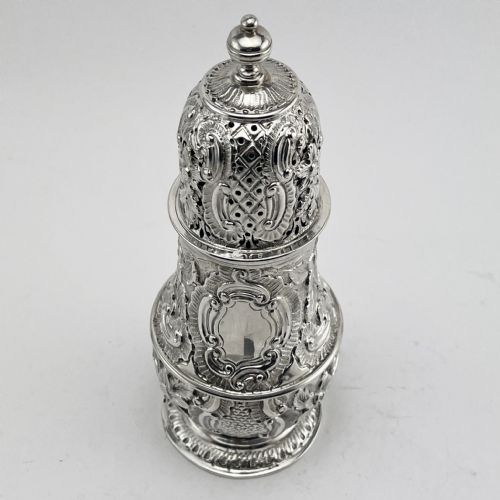
When you search for a baluster sugar caster, you are looking at sterling silver table vessels shaped with a swelling lower body and a tapering upper section. The examples you are most likely to meet on this page date from the Georgian period through to the mid-twentieth century, including Victorian, Edwardian, and later twentieth-century iterations. These pieces often take the form of sugar shakers, muffineers, or sifters, functioning as both functional dining tableware and decorative silver.
The forms span early eighteenth-century George I and George II designs through to George V and George VI creations, alongside vintage pieces hallmarked in the nineteen-forties. While many follow traditional Georgian styles, others reflect Art Deco influences or simpler twentieth-century interpretations. Makers such as Stephen Adams, Simon Pantin, James Dixon and Sons Ltd, John Delmester, and Charles Alchorne contributed to this lineage over the centuries.
How they were made
Every piece listed or recorded in the archive is fashioned from sterling silver, relying on the metal's malleability and bright finish to achieve the classic baluster silhouette. Silversmiths formed the hollow body either by raising from a flat sheet of silver or by spinning, before attaching a pierced removable cover used for shaking sugar.
Decoration and assembly required specialist silversmithing techniques, including hand-piercing the intricate patterns on the top covers to allow the sugar to flow evenly. Hallmarks were stamped directly into the metal to record the standard of silver, the assay office city such as London or Sheffield, and the date letter corresponding to the year of manufacture.
Listings span from the early eighteenth century through the Georgian and Victorian eras into the nineteen-forties, entirely in sterling silver.
What varies in quality
The distinction between ordinary and exceptional examples rests in the heft of the sterling silver, the crispness of the baluster profile, and the pedigree of the maker. Early eighteenth-century pieces by renowned Huguenot makers display superior gauge silver and more refined proportions than standard later reproductions.
The intricacy and precision of the pierced cover design further separate the standard production from the finest work. Crisp hallmarks, balanced weight in the hand, and well-preserved maker marks elevate certain casters above others of the same period.
Stephen Adams·Simon Pantin·James Dixon And Sons Ltd·John Delmester·Charles Alchorne
The Baluster Sugar Caster Glossary
- Baluster
- A architectural form featuring a rounded, swelling lower belly that tapers upward, which defines the classic silhouette of these silver vessels.
- Muffineer
- An alternative term for a small caster used specifically for sprinkling sugar or salt over hot muffins or bread.
- Hallmark
- A certified stamp impressed into sterling silver that guarantees the metal purity and reveals the assay office and date of manufacture.
- Pierced cover
- The removable top lid drilled or cut with decorative holes through which the sugar is shaken onto food.
Baluster Sugar Caster: Frequently Asked Questions
What is a baluster sugar caster?
A baluster sugar caster is a standing sterling silver vessel with a curved, bulbous lower body and a pierced lid. It was traditionally used at the dining table for sprinkling fine sugar over desserts or baked goods.
These pieces range from early eighteenth-century George I examples to mid-twentieth-century vintage items. Their enduring appeal lies in the combination of functional design and polished silver craftsmanship.
How do I date a silver caster?
Dating a silver caster relies primarily on the stamped hallmarks, which include a date letter indicating the exact year of assay. Examining the stylistic details, such as the shape of the baluster body and the pattern of the pierced lid, also helps place the piece within a specific reign or period.
Early pieces often feature maker marks and town marks that correspond to eighteenth-century silversmiths. Later pieces carry twentieth-century stamps from offices such as Sheffield or London.
Can I still use an antique sugar caster?
Sterling silver casters remain entirely functional for everyday dining use, provided they are handled with care and cleaned properly. The pierced top functions just as it did centuries ago for dusting powdered or caster sugar.
Many collectors prefer to display them as part of a silver collection rather than using them daily. Regular gentle washing keeps the silver bright without wearing down the historic hallmarks.
What is the difference between a caster and a shaker?
In historical terms, the words caster and shaker often describe the same table vessel used for dispensing dry condiments like sugar. Some regional or period variations use muffineer interchangeably for smaller sugar containers.
The core mechanism remains identical, featuring a hollow silver body and a perforated lid designed to release fine grains when inverted.