

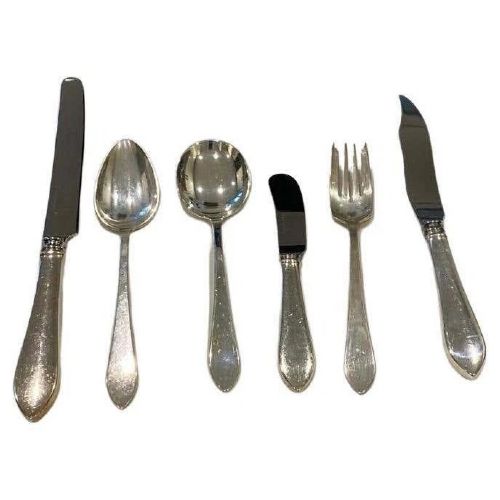




Silver Dessert Spoon Set
A silver dessert spoon set brings refined historical elegance to the table, offering matched or cased spoons for formal dining.
Silver Dessert Spoon Set
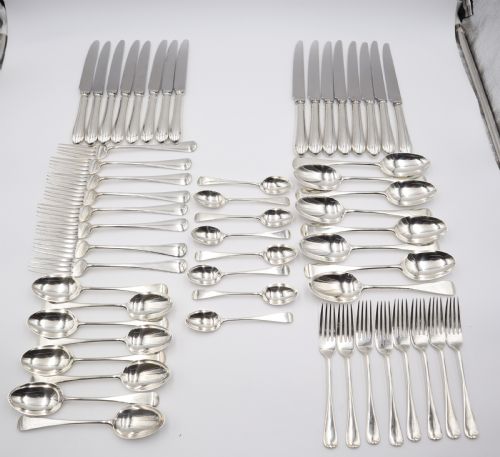
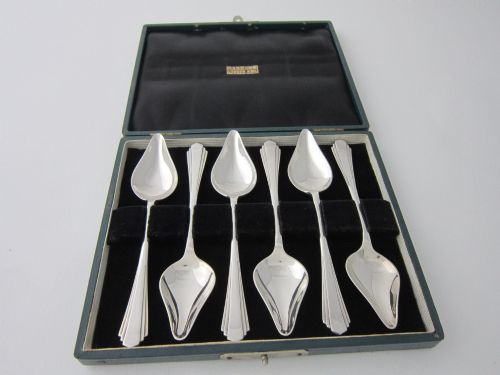
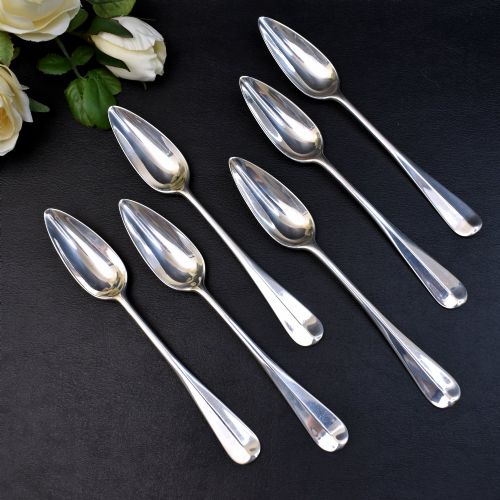
A silver dessert spoon set comprises multiple spoons designed for the second course of a meal, often including specialist berry, fruit or grapefruit spoons alongside standard service pieces. Many examples encountered here date from the Georgian and Victorian periods, reflecting centuries of dining tradition.
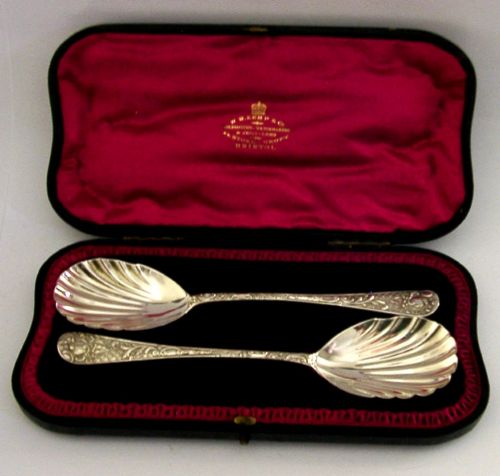
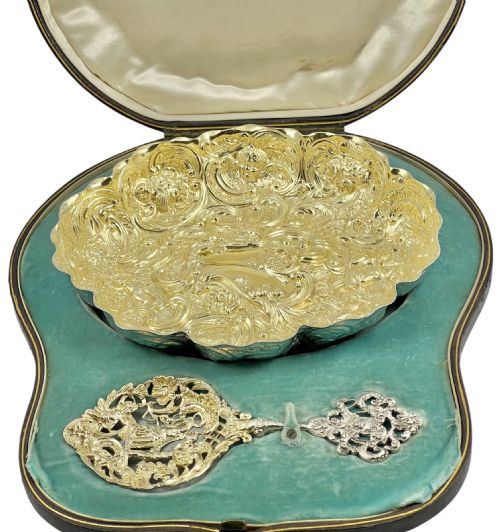
Sets frequently appear complete within fitted cases lined in velvet, silk, satin or leatherette, preserving the items securely. Buyers find everything from provincial Exeter issues to London hallmarks and Scottish provincial pieces.
Forms extend beyond simple bowls to include sifter spoons, apostle handles and gilt finishes. These variations determine how the service was originally deployed in domestic dining.
Materials and construction
Makers utilised sterling silver and silver plate over base metals, shaping them through traditional methods such as hammering, casting and die-stamping. Many pieces incorporate steel for functional edges, alongside gilt treatments that impart a rich surface colour.
Handles often display intricate hand-engraving, chasing, or applied patterns like Fiddle, thread, shell, and Rat Tail. Fitted presentation boxes utilise wood covered in leatherette, velvet, or satin to house the cutlery securely.
Listings span from the Georgian era through the Victorian period and into mid-century modern design, utilising sterling silver, silver plate, velvet, and silk.
Distinctions in quality
The standard of a silver dessert spoon set depends on the crispness of the original chasing, the integrity of any parcel gilding, and whether the set remains truly matched from its period of origin. Maker attribution plays a significant role, as pieces from notable workshops command greater attention.
The preservation of the original fitted case and the clarity of the hallmarks stamped into the silver add measurable weight to the set's historical integrity.
Hamilton & Inches·Tiffany·Georg Jensen·Christofle·Peter & Ann Bateman·Paul Storr·Hukin & Heath
The Silver Dessert Spoon Set Glossary
- Hallmark
- Official stamps indicating the purity of the metal, the assay office, and the year of manufacture. These marks allow collectors to date the silver precisely.
- Berry spoon
- A large serving spoon embossed and engraved with fruit and foliage designs, typically added to older spoons during the Victorian era. They were popular for serving soft fruits.
- Gilt
- A thin layer of gold applied to the surface of the silver, creating a contrasting two-tone effect. This technique was frequently used on the bowls of dessert and sugar spoons.
- Fiddle pattern
- A popular 19th-century cutlery handle style featuring a narrow stem that broadens into a shoulder before spreading into a flat, fiddle-like end. It remains one of the most common provincial patterns encountered.
- Rat Tail
- A traditional strengthening ridge running down the back of the spoon bowl from the handle junction. This feature is commonly found on early pieces.
Silver Dessert Spoon Set: Frequently Asked Questions
How do I store a silver dessert spoon set?
Keep the spoons in their original fitted case or an anti-tarnish roll to minimise exposure to air and moisture. Proper storage prevents unnecessary scratching between the individual pieces.
Avoid wrapping silver in ordinary paper or rubber bands, which can cause chemical tarnishing and surface damage over time.
Are these spoons suitable for daily use?
Silver sets can certainly be used for special meals and modern dining, provided they receive gentle hand washing without harsh abrasive detergents. Sterling silver is durable enough for regular handling.
Hand drying immediately after washing prevents water spots and maintains the polished finish of the metal.
How can I identify the age of my set?
Examine the hallmarks stamped on the reverse of the handles, which typically show a date letter, a maker's mark, and a standard mark indicating sterling quality. Reference books or online assay office registers will decode these symbols.
Stylistic cues, such as handle shapes and engraving styles, also provide strong indications of the manufacturing period.
What is the difference between silver and silver plate?
Solid silver pieces consist of precious metal all the way through, usually stamped with sterling hallmarks such as a lion passant in British items. Silver plate involves a thin layer of silver bonded to a base metal core.
Plated items generally show base metal beneath worn spots, whereas solid silver maintains consistent material throughout.