



Antique Berry Spoon Set
An antique berry spoon set brings silver gilt bowls and engraved fruit motifs to the table, packaged in velvet and silk lined presentation cases.
Antique Berry Spoon Set
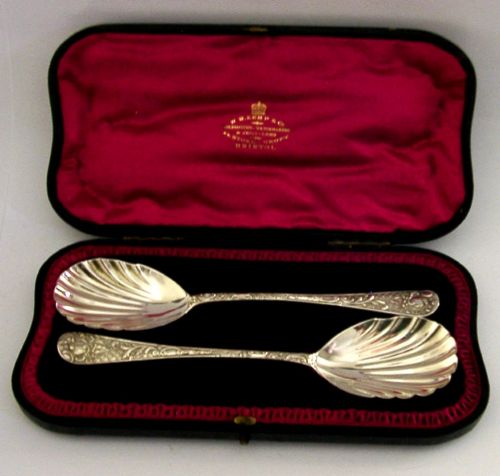
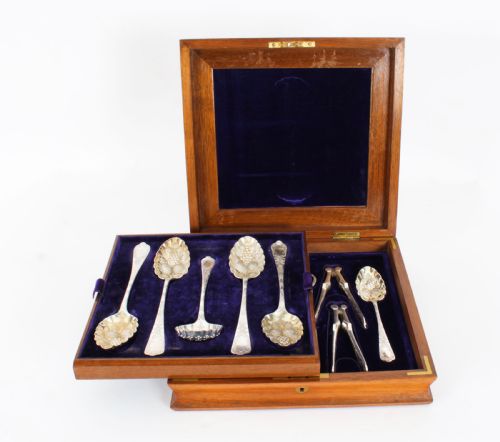
An antique berry spoon set usually consists of paired or matched serving spoons housed in fitted presentation boxes lined with silk, satin, or velvet. These matched sets frequently emerge from the Victorian and Edwardian periods, alongside earlier George III examples.
The bowls of these spoons often feature ornate fruit and foliage repoussé or chasing, sometimes finished with silver gilt to highlight the engraved decoration. Many configurations include matching sifter spoons or companion pieces such as nutcrackers and grape scissors.
Makers packaged these serving sets in leatherette cases designed for formal dining presentation, reflecting the domestic habits of the eighteenth and nineteenth centuries.
Materials and construction
Silversmiths utilised sterling silver and silver plate as the primary metal bases, frequently applying silver gilt to the interior bowls to contrast with the bright polished stems. Engraved handles and chased fruit designs required skilled hand tool work by period craftsmen.
Presentation containers combined structural wooden or cardboard carcasses covered in leatherette, then fitted internally with moulded beds upholstered in velvet, silk, or satin to secure each spoon and accessory.
Antique Berry Spoon Set Retail Price Guide 2026
Typical asking prices for berry spoon set among the pieces listed under this phrase on Sellingantiques today, from the lower quarter to the upper quarter. They describe what is for sale here now, not the wider market.
Grape scissors and nutcrackers occasionally share the velvet slots alongside the spoons, proving that Victorians took their post dinner fruit very seriously.
Assessing quality and craftsmanship
The depth and crispness of the chased berry and leaf work on the spoon bowls distinguish standard production from finer silversmithing. Sharp, detailed hand engraving along the stems and handles indicates superior workshop output.
The integrity and original condition of the fitted presentation case, including the preservation of its silk and velvet linings, heavily influence the overall character of the set.
Hukin & Heath
The Antique Berry Spoon Set Glossary
- Berry spoon
- A large serving spoon with a bowl heavily embossed and chased with fruit and foliage designs, popular from the Georgian era onwards. These pieces were often retrofitted or specially manufactured for serving dessert.
- Silver gilt
- Sterling silver that has been coated with a thin layer of gold, providing a rich two tone appearance inside the spoon bowl. This treatment protected the silver from fruit acids.
- Repoussé
- A metalworking technique where the artisan hammers the design from the reverse side to create a raised relief pattern on the front. It defines the fruit motifs found on these spoons.
- Sifter spoon
- A specialised spoon featuring a pierced or perforated bowl, commonly included in larger matched sets for dusting sugar over fruit. They appear alongside standard serving spoons in presentation cases.
- Leatherette
- A simulated leather material utilised to cover the exterior of nineteenth century presentation boxes. It protected the fitted velvet and silk interiors during storage.
Antique Berry Spoon Set: Frequently Asked Questions
What are antique berry spoons used for?
These large serving spoons were designed specifically for serving fresh berries, fruit salads, and desserts at the dining table during the Georgian and Victorian periods.
They frequently accompanied specialised sifter spoons used for applying powdered sugar onto the fruit before consumption.
Why do some spoons have gold bowls?
The gold appearance is silver gilt, created by applying a thin layer of gold over sterling silver. This finish provided an attractive contrast and protected the silver metal from tarnishing when exposed to acidic juices in fruits.
Victorian silversmiths utilised this technique extensively on dessert and berry serving pieces.
How do I care for cased silver sets?
Keep the sterling silver and silver gilt spoons stored within their original velvet and silk lined presentation cases to protect them from airborne dust and moisture. Avoid harsh chemical dips that can strip away delicate silver gilt highlights.
Gentle cleaning with a soft cloth preserves the hand engraved details on the handles and bowls.
How can I tell George III from Victorian sets?
George III sets originate from the mid to late eighteenth century and early nineteenth century, displaying distinct Georgian silversmithing traits and hallmarks. Victorian and Edwardian examples date from the later nineteenth century onward.
Examination of the hallmarks stamped on the silver reveals the exact assay office and date letter for each piece.