




Victorian Silver Fruit Set
A victorian silver fruit set brings matched elegance to the dining table, pairing refined cutlery with fitted presentation boxes.
Victorian Silver Fruit Set
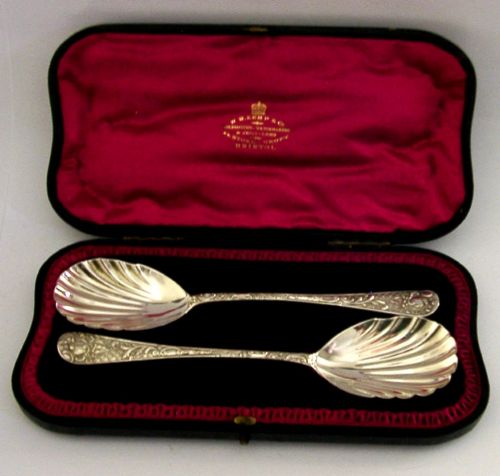
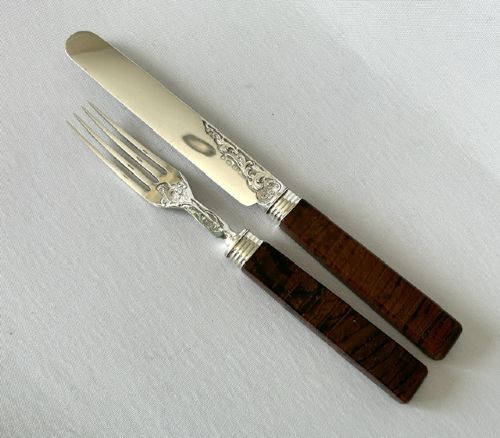
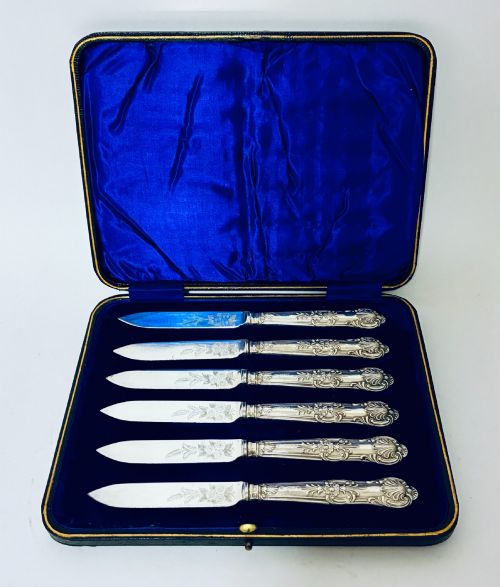
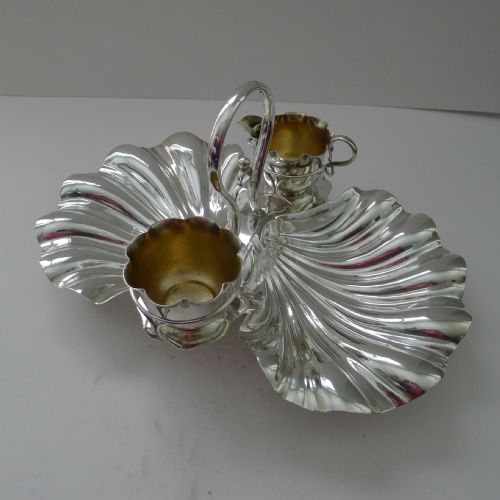
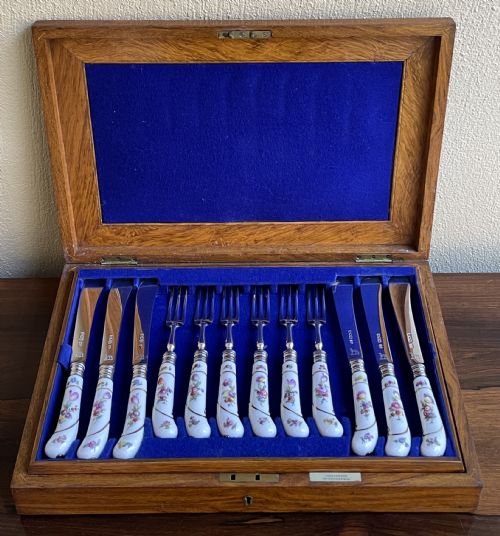
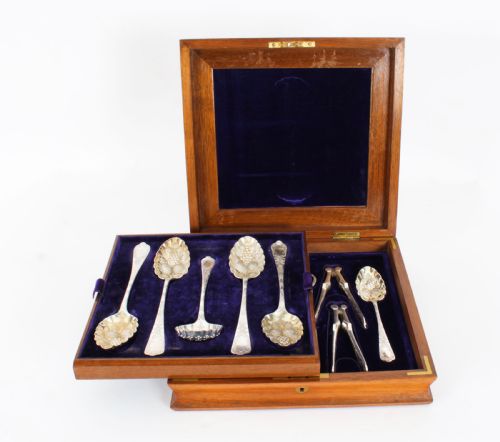
A victorian silver fruit set comprises specialised dining utensils designed for dessert and fruit courses, frequently found in fitted wooden or velvet-lined boxes. These groupings range from matched sets of knives and forks with decorated handles to comprehensive boxed collections incorporating serving spoons, nutcrackers and grape shears.
The versions most commonly met on this page span the Victorian and Edwardian eras, utilising sterling silver, silver plate, mother-of-pearl and agate. Many sets pair engraved metal blades with organic handles, reflecting the period taste for naturalism and elaborate table service.
Materials and construction
Metalwork for these pieces combines sterling silver or silver plate with steel for cutting edges, ensuring both decorative sheen and functional durability. Silversmiths employed techniques such as silver gilt, ornate engraving and casting to decorate spoons, forks and serving pieces.
Handles introduce contrasting textures, utilising natural materials like mother-of-pearl, agate, silk and oak fitted securely to the metal tangs. Presentation cases integrate wood, velvet and satin to protect the contents during storage.
An apple, pear and pomegranate inkstand proves that nineteenth-century dining enthusiasm occasionally spilled over into the writing desk.
Judging quality in fruit sets
Quality rests upon the crispness of the handler's engraving, the integrity of the silver gilt or plating, and the matching of the components within the set. Sets retaining their original fitted oak or velvet-lined boxes demonstrate higher preservation.
The choice of handle material influences distinction, with fine carved mother-of-pearl or coloured agate elevating an assembly above standard bone or wood. Maker signatures from established silversmiths also separate standard workshop output from exceptional commissions.
Daniel Arter·Carrington·Robert Hennell·Hukin & Heath·Roberts and Belk·Aaron Hadfield·Lee & Wigful
The Victorian Silver Fruit Set Glossary
- Silver Gilt
- Silver that has been coated with a thin layer of gold on its surface. This technique imparts a rich warm tone frequently seen on dessert spoons and fruit knives.
- Mother-of-Pearl
- The iridescent internal layer of certain mollusc shells, carved to form knife and fork handles. It provides a luminous surface that contrasts against polished metal blades.
- Grape Shears
- Specialised scissors designed for cutting clusters of fruit at the table. They often feature matching decorative engraving to coordinate with the wider cutlery set.
- Berry Spoon
- A large serving spoon with an oversized bowl, typically heavily chased or engraved with fruit and foliage. These pieces form part of larger dessert and fruit services.
- Silver Plate
- A base metal coated with a layer of pure silver. This method allowed makers to produce elaborate table services with the appearance of solid silver at a lower cost.
Victorian Silver Fruit Set: Frequently Asked Questions
What is a fruit set used for?
These sets were utilised during formal dining for consuming dessert courses, particularly fresh fruit, nuts and preserves. The specialised utensils allowed guests to slice and serve delicate items cleanly.
Over time, the contents expanded from simple knives and forks to include nutcrackers, grape scissors and dedicated serving spoons housed in fitted presentation boxes.
How do I care for silver fruit sets?
Store silver and silver-plated items in their original oak or velvet-lined boxes to protect them from tarnishing and physical damage. Regular, gentle cleaning with a soft cloth maintains the finish without wearing away thin plating.
Avoid immersing pieces with mother-of-pearl or organic handles in water for prolonged periods, as moisture can loosen the fixings.
Are these sets made of solid silver?
The listings show a mix of solid sterling silver and silver plate over base metals. Hallmarks on the metal components help identify solid silver pieces and date their manufacture.
Blades on knives frequently combine steel with silver or silver plate to ensure a durable cutting edge.
How do I identify Victorian pieces?
Victorian and Edwardian items often display registration marks, maker stamps, or traditional hallmarks that indicate the year and place of production. Stylistic clues include naturalistic engraving, ornate floral motifs and the use of specific handle materials like agate.
Fitted presentation cases lined with silk and velvet also point toward late nineteenth-century manufacturing standards.